If you think all the time, what happens to your life?
Alan Watts once said: “A person who thinks all the time has nothing to think about except thoughts. So they lose touch with reality, and live in a world of illusions.”
Most people are trapped in their heads. They replay conversations. They anticipate worst-case scenarios. They judge themselves constantly. They mistake their thoughts for truth.
But thoughts are not truth. They’re not universal insights into who you are or what’s real. They only mean what you decide they mean. They’re only as heavy as you weight them.
Here’s the question: are you living in reality — or are you living in a world of your own thoughts?
Key Takeaways (At a Glance)
- Thinking all the time becomes a loop. When you only have thoughts to think about, you lose touch with what’s real.
- Thoughts are not truth. They’re not universal insights. They only mean what you decide they mean.
- Detach from your thoughts. Observe them as if they belonged to someone else. See them with curiosity, not obedience.
- You are not your thoughts. You are the one noticing them.
When You Live Inside Your Head, You Lose Touch With Reality
Most people are constantly thinking. About the past. About the future. About what others think of them. About what they should have said or done differently.
The problem isn’t thinking itself. The problem is being hypnotized by your thoughts. Believing every one of them as if they were absolute truth. Living inside them like they were reality.
Alan Watts pointed this out: “It doesn’t mean not to have any thoughts at all. It means not to be fooled by thoughts, not to be hypnotized.”
When you’re hypnotized by your thoughts, you’re not actually present. You’re in a dream. You’re reacting to mental projections, not actual life.
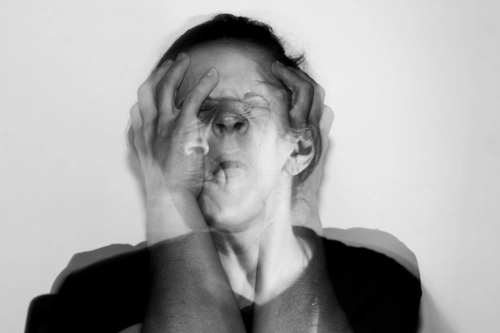
Your Thoughts Are Not Reality
“Thoughts are not truth. They are not universal insights into us or reality. They only mean what meaning we give them. They’re only as heavy as we weight them.”
Think about that. A thought about yourself is not who you are. A thought about someone else is not who they are. A thought about a situation is not the situation itself.
The thought only has the power you give it. You choose how much weight to assign it. You choose whether to believe it or let it pass.
Detach From Your Thoughts
The solution isn’t to stop thinking. It’s to change your relationship with your thoughts.
Consider thoughts with a degree of detachment. Observe them as if they were the thoughts of another person. Like a pestering but insightful child. When you see your thoughts this way, they become interesting. Not overwhelming. Not threatening.
Your thoughts are not commands. They’re not orders you have to follow. They’re just mental events. Like clouds passing through the sky. You don’t have to chase every one. You don’t have to build a house in every one. You can just watch.
You Are Not Your Thoughts
You are not the voice in your head. You are the one who hears it. That’s the distance you need. That’s the space where freedom lives.
When you’re lost in thought, you’re dreaming. When you observe your thoughts, you’re awake. When you believe every thought, you’re imprisoned. When you watch them pass, you’re free.
So the next time you’re caught in a spiral, pause. Notice your thoughts. Name them. Question them. “Is this true? Is this helpful? Is this who I really am?”
And remember: thoughts are not reality. They’re just thoughts. You don’t have to believe everything you think.
FAQ
Q: Is it possible to stop thinking entirely?
A: No. And that’s not the goal. The goal isn’t to stop thinking — it’s to stop being hypnotized by your thoughts. To observe them without getting lost in them.
Q: How do I know if I’m overthinking?
A: When you can’t focus on the present. When you replay the same thoughts over and over. When you feel anxious, stuck, or disconnected. If your thoughts feel heavy, you’re probably overthinking.
Q: Does detaching from my thoughts mean I stop caring?
A: No. Detachment isn’t indifference. It’s clarity. It’s the ability to choose which thoughts to act on and which to let go. You can still care deeply — you just don’t let your thoughts control you.
Q: How do I practice observing my thoughts?
A: Start by noticing when you’re lost in thought. Name it: “I’m thinking about this right now.” Ask: “Is this thought helpful? Is it even true?” Watch it like a cloud passing by. You don’t have to chase it.
