People talking about why they were blindsided. Why they trusted someone who turned out to be looking for something else. Why they kept giving chances to people who never changed. Why they felt naive after the fact.
If you have been following those topics, you already know the premise. This book is about understanding human behavior. But here is what those clips do not tell you: it is not about becoming cynical. It is about stopping the cycle of being surprised by people.
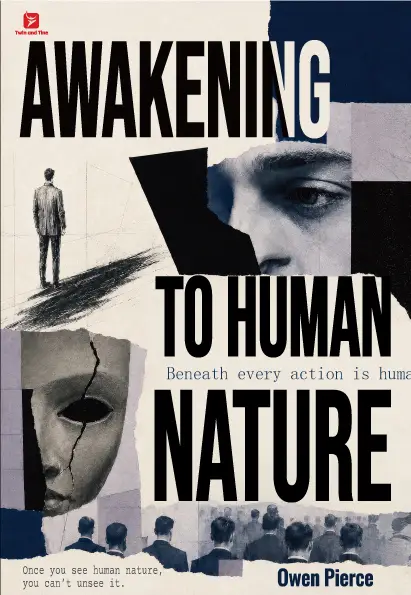
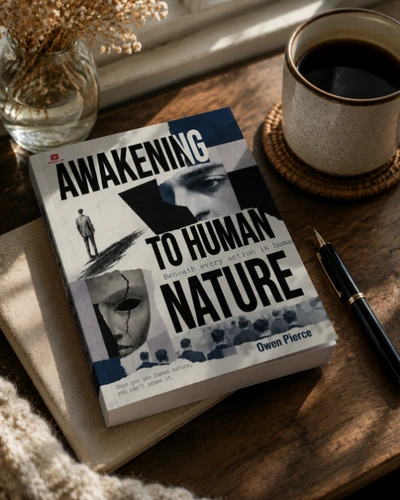
Awakening to Human Nature
Owen PierceA practical guide for understanding hidden motives, social patterns, emotional pressure, and manipulation—so you can read situations more clearly and protect your boundaries with confidence.
The Problem Is Not People. The Problem Is Your Assumptions.
You have been told your whole life that most people are good. That you should give them the benefit of the doubt. That trust is the foundation of everything.
Those are not bad principles. They are just incomplete.
The book opens with a statement that lands differently depending on how much you have been burned: “We live in a world driven by hidden motives, unspoken interests, and conflicting human instincts.” That is not pessimism. It is a starting point. If you ignore those forces, you make decisions based on how you wish people were, not how they actually are.
The book is organized around seven sections. Each one targets a different way we get blindsided.
What the Book Covers
Section One: Cognitive Laws
This is the part that explains why you keep getting confused by people. It covers why perception overrides truth. Why people see what they want to see. Why honesty often gets punished. Why smart people are disliked. Why double standards exist in almost every relationship.
The chapters are direct. “How to See a Person’s True Colors.” “The Real Danger in a Human Being Is Self-Deception.” “The Most Hated Person Is the One Who Tells the Truth.”
If you have ever been the one who told the truth and watched people turn on you, this section explains why.
Section Two: Emotional Laws
This is about why people do not operate on logic. It explains why people seek validation over truth. Why men and women prioritize different things in relationships. Why expectations create disappointment. Why talking too much reveals more than you intend. Why anger is a trap.
The chapters include “People Don’t Seek Truth; They Seek Validation.” “Men Value Respect More Than Love.” “Disappointment Begins With Expectations.”
If you have ever been frustrated by someone who refuses to see facts, this section tells you why they are not listening. They are not looking for facts. They are looking for confirmation.
Section Three: Desire and Interest Laws
This is the part that makes some people uncomfortable. It is about self-interest. How people actually make decisions. Why loyalty expires when needs change. Why scarcity creates value. Why morality is often secondary to survival.
The chapters are direct: “Power Is the Most Addictive Drug.” “Loyalty Lasts Only as Long as the Need Does.” “Who Betrays You Once Will Betray You a Thousand Times.”
If you have ever been shocked when someone you trusted switched sides, this section explains what you missed.
Why People Who Read This Book Say They Wish They Read It Sooner
Most reviews of this book say the same thing: “I wish I had read this earlier.”
That is not because the book is comfortable. It is because it is clarifying. It gives you a framework for understanding patterns you already noticed but could not name. The person who was always taking credit. The friend who showed up only when they needed something. The colleague who seemed supportive but was competing behind your back.
You knew something was off. You just did not have language for it.
This book gives you that language.
Who This Book Is For
If you have ever been taken advantage of and wondered how you did not see it coming, read this book.
If you keep trusting people who later prove untrustworthy, read this book.
If you are tired of being surprised by people’s behavior, read this book.
If you want to understand how influence, power, and loyalty actually work, read this book.
The Final Question
Here is what this book really asks: how many more times do you need to be blindsided before you learn to see what is already in front of you?
You do not have to stop trusting people. You just have to stop trusting the wrong ones.
Awakening to Human Nature is available now. If you are ready to stop being surprised by people, this is where you start.