You have probably been in this situation. You knew exactly what you wanted to say. But when the pressure hit, the words came out wrong. Or they did not come out at all. You walked away replaying the conversation, thinking “I should have said that differently.”
Emotional intelligence is not just about reading other people. It is about managing yourself in the moment. The three books below cover different pieces of that puzzle. One helps you express yourself clearly under pressure. One helps you understand your emotions before they take over. One gives you a framework for navigating difficult conversations.
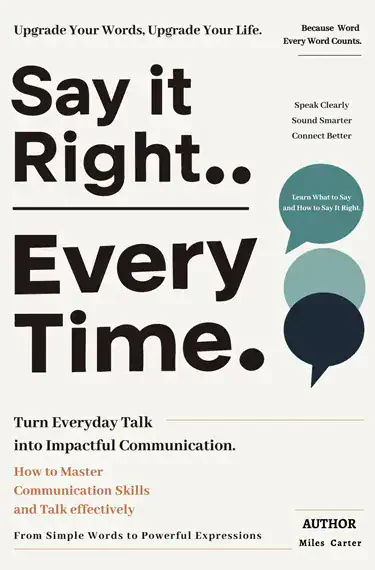
1. Say It Right Every Time by Miles Carter
Most communication advice tells you to “stay calm” or “be confident.” That is not helpful when your brain is already overloaded. Carter does something more useful. He gives you language patterns that work when your nerves are working against you.
The book is built around side-by-side comparisons of the same idea phrased two different ways. One version escalates tension. The other diffuses it. One version sounds defensive. The other sounds firm. The book covers job interviews, salary negotiations, and difficult conversations with colleagues or partners.
What makes this a book about emotional intelligence is the mental filter it teaches you to build before you speak. You learn to pause, choose your words, and say what you actually mean—not what your fight-or-flight reflex spits out.
What you will learn from ‘Say It Right Every Time’:
- How to speak clearly and confidently when you are nervous
- The difference between phrasing that escalates tension and phrasing that diffuses it
- How to build a quick mental filter before you speak
- Practical language patterns for interviews, negotiations, and difficult conversations
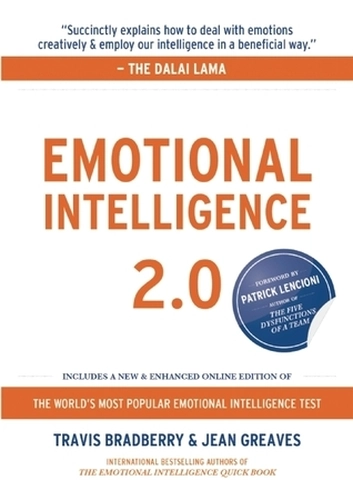
2. Emotional Intelligence 2.0 by Travis Bradberry and Jean Greaves
This book is built around one central idea: emotional intelligence is a skill, not a personality trait. And like any skill, it can be improved.
The authors break emotional intelligence down into four core competencies: self-awareness, self-management, social awareness, and relationship management. Each one is explained with clear examples and backed by research. The book includes access to an online EQ test so you can see where you stand before you start.
What sets this book apart is its practicality. It does not just describe the components of emotional intelligence. It gives you specific strategies for improving each one. How to recognize your emotional triggers. How to pause before reacting. How to read other people’s emotions more accurately. How to handle conflict without burning bridges.
What you will learn from ‘Emotional Intelligence 2.0’:
- The four core components of emotional intelligence
- How to recognize your emotional triggers
- Strategies for pausing before reacting
- How to read other people’s emotions more accurately
- How to handle conflict without damaging relationships
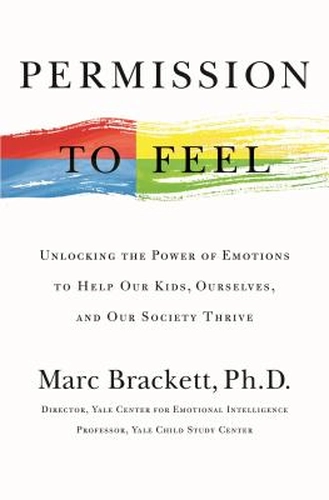
3. Permission to Feel by Marc Brackett
Brackett is a psychologist who spent decades studying emotions and how they affect learning, decision-making, and relationships. He developed the RULER framework—a practical system for understanding and managing emotions.
The framework stands for five steps: Recognize, Understand, Label, Express, and Regulate. Each step is explained with clear examples and exercises. You learn how to notice what you are feeling, why you are feeling it, and what to do about it.
What makes this book different from other EQ books is the emphasis on permission. Brackett argues that many of us were taught to suppress our emotions—to ignore them, push through them, or pretend they do not exist. He makes a case for letting yourself feel what you feel, and then using that awareness to make better decisions.
What you will learn from ‘Permission to Feel’:
- The RULER framework for understanding and managing emotions
- How to recognize and label emotions accurately
- Why suppressing emotions makes things worse
- How to express emotions constructively
- Strategies for regulating emotional responses
Frequently Asked Questions
What is the best book to start with if I have never read anything on emotional intelligence?
If you often freeze in high-pressure conversations, start with Say It Right Every Time. It gives you immediate tools you can use right away. If you want a broader framework, Emotional Intelligence 2.0 is a solid foundation. And if you want to go deeper into the psychology behind emotions, Permission to Feel is the one.
Can I read just one of these books and still get value?
Yes. Each book stands on its own. But they cover different aspects of emotional intelligence. Carter focuses on expression under pressure. Bradberry and Greaves give you the full framework. Brackett goes deeper into the psychology. The right one depends on where you are struggling most.
How long does it take to improve emotional intelligence?
You will notice improvements immediately after reading any of these books because you will start paying attention to things you previously ignored. But like any skill, it takes practice. The books give you frameworks. The more you practice, the more natural it becomes.
