Three Reads That Actually Change How You Talk
I still remember the argument. Not the fight itself, actually. The moment after, when I replayed what I said and heard how it sounded. Harsher than I meant. Vaguer than I wanted. That gap between intention and impact sent me looking for the best books about improving conversation skills. Not because I wanted to win arguments. Because I wanted fewer of them, and I wanted to stop leaving every difficult talk feeling like I had failed at being myself.
If you have ever hung up the phone and wished you could redo the last five minutes, this list is for you. I read these three books over about a year. Some parts felt like homework. Some parts changed how I talk at dinner, at work, and in hard moments I used to avoid.
Quick answer: Which conversation book should you read first?
If you want the widest practical range, start with Say It Right Every Time. If conflict is your problem, go with The Next Conversation. If social anxiety holds you back, start with How to Talk to Anyone About Anything.
Here are three books about improving conversation skills. One gives you side-by-side scripts for real situations. One teaches you to argue less and connect more. One builds confidence before it builds technique.
Why Is It So Hard to Say What You Actually Mean?
You know the feeling. You have a clear thought. You open your mouth. Out comes something that either lands too soft to matter or too sharp to ignore.
Part of it is habit. We repeat the phrases we grew up hearing, even the ones that never worked. Part of it is pressure. In the moment that matters most, our language gets sloppy or defensive.
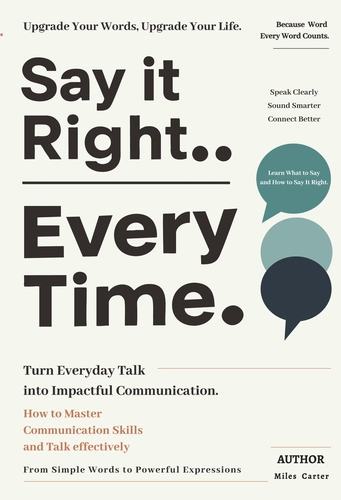
Miles Carter’s Say It Right Every Time starts from a simple idea. It is not what you say. It is how you say it. He lines up a blunt version next to a mature version so you can see the difference on the page.
| Basic | Mature |
|---|---|
| “You didn’t think of me.” | “That made me feel left out.” |
| “That’s not my job.” | “I can’t take that on this week. Here’s what I can do.” |
| “You never listen.” | “I feel unheard right now.” |
Same feeling. Completely different result. When I first read that pair, I felt a little embarrassed. I had said the first version hundreds of times.
What Makes These Books Different From Each Other?
Each book attacks a different part of the problem.
| Book | What it gives you | Best for |
|---|---|---|
| Say It Right Every Time | Side-by-side scripts for real situations | Anyone who knows what they mean but cannot get it out right |
| The Next Conversation | A calm, controlled approach to conflict | Anyone who escalates or avoids hard talks |
| How to Talk to Anyone About Anything | Confidence-building for social situations | Anyone who freezes at parties or networking events |
Say It Right Every Time
By Miles Carter
This is the one I reach for when I need actual words.
What makes it different: It is not theory. Every chapter puts a blunt version of a sentence next to a mature version. You see the difference instantly.
What you get:
- Scripts for everyday conversations, conflict, boundaries, and workplace situations
- How to say no without guilt
- How to pause before reacting. Carter calls it strategic pausing. Silence is a tool.
- How to handle rude comments without matching the tone
One key idea: Pause before reacting. That one change, just waiting three seconds, has saved me from more arguments than any clever phrase.
Best for: Anyone who wants a wide range of practical scripts they can use tomorrow.
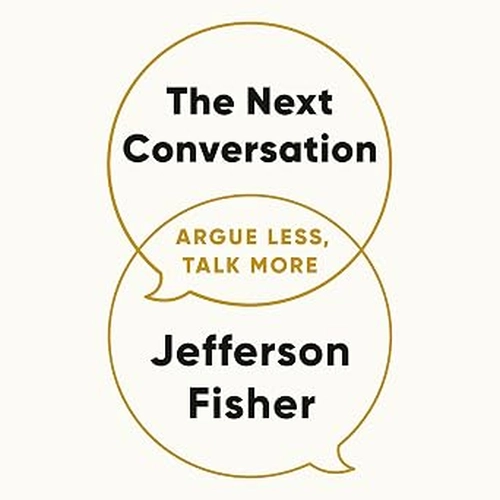
The Next Conversation
By Jefferson Fisher
This one comes from a trial lawyer. That background shows.
What makes it different: Fisher built a three-part system. Say it with control. Say it with confidence. Say it to connect. His point that you should never try to win an argument sounds soft until you try it.
What you get:
- A calm, structured approach to difficult conversations
- How to say what you need without escalating
- Why winning an argument ends the conversation, but connecting keeps it going
- Practical tools from years in the courtroom
One key idea: Never try to win an argument. Winning ends the conversation. Connecting keeps it going.
Best for: Anyone who tends to escalate or avoid hard talks.
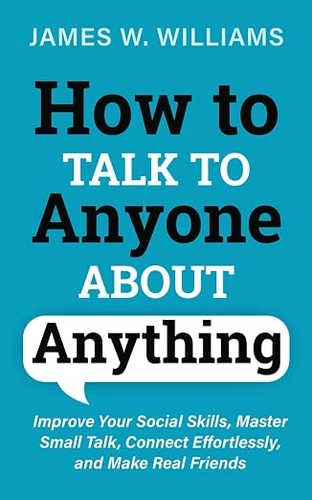
How to Talk to Anyone About Anything
By James W. Williams
This one is gentler.
What makes it different: It focuses on small talk, telling stories, and the quiet confidence that makes people want to keep talking to you. It builds confidence before it builds technique.
What you get:
- How to start and sustain conversations
- How to tell stories that hold attention
- How to feel more comfortable in social situations
- A gentle approach for anyone who freezes up
One key idea: Confidence comes first. Technique follows. If you feel comfortable, the words will come.
Best for: Anyone whose main struggle is social anxiety, not conflict.
The Three-Second Pause
Here is the one practice I took from all three books and actually kept.
Before responding to anything that stings, count to three in your head. That is it. No app, no journal, no complicated system. Just three seconds of silence between their words and yours.
Carter calls this strategic pausing. Fisher frames it as control. Williams describes it as the space where listening begins. Different names, same move.
I tried it first with my brother during a tense phone call about our parents. Normally I would have jumped in with a defense within half a second. This time I waited. He kept talking. And then he said the actual thing he was upset about, which had nothing to do with what I thought we were arguing about.
That pause did more than any script.
Final Thought
That argument I mentioned at the start? We talked again a few weeks later. I paused. I said less. The conversation was shorter and softer than the first one. It did not fix everything, and it was not supposed to. But I hung up without that familiar ache of wishing I had said it differently.
Sometimes that is the whole win.
Start with one book. Try one technique. See what happens.
References
Carter, M. Say It Right Every Time.
Fisher, J. The Next Conversation: Argue Less, Talk More.
Williams, J. W. How to Talk to Anyone About Anything.

