You have been in this situation before. Someone says they are fine, but you know they are not. You cannot point to a single thing they said wrong. You just feel it. Or the opposite: you trust someone immediately, and later find out you were completely wrong about them.
The ability to read people is not a superpower. It is a skill. And like any skill, it can be learned. The problem is that there are so many books on the subject that it is hard to know where to start. Some focus on body language. Some focus on psychology. Some focus on intuition. And some focus on something else entirely: how to make yourself more readable to others.
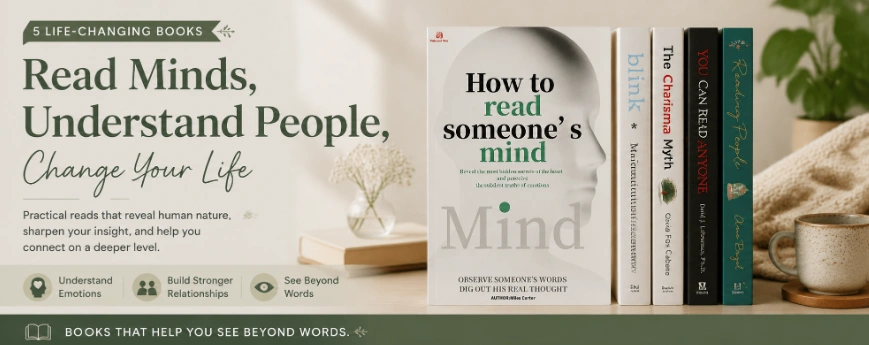
Here are five books that cover the full spectrum of reading people. Each one approaches the topic from a different angle. Together, they give you a complete picture of what it means to understand the people around you—and to be understood yourself.
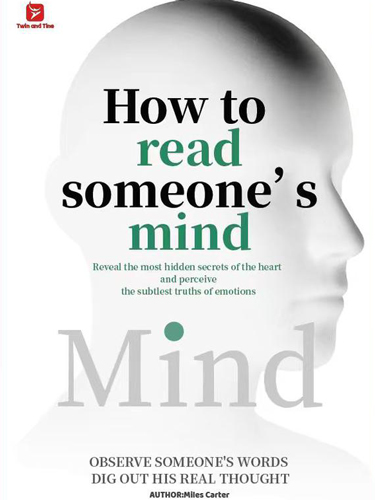
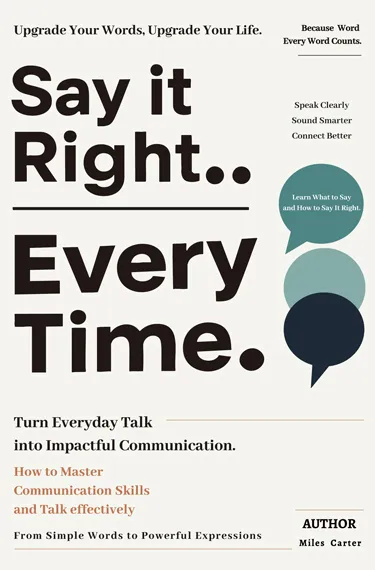
How to Read Someone’s Mind
Miles CarterPractical tools for reading body language, tone, and hidden intentions in real time. Spot what people aren’t saying — before you trust the wrong person.
1. How to Read Someone’s Mind by Miles Carter
I used to walk away from conversations replaying them in my head, trying to figure out what actually happened. Someone would say they were fine, but I knew they were not. I just could not explain why.
Carter gave me a framework for naming what I was already sensing. His approach is not about memorizing a list of gestures. It is about reading emotional signals in real time. He breaks it down into four layers: face, body, voice, and context.
The section on contempt hit me hard. Contempt is an emotion that does not shout or argue. It shows up as a flicker in the eyes, a slight pull at the corner of the mouth, a moment when the other person looks through you instead of at you. I started noticing this in conversations I had been having for years. Suddenly I understood why certain relationships felt off in ways I could never explain.
The book also teaches you to observe baseline behavior. People have patterns. When those patterns shift, something has shifted underneath. Instead of asking “is he lying?” I started asking “what is different about today compared to how he usually is?” That one question made me more relaxed in conversations. I stopped trying to decode every gesture and started paying attention to the whole person.
If you have ever walked away from a conversation feeling unsettled and could not explain why, this book will give you a way to name what you already know.
This is the foundation. Once you understand what people are feeling underneath their words, everything else falls into place.
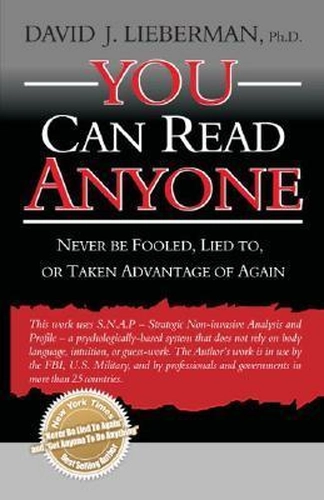
2. You Can Read Anyone by David J. Lieberman
Sometimes you do not need a deep emotional read. You just need to know one thing: can I trust this person?
Lieberman is a psychologist who specializes in reading people quickly and accurately. His book is built around specific, actionable techniques for assessing whether someone is being honest, whether they have good intentions, and whether they are likely to follow through on what they say.
The book is organized by real-life scenarios. How to read someone in a first meeting. How to read someone in a business negotiation. How to read someone when you are dating. How to read someone when you suspect they are hiding something. Each scenario comes with specific signals to look for and specific questions to ask.
What I appreciate about this book is that it does not rely on vague intuition. Lieberman gives you observable, verifiable patterns. Body language, speech patterns, emotional reactions. He shows you how to notice the gap between what someone says and what their behavior reveals.
If you need to make quick judgments about trustworthiness in professional or personal settings, this book gives you a reliable system.
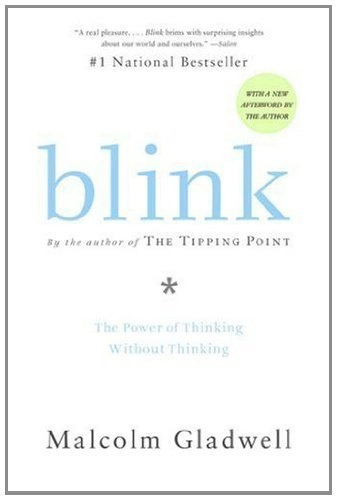
3. Blink by Malcolm Gladwell
Most reading-people books assume that careful analysis is the best approach. Gladwell argues the opposite. Sometimes, your brain makes better decisions in two seconds than it does after two hours of careful thought.
Blink is about thin-slicing—the ability to make quick, accurate judgments based on very limited information. Gladwell shows how experts in various fields can make split-second decisions that are more accurate than lengthy analysis. A museum director who spots a fake sculpture in seconds. A tennis coach who can predict a double-fault before the serve. A marriage expert who can predict divorce with 90% accuracy after watching a couple interact for just a few minutes.
But the book also covers when this instinct fails. When we are tired, stressed, or biased, our snap judgments can be dangerously wrong. Gladwell shows you how to distinguish between the two—when to trust your gut and when to slow down.
If you have ever had a strong first impression that turned out to be right, or wrong, and wondered why, this book explains the mechanics behind it.
4. The Charisma Myth by Olivia Fox Cabane
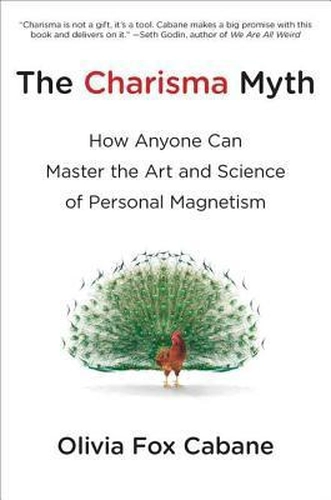
Most books about reading people focus on one direction: outward. You read them. This book flips the lens. It is about how to be read well by others.
Cabane argues that charisma is not a personality trait you are born with. It is a skill you can train. She breaks charisma down into three components: presence, power, and warmth. Presence is about being fully in the moment with the other person. Power is about having the ability to affect their world. Warmth is about making them feel understood and valued.
The book is full of practical exercises. How to project confidence through your body language. How to make eye contact without making it awkward. How to listen in a way that makes people feel truly heard. How to recover from awkward moments without losing your composure.
What I found most valuable is the emphasis on presence. Most of us are only half-present in conversations. We are thinking about what to say next, checking our phones, or mentally rehearsing our exit. Cabane shows you how to actually be there—and how that presence changes how people perceive you.
If you want to understand why some people seem naturally magnetic, and you want to become one of them, this book gives you a step-by-step plan.
5. Reading People by Anne Bogel
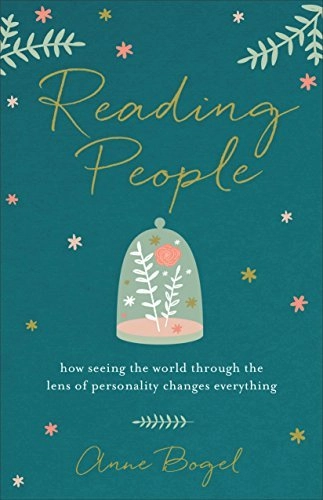
If the other books on this list are about reading emotions, intentions, and intuition, Bogel’s book is about reading personality. It uses nine popular personality frameworks to help you understand yourself and the people around you.
Bogel covers the Enneagram, Myers-Briggs, the Big Five, and several other systems. She does not argue for any one system over the others. She shows you what each one is useful for and how to apply them in real life. The goal is not to put people in boxes. It is to understand why people do what they do and how to communicate with them more effectively.
The book is written in a warm, accessible style. It feels less like a psychology textbook and more like a conversation with a friend who really understands people.
If you are drawn to personality frameworks and want a practical guide to using them in your daily life, this is a great starting point.
These five books cover the full spectrum of reading people. Carter gives you the emotional and psychological foundation. Lieberman gives you quick, reliable signals for trust and deception. Gladwell shows you when to trust your intuition and when to question it. Cabane flips the lens to help you be read well by others. Bogel gives you the personality frameworks to understand long-term patterns.
Read them all, and you will have a complete toolkit for understanding the people around you.