In 1951, psychologist Solomon Asch gathered college students for a simple test. Three lines. One clearly matched a reference line. The others obviously did not.
He asked the students to pick the correct match. But he had planted actors in the room who gave wrong answers on purpose.
About 75% of the real students went along with the wrong answer at least once. Not because they could not see the right answer. Because they did not want to stand out.
That experiment has stayed with me. Not because it is shocking, but because it is so recognizable. I have done it. You have done it. We all have.
The three books below approach this question from different angles. One helps you read individuals. One reveals how groups influence you. One shows how situations shape behavior.
How to Read Someone’s Mind by Miles Carter
The first layer of social psychology is the individual. You are in a room full of people. Some are comfortable, some are pretending. If you cannot read those signals, you are flying blind.
Carter gives you a four-layer framework—face, body, voice, and context—to understand what someone is actually feeling, not just what they are saying.
In Asch’s experiment, the real students were reading the room. They saw confidence in the actors’ voices. They saw certainty in their postures. They inferred that the group knew something they did not. And they went along with it.
Carter trains you to notice the discomfort beneath the confidence. Once you can see those micro-signals, you are much harder to manipulate.

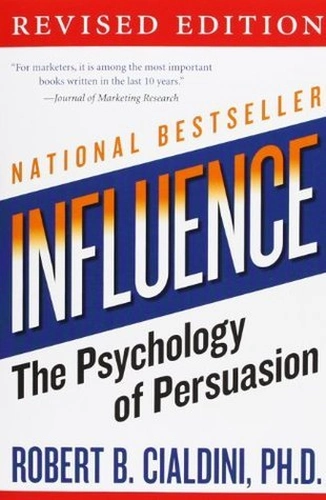
Influence by Robert Cialdini
The second layer is the group itself. What makes people go along with something even when they know it is wrong?
Cialdini identified six principles of influence. The one that explains Asch’s experiment is social proof—the tendency to look to others for guidance when you are uncertain. If everyone else says the wrong answer, you start to question yourself.
Cialdini shows how this works in real life—from infomercials to restaurants telling you what is “most popular.” He also shows you how to resist it. Once you understand the mechanism, you are harder to manipulate.
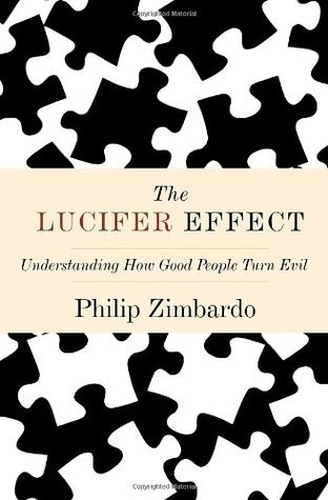
The Lucifer Effect by Philip Zimbardo
The third layer is the situation. Zimbardo is famous for the Stanford Prison Experiment. This book is his full account of how good people can do terrible things in the wrong environment.
He argues that we overemphasize personality and underemphasize situations. Most of us are capable of behaving in ways we would never predict, given the right circumstances.
Asch’s experiment was low-stakes and anonymous. Zimbardo shows how the same mechanism works in high-stakes situations with authority figures and pressure to conform. This is the hardest read of the three. But if you want to understand why people behave the way they do in extreme situations, this is the one.
These three books cover three levels of social psychology. Carter teaches you to read the individual. Cialdini teaches you to understand the group. Zimbardo teaches you to see the situation.
Asch’s experiment is a small window into a much bigger puzzle. Read all three, and you will never see a group the same way again.
