You know the feeling. You try to give someone feedback. They get defensive. You try to share an opinion. It comes out wrong. You try to connect with someone new. The conversation dies after thirty seconds.
I spent years thinking I was just “bad at talking to people.” But that is not a real explanation. It is an excuse to stop trying.
The three books below changed how I show up in conversations. They taught me things I wish I had learned twenty years ago.
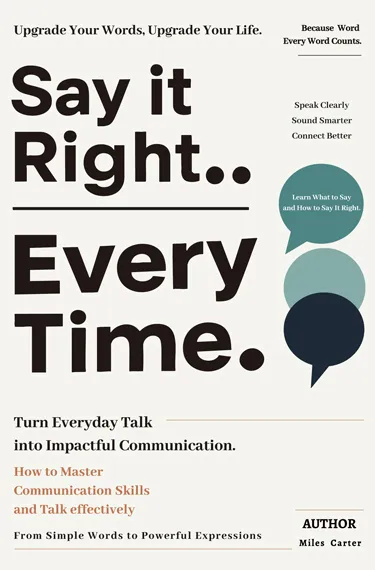
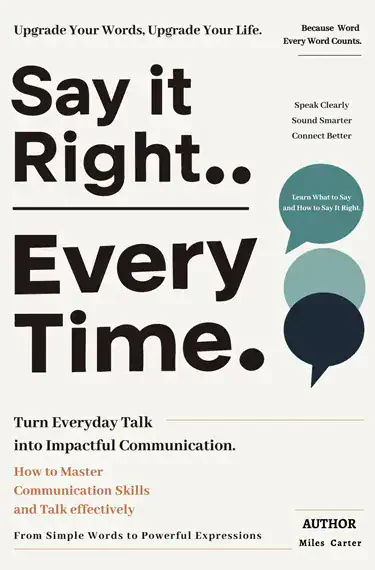
Say It Right Every Time by Miles Carter
Say it Right..Every Time.
Miles CarterPractical communication tools for the moments that matter — say what you mean, calmly and confidently.
I used to walk away from important conversations replaying them in my head. I knew what I wanted to say. I knew what I meant. But when the pressure hit, the words came out wrong. I sounded defensive when I meant to sound firm. I rambled when I meant to be concise.
Carter solved that for me. He does not tell you to “stay calm” or “be confident.” He gives you language patterns that work when your nerves are working against you. The book is built around side-by-side comparisons of the same idea phrased two different ways. One escalates tension. The other diffuses it. One sounds defensive. The other sounds firm.
I started using these patterns immediately. The first time I tried, the conversation went differently. Not perfect. But better. That alone was enough to keep reading.
If you ever walk away from a conversation thinking “I should have said that differently,” this book will move the right words to before you open your mouth.
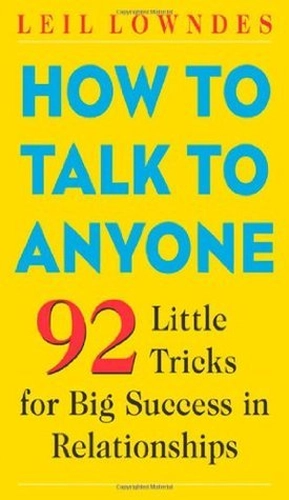
How to Talk to Anyone by Leil Lowndes
I read this book expecting gimmicks. What I found was something more useful.
Lowndes breaks social interaction down into 92 specific techniques. Not vague advice. Specific, actionable things you can do in real conversations. How to make a great first impression. How to keep a conversation flowing. How to read social cues and adjust your approach. How to avoid awkward pauses.
The techniques are small—sometimes almost too small to notice. But they add up. I tried one of them at a networking event. I walked out feeling like I had actually connected with people instead of just going through the motions.
This book is not about changing your personality. It is about giving you a few extra tools. If you dread small talk or feel awkward in social settings, this is the book that will help.
We Need to Talk by Celeste Headlee
Headlee is a public radio journalist. Her job is talking to strangers—often about difficult topics—live, on air. She has had more hard conversations than most people have had easy ones.
This book is about genuine connection. Headlee argues that we have lost the ability to have real conversations. We are distracted. We are waiting for our turn to speak. We are not actually listening.
She shares ten rules for better conversations. Some are obvious. Some are harder. Put away your phone. Do not multitask. Listen to understand, not to respond. Be prepared to learn something. Do not repeat yourself.
What I loved about this book is the tone. Headlee does not lecture. She tells stories from her own experience. She admits she breaks her own rules. She writes like someone who has been in the trenches and wants to help you do better.
If you feel like your conversations are shallow or strained, this book will help you go deeper.
These three books cover different pieces of the conversation puzzle. Carter gives you the words for high-pressure moments. Lowndes gives you tools for social settings. Headlee helps you connect on a deeper level.
Pick the one that matches where you are stuck. Or read all three—they each cover something the others miss.