Everyday conversations often involve more than exchanging information. You might meet someone new and struggle to move beyond small talk, lose your train of thought when explaining an idea, or find that a simple disagreement becomes uncomfortable because neither person knows how to respond.
Good conversation skills are not about being the funniest or most charismatic person in the room. They involve listening carefully, choosing words that fit the situation, showing genuine interest, and responding in ways that help the other person understand you. These abilities can be developed with practice, and books offer different ways to approach them.
The five books below cover practical communication techniques, listening, social confidence, and the conversations that shape everyday relationships.
1. How to Win Friends and Influence People by Dale Carnegie
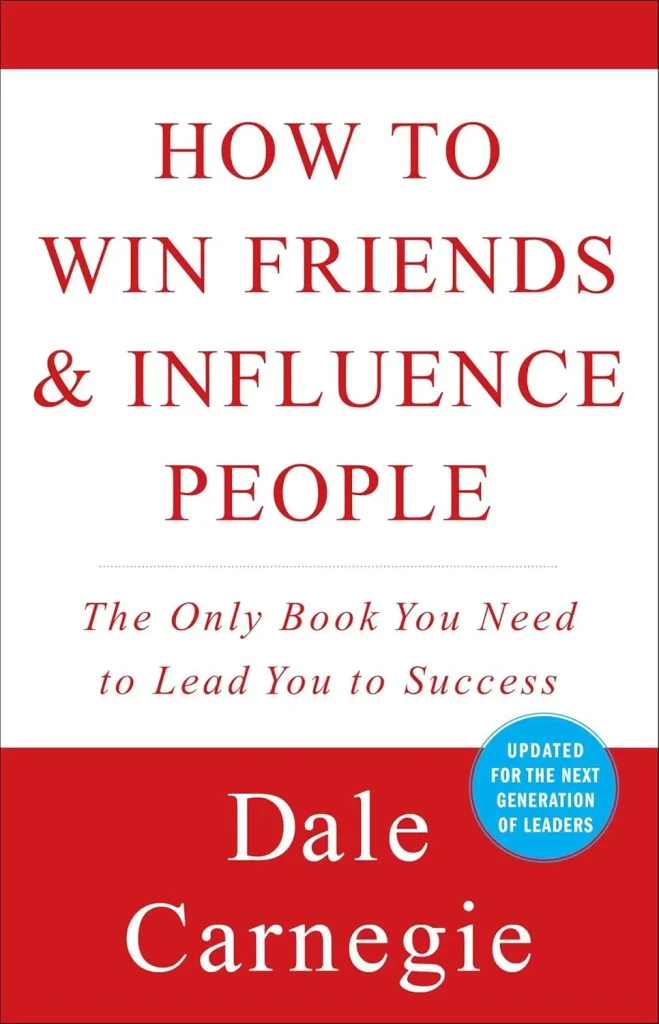
Best for: Building rapport and making everyday interactions more comfortable
A conversation can become strained when both people focus mainly on what they want to say. They may interrupt, rush to offer advice, or steer the discussion back to their own experiences without noticing that the other person has more to share.
How to Win Friends and Influence People explores interpersonal principles such as showing genuine interest, listening to others, and avoiding unnecessary criticism. Its advice encourages readers to consider how their words affect people rather than treating conversation as a performance.
These ideas can be applied in many settings, from meeting new colleagues to strengthening friendships. The book is particularly useful for readers who want to become more thoughtful and approachable in their interactions.
Some examples reflect the social conventions of the period in which the book was written, but its central emphasis on respect and genuine interest remains relevant.
2. Say It Right Every Time by Miles Carter
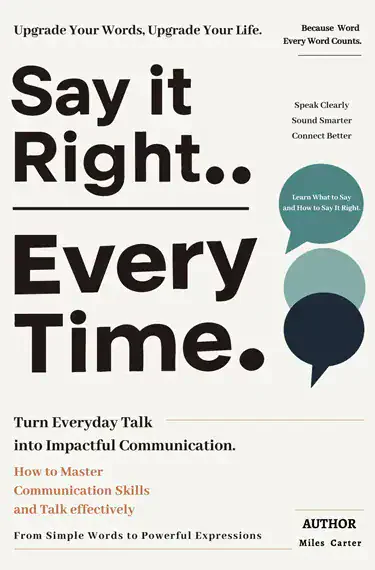
Best for: Finding the right words in real-life conversations
Have you ever finished a conversation and thought of a much better response ten minutes later? Perhaps you wanted to ask for help but made the request too indirectly, or tried to explain your feelings and ended up sounding more upset than you intended.
Say It Right Every Time by Miles Carter focuses on practical scripts and communication frameworks for situations people regularly encounter. Its 115 scripts and 15 communication frameworks address expressing needs, making clear requests, disagreeing respectfully, setting boundaries, and responding calmly under pressure.

Say it Right..Every Time.
Miles CarterPractical communication tools for the moments that matter — say what you mean, calmly and confidently.
The book is useful for readers who want to turn broad communication advice into words they can actually use. Rather than simply telling you to communicate better, it helps you think through how to phrase a request, explain a concern, or respond when someone misunderstands you.
For example, if a friend repeatedly cancels plans at the last minute, you could say, “I enjoy spending time with you, but it’s difficult to plan when arrangements change at the last minute. Can we confirm earlier next time?” This communicates the issue clearly without attacking the other person.
The book also covers people-pleasing and mature expression, making it relevant to readers who struggle to balance honesty with consideration.
3. Just Listen by Mark Goulston
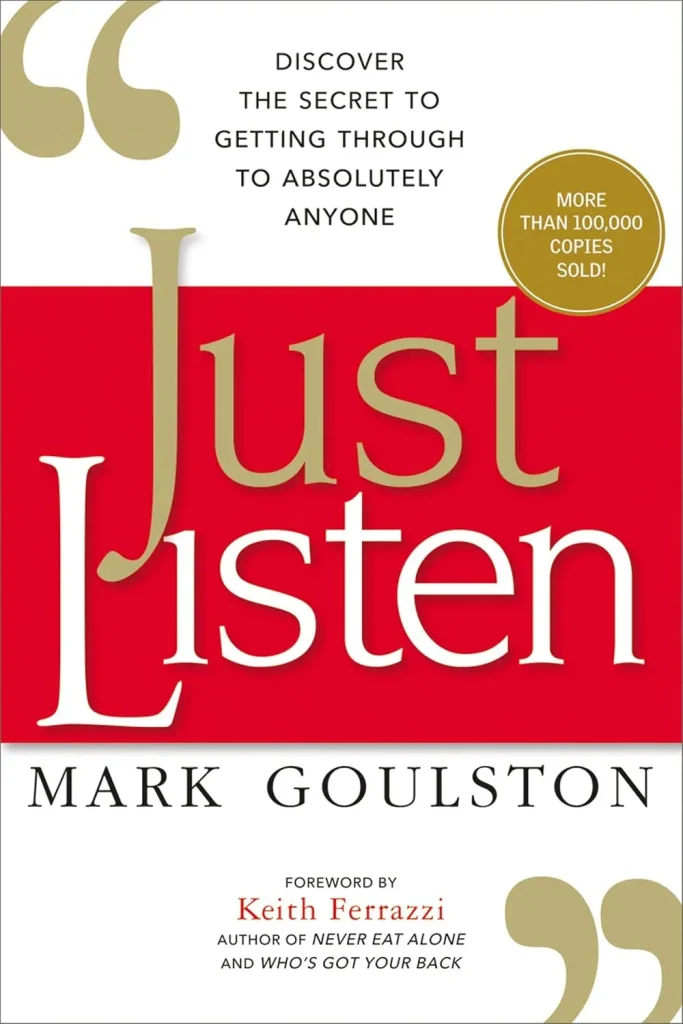
Best for: Listening when conversations become emotional
Not every conversation needs an immediate answer or solution. Sometimes someone is upset, frustrated, or worried, and offering advice too quickly makes them feel that you have not understood what they are trying to say.
In Just Listen, psychiatrist Mark Goulston explores ways to help people feel heard and become more receptive during difficult interactions. The book discusses how emotional reactions affect communication and how listening can help reduce defensiveness.
Its ideas can be useful in personal and professional relationships, especially when someone feels ignored or misunderstood. Instead of immediately defending yourself or explaining why the other person is wrong, you can first try to understand what matters most to them.
This is a good choice for readers who speak comfortably but find it difficult to listen without interrupting, correcting, or rushing to fix the problem.
4. The Fine Art of Small Talk by Debra Fine
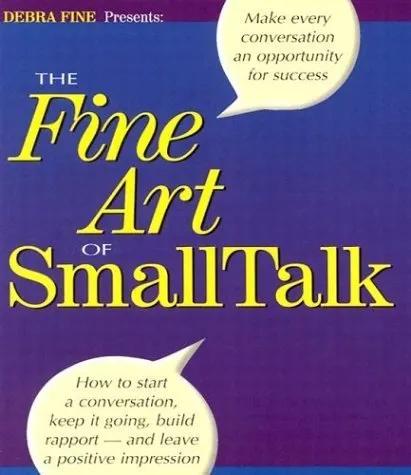
Best for: Starting conversations and avoiding awkward silences
Small talk can feel surprisingly difficult when you do not know someone well. At a work event, family gathering, or social meeting, you may want to connect but struggle to think of a natural opening. Questions can sound stiff, and the conversation may stop after a brief exchange.
The Fine Art of Small Talk offers practical guidance for starting conversations, asking questions, finding common ground, and keeping an interaction going. It helps readers approach casual conversation as a skill that can be practiced rather than a talent that some people simply have and others lack.
The book is particularly relevant for people who feel nervous in unfamiliar social settings or rely on the other person to carry the discussion.
You can start with something connected to the situation, ask a follow-up question, and share a little about your own experience. The aim is not to keep talking endlessly, but to create a comfortable exchange in which both people have room to participate.
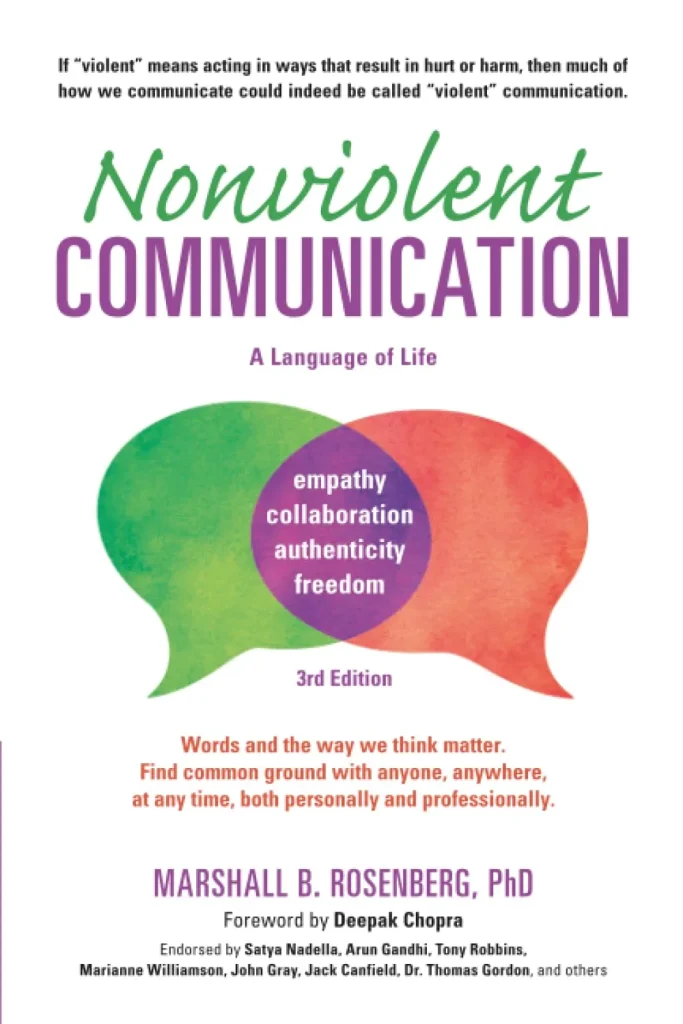
5. Nonviolent Communication by Marshall B. Rosenberg
Best for: Expressing feelings and needs without escalating conflict
Sometimes a conversation starts with a small frustration but quickly turns into an argument. “You never listen to me” may lead the other person to defend themselves, while the actual concern remains unresolved.
Nonviolent Communication introduces a framework for communicating through observations, feelings, needs, and requests. It encourages people to describe what happened without immediately assigning blame, recognize the emotions involved, and explain what they need from the interaction.
This approach can help readers express dissatisfaction more constructively and listen to the needs behind another person’s words. It is especially useful in close relationships, where recurring misunderstandings can build up over time.
The framework takes practice, and not every conversation will go smoothly. Still, it offers a clear way to move from accusations toward more specific and understandable communication.
Which Conversation Skill Should You Work on First?
You may not need to improve every aspect of conversation at once. Start with the situations that cause the most friction in your daily life.
- If starting conversations feels awkward: Begin with The Fine Art of Small Talk.
- If you want to build rapport: Try How to Win Friends and Influence People.
- If you struggle to find the right words: Consider Say It Right Every Time.
- If people feel unheard when talking to you: Explore Just Listen.
- If everyday discussions turn into arguments: Start with Nonviolent Communication.
As you read, choose one skill to practice in a real interaction. Ask a follow-up question instead of changing the subject, summarize what someone said before offering advice, or make one request more clearly than you usually would. Small adjustments can make conversations feel more natural over time.
Better Conversations Begin with Attention and Practice
Strong conversation skills do not require a perfect response to every question. They develop when you become more attentive to what others are saying, more aware of how your own words come across, and more willing to adjust when a conversation takes an unexpected turn.
These books offer different starting points, whether you want to feel more comfortable meeting people, listen with greater care, express yourself more clearly, or work through disagreements. Choose the approach that matches your everyday challenges, then practice it in the conversations you already have.
Did this article help you see things differently? Our books turn helpful ideas into practical tools you can return to anytime.



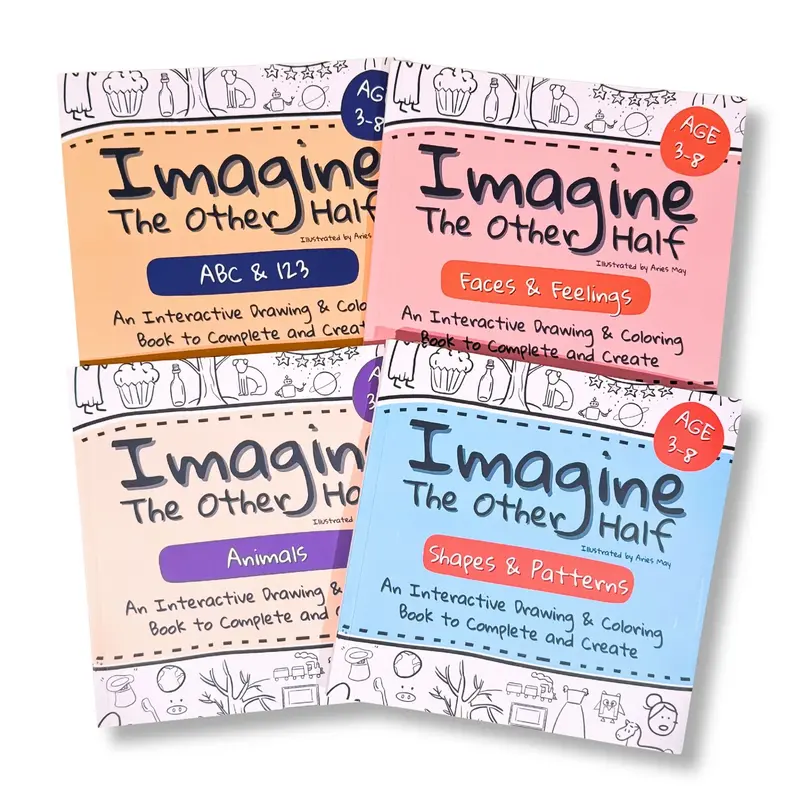
Imagine The Other Half
$24.99

