You know the type. They walk into a room and people naturally gravitate toward them. They make you feel heard, respected, and understood within minutes of meeting you. These people are not born that way. They have simply mastered a set of skills that most of us never learned.
Interpersonal skills are not just about being likable. They are about reading people, expressing yourself clearly, handling conflict without burning bridges, and building relationships that actually last. The five books below cover the full spectrum of these skills. Together, they give you everything you need to show up better in every interaction—with your boss, your partner, your colleagues, and everyone in between.
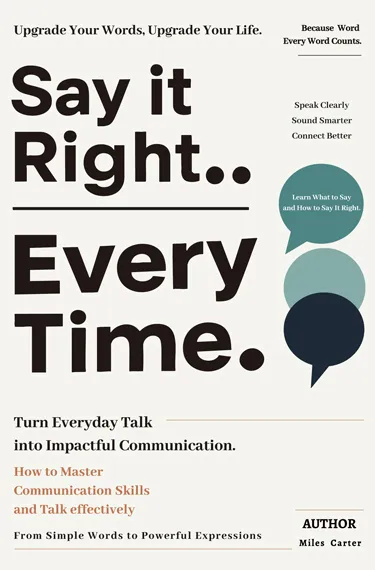
Say it Right..Every Time.
Miles CarterPractical communication tools for the moments that matter — say what you mean, calmly and confidently.
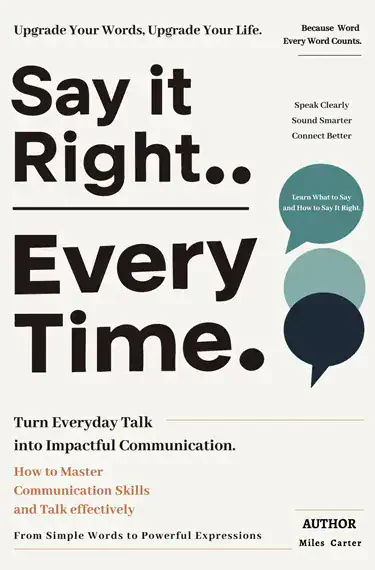
Say It Right Every Time by Miles Carter
Main focus: Speaking clearly and confidently in high-pressure moments
Target audience: Professionals in their late twenties to fifties who have good ideas but struggle to articulate them clearly under pressure
Book Overview:
You have the intelligence. You have the experience. You have the ideas. But when the pressure hits—a job interview, a salary negotiation, a difficult conversation with a colleague—your words come out wrong. You sound defensive when you meant to sound firm. You ramble when you meant to be concise. You walk away replaying the conversation, thinking “I should have said that differently.”
This is not a knowledge problem. It is a delivery problem. And it is the problem this book solves.
Carter gives you language patterns that work when your nerves are working against you. The book is built around side-by-side comparisons of the same idea phrased two different ways. One escalates tension. The other diffuses it. One sounds defensive. The other sounds firm. One puts the other person on the defensive. The other invites them into your perspective.
The book covers job interviews, salary negotiations, difficult conversations with partners or colleagues, and team meetings. It teaches you to build a quick mental filter before you speak, so you stop saying things that make situations worse. It does not ask you to change who you are. It asks you to change what you say.
Who Should Read This?
Anyone who has ever walked away from an important conversation thinking “I should have said that differently.” If you have good ideas but cannot access them under pressure, this book is your starting point.
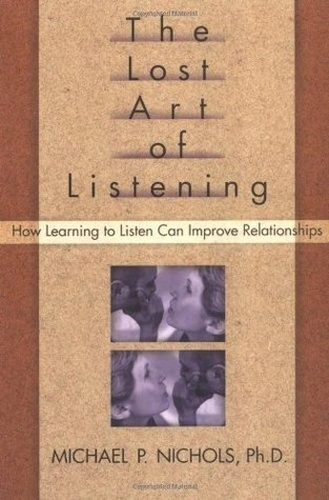
The Lost Art of Listening by Michael P. Nichols
Main focus: How to listen so people actually feel heard
Target audience: Anyone in relationships—professional or personal—where they feel like they keep having the same arguments without resolution
Book Overview:
Most of us think we are good listeners. We are not. We are waiting for our turn to speak. We are preparing our response while the other person is still talking. We are interpreting everything through our own lens and wondering when they will finally get to the point.
Nichols, a psychologist with decades of clinical experience, argues that listening is the most overlooked skill in human interaction. And it is the one that determines whether people feel understood or dismissed.
The book explores why listening is so hard: we are wired to protect ourselves, we are distracted, we are emotionally reactive, and we confuse listening with agreeing. Nichols gives you a framework for getting past these barriers. He shows you how to listen for what is underneath the words, not just the words themselves. How to stay present when the conversation gets uncomfortable. How to make the other person feel like they are genuinely being heard.
What I found most valuable is the chapter on “listening in close relationships.” Nichols explains why partners stop listening to each other—and how to repair that pattern. It is practical, honest, and uncomfortable in the best way.
Who Should Read This?
Anyone who keeps having the same arguments with a partner, colleague, or family member and cannot figure out why nothing changes. If people in your life keep saying “you are not listening,” this book will show you what you are missing.
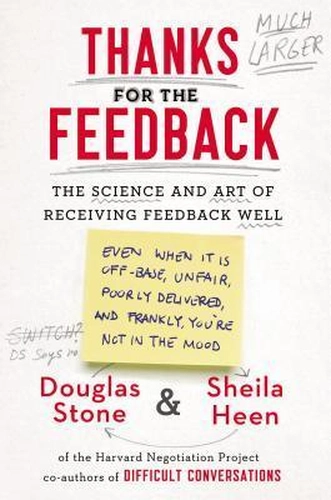
Thanks for the Feedback by Douglas Stone and Sheila Heen
Main focus: Receiving and giving feedback without getting defensive
Target audience: Anyone in a workplace or relationship where feedback is frequent but rarely constructive
Book Overview:
Feedback is essential. It is how we grow, improve, and align with others. But most of us are terrible at receiving it. We get defensive. We shut down. We dismiss the feedback, ignore it, or resent the person who gave it.
Stone and Heen, from the Harvard Negotiation Project, wrote this book to fix that. They argue that feedback does not fail because of the delivery. It fails because of the receiver. We react emotionally before we process logically. We interpret criticism as an attack on our identity. We defend ourselves before we understand what we are defending.
The book breaks down why feedback is so hard to take and gives you a framework for receiving it better. How to distinguish between three types of feedback (appreciation, coaching, evaluation) and respond appropriately to each. How to manage your emotional triggers. How to ask for feedback instead of waiting for it. How to give feedback without triggering defensive reactions in others.
This is not a book about being soft. It is a book about being effective. If you cannot handle feedback, you cannot grow.
Who Should Read This?
Anyone who gets defensive when receiving feedback—or anyone who gives feedback and watches it land poorly. If you have ever felt criticized and shut down, or watched someone shut down when you criticized them, this book will change how you handle both sides.
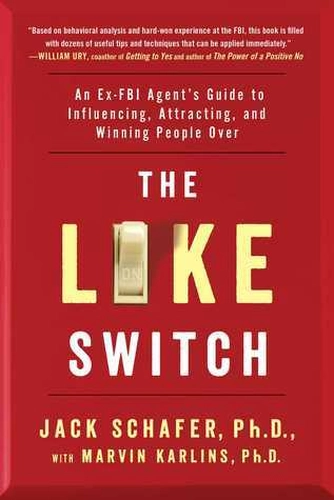
The Like Switch by Jack Schafer
Main focus: Building trust and rapport quickly in any setting
Target audience: Professionals who need to build relationships with new clients, colleagues, or contacts quickly
Book Overview:
Schafer is a former FBI agent who spent his career in recruitment and source development. His job was to make people trust him quickly and deeply—sometimes within minutes. The Like Switch distills that experience into a set of practical techniques anyone can use.
The book focuses on behavioral patterns that signal safety and trust. How to read someone’s willingness to connect. How to create a sense of rapport without forcing it. How to tell the difference between someone who is genuinely interested and someone who is performing interest. The title refers to a specific moment in a conversation where trust tips from neutral to positive. Once you recognize that moment, you stop wasting energy on connections that will never develop.
What I appreciate most is that Schafer does not teach manipulation. He teaches awareness. He shows you what people are signaling—and how to signal back. It is practical, grounded in real experience, and refreshingly free of fluff.
Who Should Read This?
Anyone who struggles to build rapport with new people—whether in networking, sales, leadership, or social settings. If you have ever left a first meeting unsure whether the other person was actually interested, this book will give you clarity.

Nonviolent Communication by Marshall Rosenberg
Main focus: Expressing needs and resolving conflict without blame
Target audience: Anyone in recurring conflict who wants to stop the cycle of blame and defensiveness
Book Overview:
Most of us are trained to judge first and understand second. Someone says something we do not like, and we immediately label them. “That was rude.” “They are selfish.” “They never listen.” The problem is, labels do not help you connect. They just make the other person defensive.
Rosenberg offers a different way. Instead of reacting with judgments, you learn to separate observation from evaluation. Observation is what happened. Evaluation is your story about what happened. Most conflicts come from treating evaluations as facts.
The book gives you a four-part model. State what you observe without judgment. State how you feel about it. State the need behind that feeling. Make a request—not a demand.
For example, instead of saying “You never help around the house,” you say “I noticed the dishes were left in the sink after dinner. I feel frustrated because I need some help with cleanup. Would you be willing to handle dishes tonight?” The second version is much harder to argue with. You are not accusing. You are sharing your experience and inviting a conversation.
This book is not about winning arguments. It is about being heard and hearing others in return.
Who Should Read This?
Anyone in close relationships who keeps having the same argument. Also useful for leaders and people in long-term teams where trust matters more than short-term wins.
The five books here cover five different interpersonal skills that most of us never learn. Carter gives you the words for high-pressure moments. Nichols teaches you to listen so people feel heard. Stone and Heen show you how to handle feedback without getting defensive. Schafer helps you build trust quickly. Rosenberg helps you resolve conflict without blame.
Pick the one that matches your biggest struggle. Then read the next when you are ready. Each one covers a different piece of the puzzle. Together, they give you a complete toolkit for every interaction.