You walk into a room full of people. Your stomach drops. You scan for a familiar face, find none, and spend the next twenty minutes pretending to check your phone.
I used to think I was just “not a social person.” That I was wired wrong. That some people had it and I did not.
But social confidence is not a personality trait. It is a skill. And skills can be learned. The three books below taught me that.
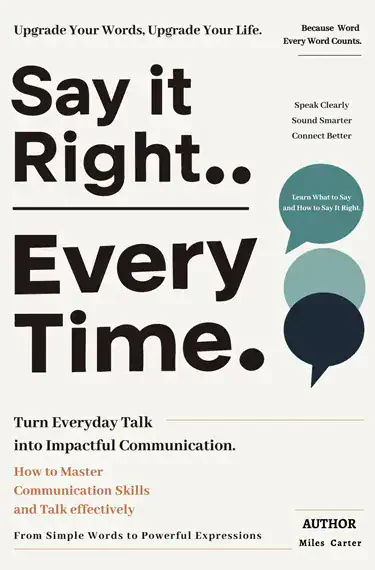
1. Say It Right Every Time by Miles Carter
You have something to say. The words are right there. But when you open your mouth, they come out wrong. Or they do not come out at all.
I spent years replaying conversations in my head, thinking “I should have said that differently.” Not because I lacked ideas. Because I could not get them out cleanly when it mattered.
Carter solved that for me. He does not tell you to “be confident.” He gives you language patterns that work when your nerves are working against you. Side-by-side comparisons of the same idea phrased two different ways. One escalates tension. The other diffuses it. One sounds defensive. The other sounds firm.
I used one of these patterns in a meeting the week after reading it. The conversation did not blow up. I did not freeze. It was not perfect, but it was better.
If you constantly replay conversations in your head, this book moves the right words to before you open your mouth.
What you will learn from ‘Say It Right Every Time’:
- How to speak clearly and confidently when you are nervous
- The difference between phrasing that escalates tension and phrasing that diffuses it
- How to build a quick mental filter before you speak
- Practical language patterns for interviews, negotiations, and difficult conversations
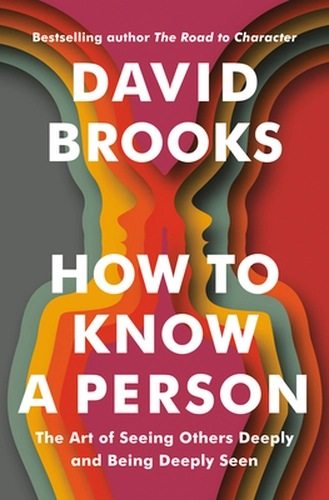
2. How to Know a Person by David Brooks
Some people walk into a room and make you feel instantly at ease. They ask the right questions. They listen. They see you. Brooks argues that this is not a gift. It is a practice.
Brooks is a New York Times columnist who has spent years thinking about what makes us human. This book is his distillation of that thinking—a guide to actually seeing the people around you, not just interacting with them.
The book is built around the idea that most of us walk around half-blind. We see surface-level behaviors and make quick judgments. We assume we know people when we have barely scratched the surface. Brooks shows you how to go deeper: how to ask better questions, how to listen without rushing to respond, how to create conditions for people to reveal themselves.
What I found useful is the emphasis on curiosity over cleverness. You do not need to be witty or charming. You need to be genuinely interested. Brooks gives you concrete techniques for showing that interest in ways that make people feel seen.
What you will learn from ‘How to Know a Person’:
- How to ask questions that invite people to open up
- How to listen beyond just the words
- How to create conditions for genuine connection
- Why curiosity is more important than charisma
- How to see people instead of just categorizing them
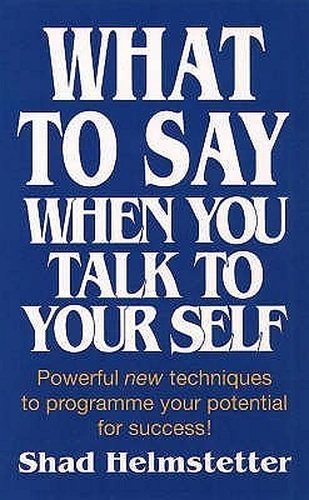
3. What to Say When You Talk to Yourself by Shad Helmstetter
Most confidence advice focuses on external skills: what to say, how to act, how to read people. But there is an internal layer that matters just as much—how you talk to yourself before you even enter the room.
Helmstetter wrote this book decades ago. It is still relevant. He argues that your internal dialogue shapes your external reality. If you walk into a room thinking “I am going to mess this up,” you will. If you walk in thinking “I have something to offer,” you will find it.
The book gives you a system for replacing negative self-talk with constructive internal scripts. It is not about pretending you are perfect. It is about telling yourself the truth in a way that helps, not harms.
I was skeptical of this one. It felt too simple. But I tried it. I started noticing how often I told myself “I am not good at this.” And I started catching it. That alone changed how I showed up.
What you will learn from ‘What to Say When You Talk to Yourself’:
- How to recognize negative self-talk patterns
- How to replace them with constructive internal scripts
- Why your inner voice shapes your external reality
- Practical exercises for rewiring your internal dialogue
- How to build confidence from the inside out
Frequently Asked Questions
What is the best book to start with if I have no confidence in social settings?
If you freeze in the moment and cannot find the right words, start with Carter. It gives you immediate tools you can use right away. If your main struggle is feeling like people do not see you, Brooks will help you reframe what confidence actually looks like. And if your own inner voice is the problem, Helmstetter gives you the reset.
Can I read just one of these books and still get value?
Yes. Each book stands on its own. They cover different layers of social confidence. Carter focuses on what to say in the moment. Brooks focuses on how to connect with others. Helmstetter focuses on your internal dialogue. The right one depends on where you are struggling most.
How long does it take to build social confidence?
You will notice improvements immediately after reading any of these books because you will start paying attention to things you previously ignored. But like any skill, it takes practice. The books give you frameworks. The more you practice, the more natural it becomes.
