You have probably had this experience. You walk away from a conversation feeling like you missed something important. Someone said they were fine, but you knew they were not. You trusted someone immediately and later found out you were completely wrong about them.
Most of us are guessing. We rely on intuition and vague feelings. No framework. No system.
The three books below changed that for me. One teaches you to read the person in front of you. One reveals the hidden patterns that drive behavior. One shows you how people influence others.
How to Read Someone’s Mind by Miles Carter
I used to replay conversations in my head, trying to figure out what actually happened. Someone would say they were fine, but I knew they were not. I could not explain why.
Carter gave me a framework. Not a list of gestures to memorize, but a way to read emotional signals in real time. He breaks it down into four layers: face, body, voice, and context.
The section on contempt changed how I see relationships. It does not shout or argue. It shows up as a flicker in the eyes, a slight pull at the corner of the mouth, a moment when the other person looks through you instead of at you. I started noticing this in relationships that had confused me for years. Suddenly I understood why they felt off.
The book also teaches you to read baseline behavior. People have patterns. When those patterns shift, something has shifted underneath.
If you often feel unsettled after conversations and cannot explain why, this book will give your perception a name.
This is perfect for anyone who feels like they are missing something in every conversation.

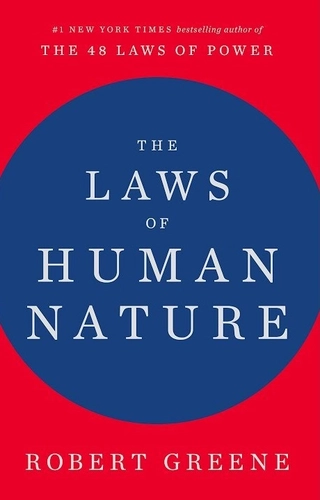
The Laws of Human Nature by Robert Greene
Greene is known for books about power and influence. This one is different—it is a broader exploration of human behavior.
The book is organized around eighteen laws of human nature. Each one explains a specific pattern: why people resist change, why they project their flaws onto others, why they crave attention, why they become irrational when threatened. Greene uses real historical figures to illustrate these patterns—Martin Luther King, Jr., Queen Elizabeth I, Howard Hughes.
The strength of this book is the depth of the examples. Greene does not give you quick tips. He gives you complete stories that stick.
The limitation is that Greene can be cynical. He assumes people are often driven by self-interest and envy. That is not wrong, but it is not the whole picture. Still, if you want to understand the darker currents of human behavior, this book is essential.
This is perfect for anyone who wants a deep, slightly cynical look at human nature.
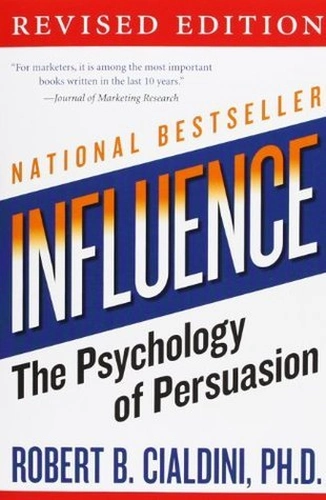
Influence by Robert Cialdini
This book changed how I see the world.
Cialdini spent years studying why people say yes. He identified six principles of influence: reciprocity, scarcity, authority, consistency, liking, and social proof.
After reading this, I started seeing them everywhere. The free sample that made me feel obligated. The email that said “only three left” that made me panic. The meeting where everyone nodded and I nodded too, even though I disagreed.
This book is not about manipulating others. It is about recognizing when you are being manipulated. Once you see the patterns, you have a choice—play along or refuse. At least you are not nodding blindly.
Cialdini writes with clarity and humor. The research is solid, but it never feels like a textbook.
This is perfect for anyone who wants to understand how they are being influenced and how to protect themselves.
These three books approach human behavior from different angles. Carter teaches you to read individuals. Greene gives you historical depth. Cialdini teaches you to resist manipulation. Start with the one that matches your biggest frustration.
