A slow reply gets read as a warning sign. A flat “okay” gets replayed for an hour. We have all gotten a little obsessed with decoding each other, probably because so much communication now happens without a face attached to it. I read three books that each tackle this from a different angle. If you only have time for one, skip the ones that teach a single skill and start with the one that covers the whole process.

How to Read Someone’s Mind
By Miles Carter
The feeling I got from this book is that it does not treat you like a student. It treats you like a partner, taking you directly into real situations and practicing with you.
The problem with many people-reading books is that they feel too much like biology class. “When a person touches their nose, they are lying.” You remember that. Then the next time you see someone touch their nose, you are about to conclude they are lying, only to realize they just have allergies. Carter avoids this rigid “signal dictionary” approach from the start. He cares about one thing: what is actually going on inside this person’s mind at this very moment?
The structure of the book is interesting. It does not divide chapters by body parts—feet, hands, head. Instead, it follows the sequence in which you naturally observe a person.
- The face – Eyebrows, eyes, lips. These areas react much faster than words.
- The body – Changes in posture, rhythm of gestures, physical distance between people.
- The voice – Not just what they say, but the speed, the pitch, the tension in it.
- Context – This is where many similar books stop short. The same physical signal can mean completely different things in different situations. How do you tell them apart?
The section on contempt also stayed with me. That emotion does not shout or argue, but its damage in relationships is greater than anger. Learn to spot it, and you get an early warning on where many relationships are heading.
The main takeaway from this book is that it does not try to make you memorize a hundred signals. It helps you build a habit of judgment. You do not need to memorize anything. You will naturally start noticing things you used to overlook.
If I had to recommend just one book on reading people, it would be this one.
It teaches observation and interpretation together. You do not have to read one book on “what to look for” and another on “what it means.”
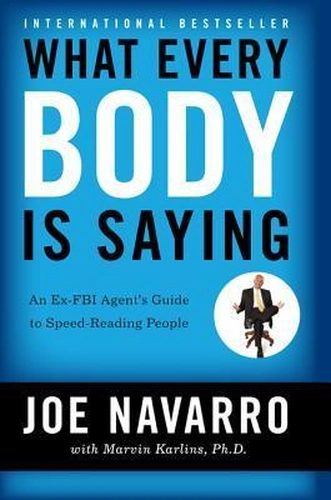
What Every BODY Is Saying
By Joe Navarro
A book written by a former FBI agent carries weight. Navarro’s career meant he trained longer and harder in observation than most people ever will.
This book reads more like a reference manual. Its method is straightforward: this gesture means that, that posture indicates something else. Foot direction, palm orientation, neck touching. He tells you what these usually correspond to, and every conclusion is backed by real cases he observed in interrogation rooms.
You will learn many specific facts:
- People under stress usually move their lower body first, not their upper body.
- Genuine comfort and fake comfort can be distinguished by how quickly the person returns to their resting state.
If you like learning concrete takeaways and having a clear “question-answer” reference, this book will satisfy you.
But it comes with a trade-off. It cares more about what you see than why the other person is doing it. It gives you a powerful telescope, but you have to draw the map yourself. It is an excellent textbook on observation, but it is not a complete course on reading people.
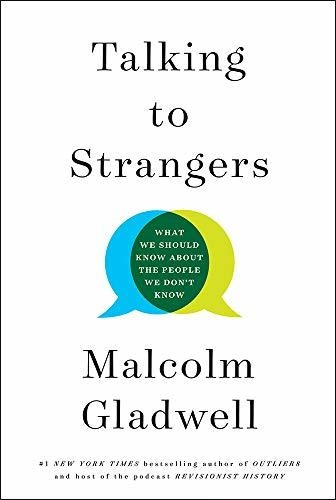
Talking to Strangers
By Malcolm Gladwell
This is a book that intentionally makes you uncomfortable.
Gladwell writes through stories. It reads smoothly. He uses real cases—from the Brexit vote to campus assault cases—to break down, layer by layer, why smart people make stupid mistakes when judging strangers.
His central argument is this: humans are wired to default to trust. Our brains assume “what the other person is saying is true” rather than “they might be deceiving me.” This factory setting works fine most of the time, but at critical moments, it makes us ignore warning signs that are already right in front of us.
You will not learn how to read people from this book. You will learn why you keep misreading them. It dismantles your overconfidence in intuition, making you pause the next time you think, “this person seems fine.” That extra moment of caution is valuable. But after finishing it, you might feel a little anxious. You know the problem now. But then what? Knowing is one thing. You still need the tools.
