A manager asks an employee to stay late for the third time that week. The employee wants to say no, but instead says, “I guess I can probably make it work.” A friend asks for another favor when the calendar is already full, and the same thing happens again. In both situations, the person knows what they want to say but struggles to say it without feeling guilty, harsh, or overly confrontational.
That is the space assertive communication tries to solve. It is not the same as being forceful, and it is not the same as saying whatever comes to mind. Assertiveness is about expressing an opinion, need, request, or boundary clearly while still leaving room for another person’s perspective.
The five books below approach that skill from slightly different directions, so they are useful for different communication problems.
1. The Assertiveness Workbook by Randy J. Paterson
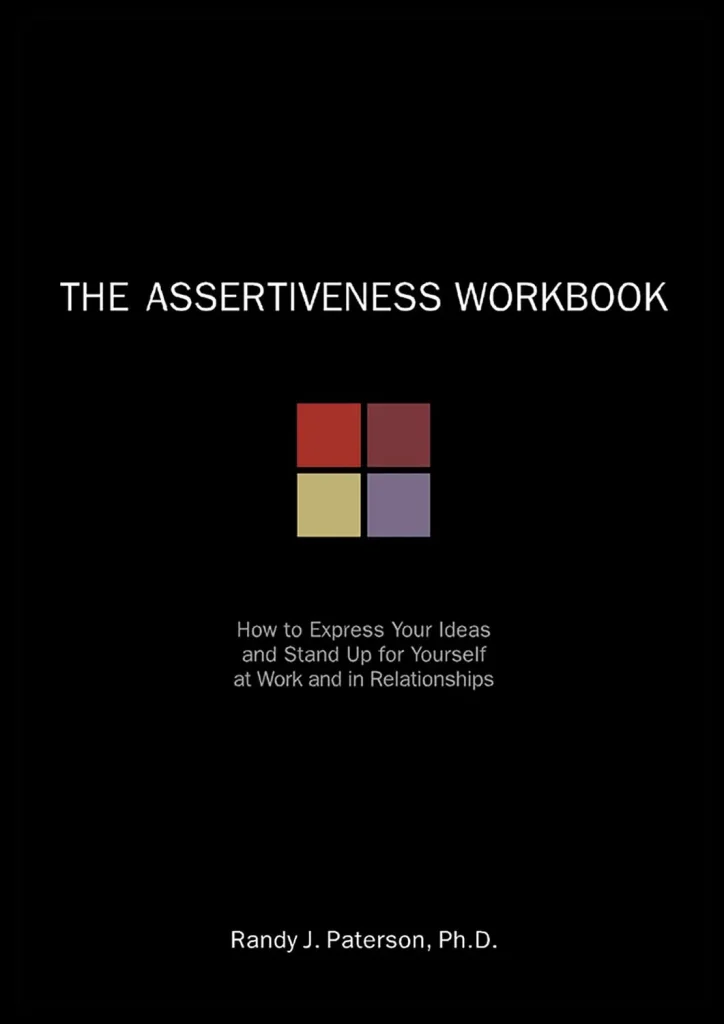
For a book focused specifically on assertiveness, The Assertiveness Workbook is an obvious place to start. Published by New Harbinger Publications, the second edition is written by psychologist Randy J. Paterson and is built around expressing ideas, standing up for yourself, handling boundaries, and becoming more comfortable with disagreement. The publisher says the book has sold more than 100,000 copies and uses skills grounded in cognitive behavioral therapy, along with practical exercises and mini-dialogues for difficult social situations.
This makes it particularly useful if your difficulty is not knowing what assertiveness means, but actually practicing it. The book deals with situations where people tend to bite their tongues, avoid confrontation, or struggle to express what they think.
2. Say It Right Every Time by Miles Carter

Say It Right Every Time focuses on the wording behind everyday assertive communication. It covers expressing honest opinions without alienating people, making respectful requests, setting boundaries with calm confidence, saying no without guilt, and disagreeing without creating unnecessary distance.
The book also goes beyond the classic “just be more assertive” advice by looking at what happens when pressure enters the conversation. Speaking confidently under pressure, responding to rude comments, handling unwanted advice, and staying grounded during difficult exchanges are all closely connected to assertive communication.
It is a useful fit for readers who want communication techniques they can apply in ordinary conversations rather than a purely theoretical discussion of assertiveness.

Say it Right..Every Time.
Miles CarterPractical communication tools for the moments that matter — say what you mean, calmly and confidently.
3. Set Boundaries, Find Peace by Nedra Glover Tawwab

Set Boundaries, Find Peace takes a more boundary-focused approach to assertiveness. Nedra Glover Tawwab, a licensed therapist and relationship expert, explains how to identify personal limits and communicate needs clearly in relationships, work, and family life. The publisher describes the book as being rooted in research and cognitive behavioral therapy practices, with a particular focus on expressing needs, saying no, and being assertive without offending others.
This is especially relevant when your lack of assertiveness is connected to people-pleasing. You may know that you need a boundary but feel guilty the moment you try to communicate it. In that situation, understanding the boundary itself can be just as important as finding the right wording.
4. Difficult Conversations by Douglas Stone, Bruce Patton, and Sheila Heen
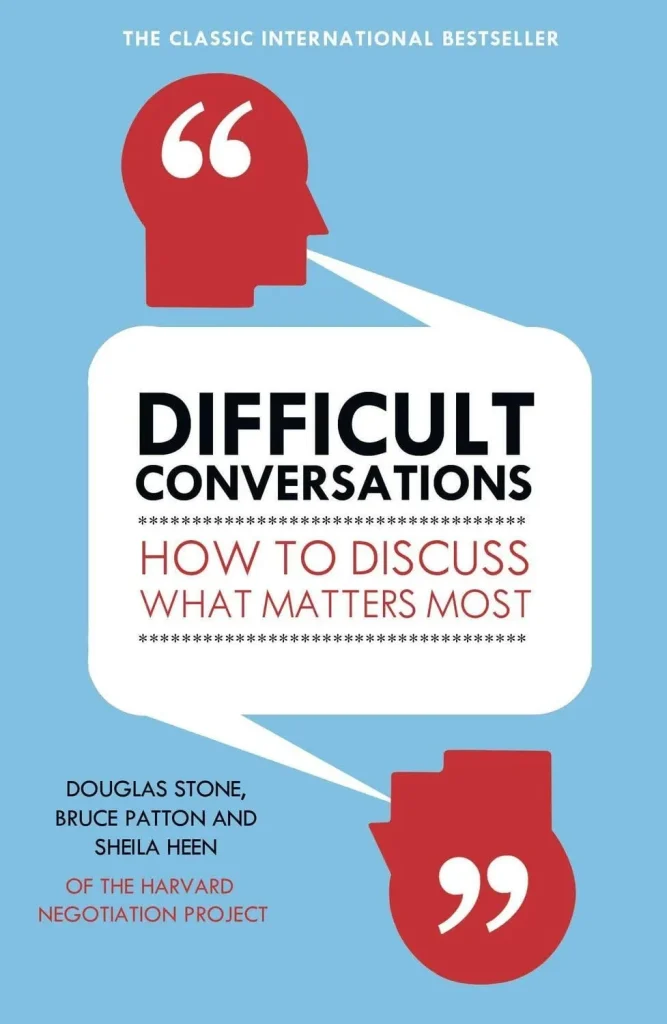
Difficult Conversations is broader than assertiveness alone, but it becomes highly relevant once the conversation involves disagreement, criticism, or strong emotions. The book comes from the Harvard Negotiation Project and is built around a structured approach to conversations that people often avoid or mishandle. Its publisher describes it as a practical guide for raising difficult issues without triggering unnecessary defensiveness.
For assertive communication, one of its most useful contributions is context. Speaking clearly is easier when you understand what kind of conversation you are actually having, rather than treating every disagreement as a simple question of who is right.
5. Nonviolent Communication by Marshall B. Rosenberg
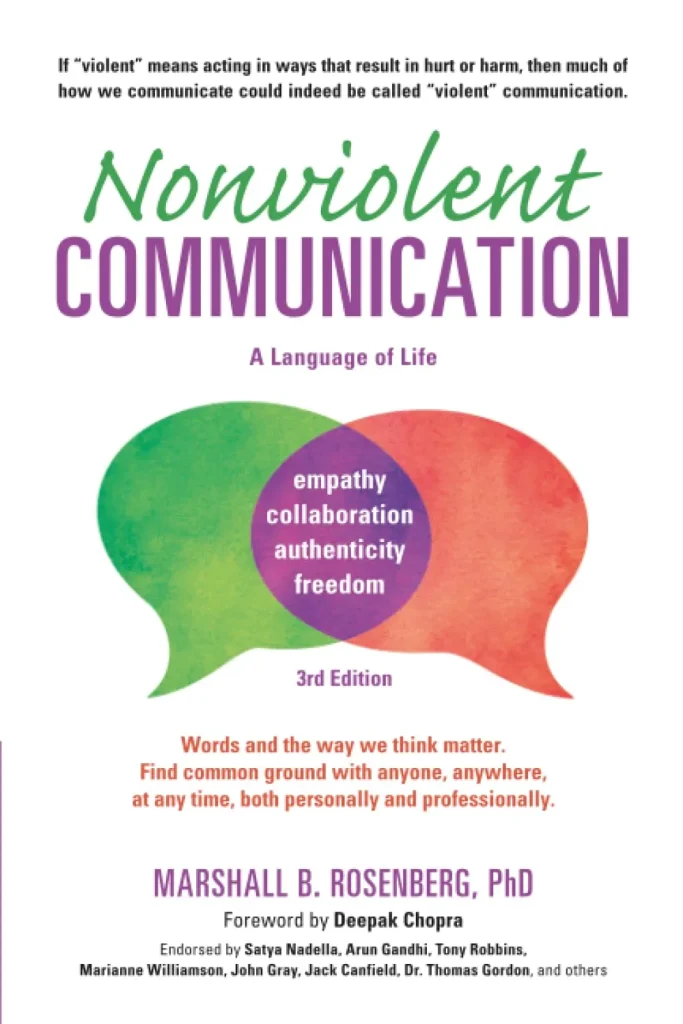
Nonviolent Communication: A Language of Life offers another way to think about being direct without becoming aggressive. Marshall B. Rosenberg’s framework centers on communicating observations, feelings, needs, and requests, giving readers a structure for discussing difficult subjects without relying on blame.
The book has been influential within the broader communication and conflict-resolution space; its publisher’s materials note that Rosenberg founded and directed educational work for the Center for Nonviolent Communication and that the book has sold more than one million copies worldwide.
For readers who often become accusatory when frustrated, this approach can be useful because it gives the conversation a different starting point: what happened, what you feel, what matters to you, and what you are asking for.
What Assertiveness Actually Sounds Like
A lot of communication advice stays at the level of labels. Be confident. Set boundaries. Speak up. Those ideas are useful, but they become much clearer when you translate them into ordinary sentences.
Instead of “You never listen to me,” you might say, “I’d like you to let me finish before you respond.” Instead of “I don’t care what you think,” you might say, “I understand your point, but I still disagree.” Instead of agreeing to something you cannot manage, you might say, “I can’t take that on this week.”
None of those responses requires a harder personality. They simply make the speaker’s position easier to understand.
Assertiveness Does Not Mean Saying Everything
Being more direct does not require explaining every thought you have. In fact, one reason people struggle with assertiveness is that they try to protect themselves from disagreement by adding too many explanations.
A clear request can stand on its own. The other person is allowed to dislike it, question it, or offer another option.
Your job is not to make sure everyone feels completely comfortable with your boundary before you are allowed to have one.
Which Kind of Assertiveness Do You Need?
The right book depends on where the difficulty begins. The Assertiveness Workbook is heavily focused on practicing assertive behavior, Say It Right Every Time concentrates on the actual wording used in everyday situations, Set Boundaries, Find Peace is especially relevant to limits and people-pleasing, Difficult Conversations provides a broader framework for high-friction conversations, and Nonviolent Communication offers a structured way to express needs without turning them into accusations.
Taken together, they show that assertiveness is not one communication trick. It is a group of related skills involving self-awareness, language, boundaries, listening, and the ability to remain clear when another person disagrees.
Did this article help you see things differently? Our books turn helpful ideas into practical tools you can return to anytime.




Imagine The Other Half
$24.99

