You finish work, get home, and finally have a quiet moment. Instead of relaxing, you start thinking about a comment your manager made earlier. Was it criticism? Did you miss something important? You replay the conversation, come up with different explanations, and check your messages to see whether anything else seems unusual. By the time you stop, you feel more anxious than you did when the thought first appeared.
This is what makes an anxiety loop so draining. The original concern may be small, but thinking about it creates new questions, and those questions give you more reasons to worry. You may even know that you are overthinking and still find it difficult to move your attention elsewhere.
Breaking this pattern starts with understanding what keeps it going. Instead of trying to force yourself to stop worrying, you can learn to recognize the habits that turn one uncomfortable thought into an entire evening of anxiety.

What Keeps You Stuck in an Anxiety Loop?
Anxiety loops often involve a familiar sequence: something makes you uncomfortable, you search for an explanation, and your mind keeps looking for certainty even after you have considered the available information. Because you cannot always know what another person thinks or what will happen next, the search for reassurance can continue indefinitely.
Several everyday habits can make this cycle harder to break.
- Replaying conversations: You keep reviewing what you said, looking for a mistake or a sign that someone misunderstood you.
- Preparing for every possible outcome: You imagine what could go wrong and mentally rehearse how you would handle each possibility, even when there is no immediate decision to make.
- Taking responsibility for other people’s feelings: If someone seems disappointed or distant, you assume you must have caused it and start figuring out how to make things right.
- Criticizing yourself for being anxious: You become frustrated that you cannot relax, then worry that your anxiety means something is wrong with you.
These habits can reinforce one another. For example, you might worry that a friend is upset, replay your last conversation, decide you must have said something wrong, and then criticize yourself for being too sensitive. What began as uncertainty about another person’s mood has become a much larger judgment about yourself.
Recognizing this pattern matters because the original problem and the anxiety surrounding it are not always the same thing. You may need to address a genuine misunderstanding, but you do not need to solve every imagined explanation your mind produces along the way.

How to Interrupt the Cycle Before It Takes Over
The aim is not to eliminate every anxious thought. It is to stop treating every thought as a problem that requires immediate attention.
1. Identify what you are actually worried about.
When your mind starts racing, put the concern into one plain sentence. Instead of thinking about everything that could go wrong at work, write down the specific question bothering you: “I’m worried that my manager was unhappy with my presentation.” Naming the concern makes it easier to distinguish what happened from what you fear it means.
2. Decide whether there is something useful to do.
Ask yourself whether the situation requires action. If you need to clarify a misunderstanding, send a message or arrange a conversation. If you are worried about an upcoming task, identify the next practical step. But if you have already done what you reasonably can, repeatedly reviewing the situation may not give you any new information.
3. Stop demanding complete certainty.
Some questions do not have immediate answers. You may not know why someone replied briefly, whether a decision will work out, or exactly how another person interpreted your words. Trying to eliminate all uncertainty can keep you trapped in the very worry you want to escape. Sometimes the more useful response is to acknowledge that you do not know yet and return to what you can control.
4. Notice when the worry turns into self-criticism.
Anxiety can become more persistent when you blame yourself for having it. You might tell yourself that you should be more confident or that you always make things difficult. Instead, describe the situation without turning it into a judgment about your character. You can acknowledge that you feel anxious without treating the feeling as proof that you have failed.
These steps take practice, particularly when overthinking has become your usual response to uncertainty. The goal is to build a different response gradually, rather than expecting yourself to switch off a familiar habit overnight.
When You Need to Understand the Pattern More Deeply
Sometimes, anxiety keeps returning because it is connected to habits that extend beyond one stressful event. You may find it difficult to trust your judgment, feel responsible for keeping everyone happy, or struggle to forgive yourself after a mistake. Even when one concern disappears, another takes its place because the underlying response remains unchanged.
This is where a book can offer a useful perspective. Rather than focusing only on the worry you are experiencing today, you can explore how overthinking, self-worth, emotional reactions, and everyday behavior may be connected.
Break the Anxiety Circle by Miles Carter addresses these related struggles, including rumination, sensitivity, self-forgiveness, letting go of the past, and setting boundaries. Its focus is relevant to readers who find themselves repeatedly caught between worrying about other people, questioning their own reactions, and trying to think their way toward feeling safe.
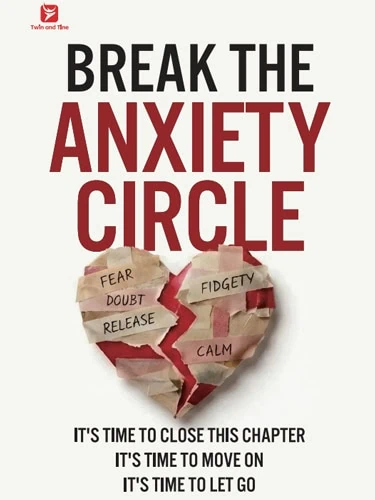
For instance, if you become anxious whenever someone seems unhappy with you, the problem may involve more than uncertainty about that person’s mood. You may also be placing too much weight on other people’s approval or assuming that you are responsible for fixing every uncomfortable interaction. Exploring self-worth and boundaries can help you examine why those situations affect you so strongly.
The book also addresses the tendency to revisit past events. This matters because an anxiety loop is not always about what might happen tomorrow; it can also involve repeatedly reviewing what happened yesterday and imagining how you could have prevented it.

Break the Anxiety Circle
Miles CarterA mental reset for people trapped in the overthinking loop. Understand why your mind won’t stop racing — and how to break free from anxiety, people-pleasing, and emotional exhaustion.
How to Tell Whether You Are Making Progress
Progress does not necessarily mean that anxious thoughts disappear. A more realistic sign of change is noticing that you respond to them differently.
You might catch yourself replaying a conversation and move on sooner than you would have before. You might feel uncertain about a work decision without spending the entire evening imagining the consequences. Or you might realize that another person’s disappointment does not automatically mean you have done something wrong.
Pay attention to how much time you spend worrying, how often you seek reassurance, and whether you can return to your normal activities after a stressful moment. These small changes can be more meaningful than expecting yourself to feel completely calm in every situation.
If anxiety is persistent, significantly disrupts sleep or daily life, or feels impossible to manage on your own, consider speaking with a qualified mental health professional. Reading and self-reflection can support your efforts, but they do not have to be your only source of help.
If you want to understand the recurring patterns behind overthinking, emotional reactions, and self-criticism, Break the Anxiety Circle is a relevant place to start. The first step toward breaking the loop is not forcing yourself to stop thinking. It is learning to recognize when thinking is helping you solve a problem and when it is simply keeping the same worry alive.
If you found this helpful, these books go deeper into the same themes.



Break the Anxiety Circle
$19.90

From Debt to Wealth
$19.90

