Good conversations rarely happen by accident. They depend on a combination of listening, clear expression, timing, emotional awareness, and the ability to respond to what another person is actually saying. Even people who are naturally outgoing can struggle when a conversation becomes awkward, emotionally charged, or difficult to follow.
Conversation is also a skill that can improve with practice. Someone who once found it difficult to keep a discussion going can learn to ask better questions, explain ideas more clearly, and become more comfortable when conversations take an unexpected direction.
This is why readers often turn to books on conversation skills. The best books do more than tell people to “communicate better.” They explain specific habits and behaviors that can make conversations easier, more natural, and more productive.
Here are three books worth exploring if you want to become a more capable conversationalist.
Say It Right Every Time by Miles Carter
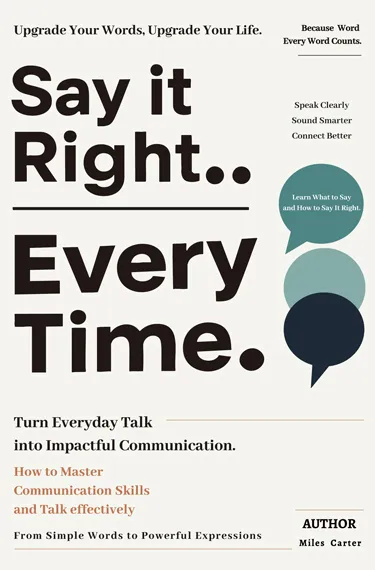
Say it Right..Every Time.
Miles CarterPractical communication tools for the moments that matter — say what you mean, calmly and confidently.
Best for improving everyday expression and communication habits
A conversation can become difficult even when both people have good intentions. Sometimes the problem is simply that an idea is not expressed clearly enough, an important point gets lost, or the speaker does not realize how their wording may be interpreted by the other person.
Say It Right Every Time by Miles Carter focuses on the everyday communication habits that influence these situations. Rather than treating conversation as something people either naturally know how to do or do not, the book encourages readers to become more intentional about the words they choose and the way they express themselves.
The book explores how readers can become more aware of:
- How they phrase their ideas
- How their words may be interpreted
- How they respond during conversations
- How everyday habits influence communication
This makes the book particularly useful for people who want practical improvements rather than abstract communication theory. For anyone exploring books on conversation skills, it offers a straightforward starting point for developing clearer and more thoughtful interactions.
Supercommunicators by Charles Duhigg
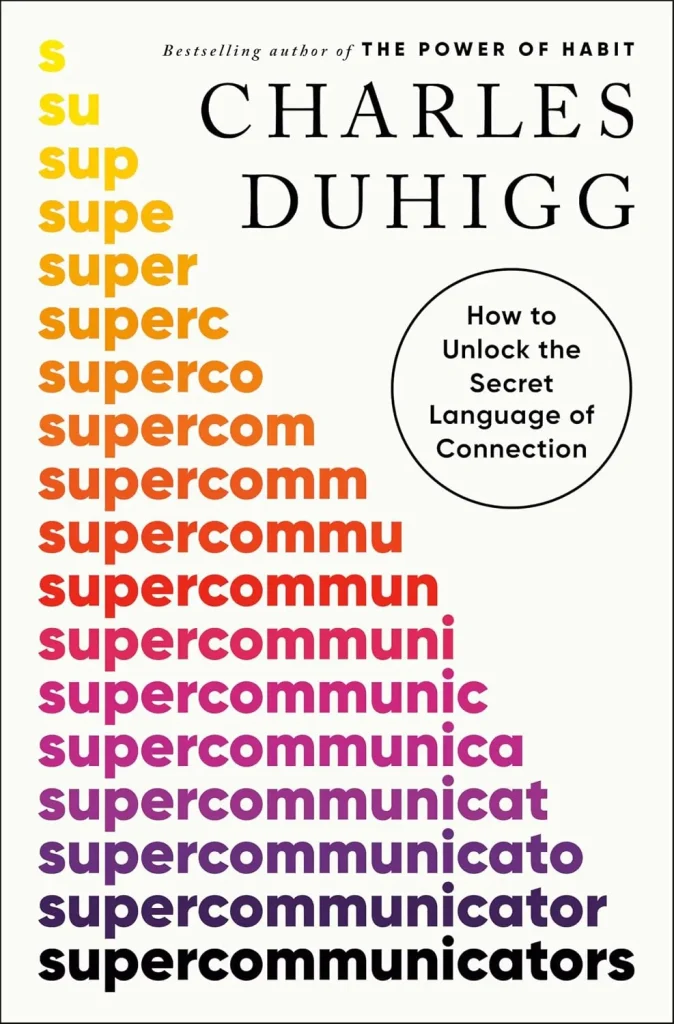
Best for understanding why conversations sometimes go wrong
Two people can be talking about the same subject while actually having very different conversations. One person may want advice, while the other wants emotional support; one may focus on facts while the other is focused on the relationship itself.
Supercommunicators explores different types of conversations and the ways people can recognize what is really happening during an interaction. The book looks at listening, asking questions, and adapting to the kind of conversation taking place.
For readers who want to understand why certain interactions feel easy while others quickly become confusing or frustrating, this book provides a useful framework. It is especially interesting for people who want to become more observant during conversations rather than relying on instinct alone.
How to Talk to Anyone by Leil Lowndes
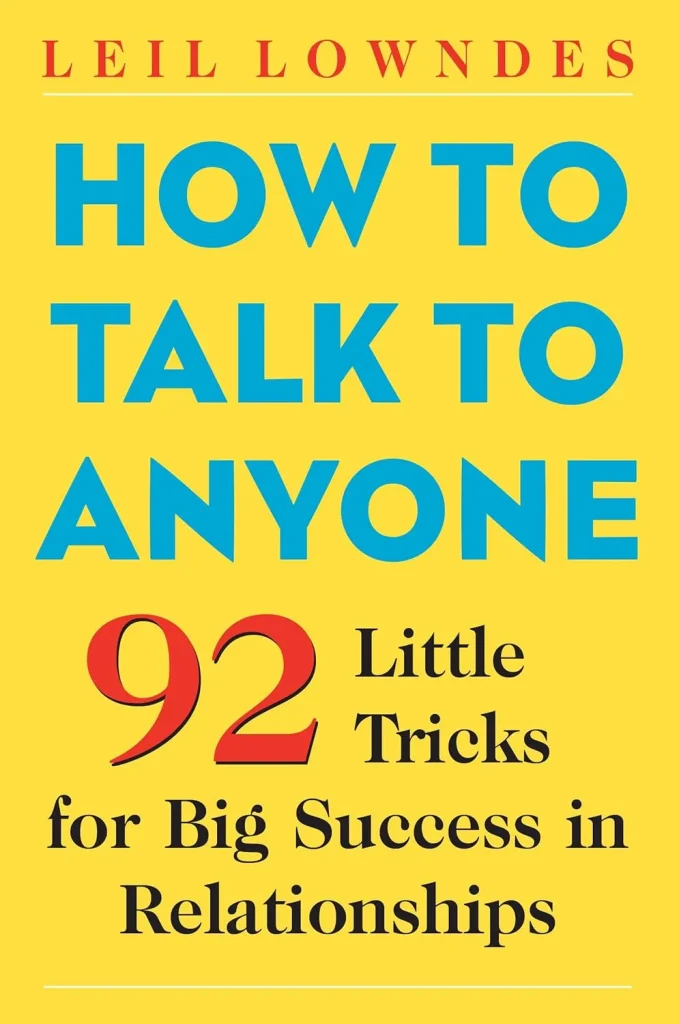
Best for building confidence in social situations
Not everyone struggles with conversation in the same way. Some people have trouble starting a discussion, while others become uncomfortable when they need to keep it going or connect with someone they do not know well.
How to Talk to Anyone focuses on practical social techniques that can help people feel more comfortable when interacting with others. It covers areas such as starting conversations, creating rapport, and making social interactions feel more natural.
The book is particularly useful for readers who want concrete ideas rather than a purely theoretical discussion of communication. Its practical approach makes it an approachable choice for people who want to experiment with new conversational habits.
What Makes a Good Conversation?
A good conversation is not necessarily one in which one person speaks particularly well. Often, the strongest interactions are balanced exchanges where both people have enough space to express themselves, ask questions, and respond to what the other person has actually said.
Listening is therefore just as important as speaking. Someone may have excellent vocabulary and still struggle socially if they interrupt frequently, ignore emotional cues, or focus too heavily on preparing their own response.
Conversation Skills Go Beyond Small Talk
Small talk is only one part of conversational ability. Being able to move naturally from casual topics into more meaningful discussions is another important skill, especially when building friendships or developing closer relationships.
This requires curiosity and flexibility. Instead of trying to control every part of a discussion, effective conversationalists pay attention to what interests the other person and allow the conversation to develop naturally.
Practice Makes Conversation Feel More Natural
Reading about conversation can give you useful ideas, but the real improvement comes from using them. A reader might learn about better questions, clearer explanations, or more attentive listening, but those skills only become natural after being practiced in real interactions.
It can help to focus on one habit at a time. For example, you might spend a week paying more attention to follow-up questions, then focus on listening without interrupting, and later work on expressing your own ideas more concisely.
Why Say It Right Every Time Is Worth Reading
Many books on conversation skills focus heavily on social confidence, psychology, or specific conversation situations. Say It Right Every Time by Miles Carter takes a broader approach by focusing on the everyday communication choices that shape interactions.
The book encourages readers to become more intentional about expression and more aware of how their words influence conversations. That makes it relevant not only to social situations, but also to conversations with family members, friends, coworkers, and other people in daily life.
For readers looking for books on conversation skills, Say It Right Every Time offers a practical perspective on developing clearer expression, more thoughtful responses, and stronger everyday communication habits.