The third reminder of the evening comes out louder than the first two. Your child has ignored the request to put away their toys, argued about turning off the tablet, and now refuses to start homework. You hear yourself raising your voice, then see your child either shout back or go quiet. Once the argument is over, you are left wondering how an ordinary request turned into another battle.
Repeated behavior problems can wear down even patient parents. It is tempting to respond more firmly each time a child ignores a rule, but when reminders turn into lectures and lectures turn into yelling, the original lesson often gets lost. Children still need clear limits and accountability; they also need help learning how to manage frustration, follow expectations, and repair mistakes. The books below offer different ways to approach discipline, from understanding what drives behavior to changing how you respond in the heat of the moment.
1. No-Drama Discipline by Daniel J. Siegel and Tina Payne Bryson
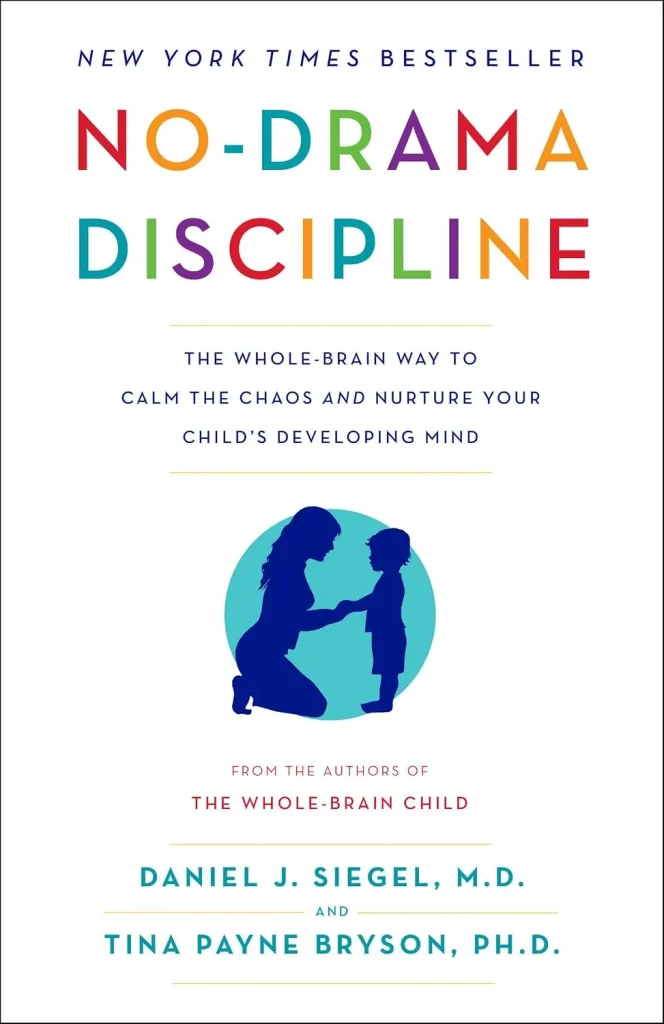
A child who is melting down over a small disappointment may not be ready to listen to a long explanation about better choices. If a parent responds with more anger, the situation can quickly become a contest over who will back down first. No-Drama Discipline explores how understanding children’s developing brains can help parents respond to misbehavior without turning every incident into a confrontation.
Siegel and Bryson distinguish between reacting to a child’s behavior and using the moment to teach. Their approach encourages parents to connect with a child emotionally before addressing the lesson, while still maintaining appropriate boundaries. This does not mean ignoring hurtful actions or allowing children to do whatever they want. It means recognizing that children often need help calming down before they can reflect on what happened.
The book is useful for parents who find themselves repeating the same warnings without seeing lasting improvement. Instead of focusing only on the consequence, it encourages a closer look at what the child needs to learn and how a parent can guide that learning. Over time, discipline can become less about winning an argument and more about helping children develop better responses.
Best for: Parents who want to reduce power struggles and turn difficult moments into opportunities to teach self-control and responsibility.
2. The Parent You Aspire to Be by Miles Carter

Your child refuses to do homework, snaps at you when asked to put away a phone, or insists that a rule is unfair. You explain the same expectation again, but the conversation gets louder and neither of you seems to be getting anywhere. In these moments, parents need more than a reminder to stay calm; they need practical ways to respond to specific behaviors while keeping their expectations clear.
The Parent You Aspire to Be by Miles Carter addresses common parenting challenges involving behavior correction, emotional management, parent-child communication, and parental self-regulation. It explores situations such as procrastination, lying, rude language, picky eating, screen overuse, school-related resistance, and emotional outbursts. The book focuses on the difference between approaches that intensify conflict and responses that help children understand expectations and take more responsibility.
A central part of effective discipline is knowing what to say and what to do when a child pushes back. The book combines explanations of unhelpful responses with alternative wording and practical steps, giving parents a more concrete starting point for everyday situations. It also addresses the parent’s role in managing frustration, which matters when repeated misbehavior makes it harder to respond consistently.

The Parent You Aspire to Be
Miles CarterPractical guidance for tantrums, backtalk, lying, screen addiction, emotional outbursts, and everyday parenting struggles.
Rather than expecting parents to handle every situation perfectly, this approach offers ways to correct behavior while maintaining connection. Firm limits and respectful communication can work together: a parent can refuse an unreasonable demand, follow through on a rule, and still avoid humiliating or frightening a child.
Best for: Parents who want practical responses to recurring behavior problems and a calmer way to enforce rules without relying on yelling.
3. 1-2-3 Magic by Thomas W. Phelan
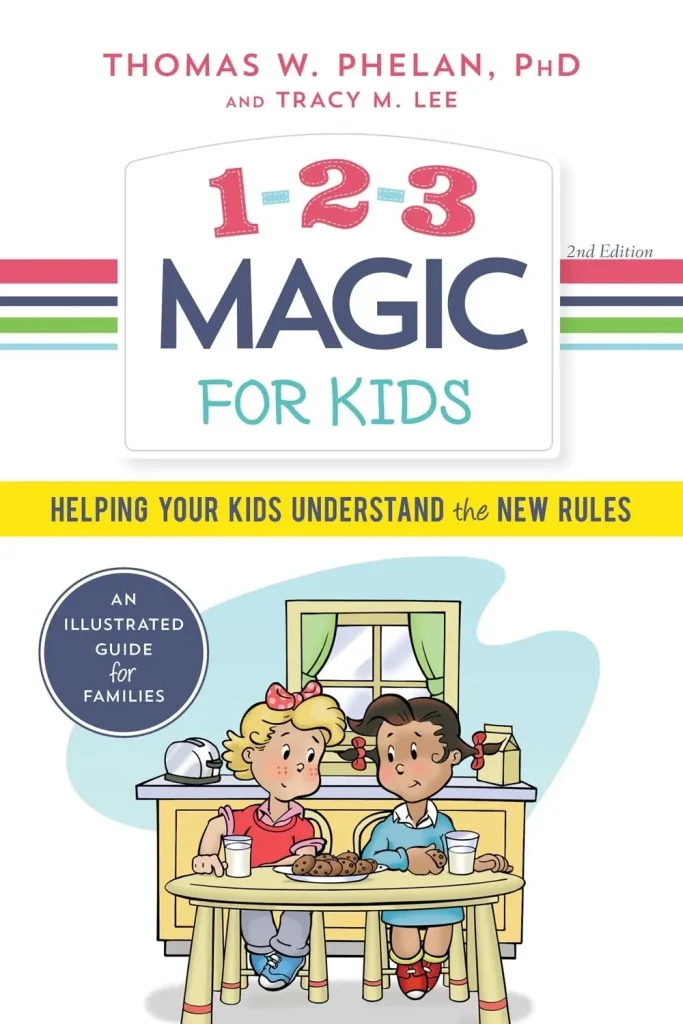
Some children seem to turn every instruction into a negotiation. A parent asks them to stop teasing a sibling, they argue about who started it, and the original behavior continues while everyone gets more frustrated. 1-2-3 Magic offers a structured approach to managing recurring behavior through clear expectations and consistent follow-through.
The method separates behavior management from encouragement of positive behavior. Parents are taught to respond to certain unwanted behaviors with brief, predictable steps rather than lengthy arguments or repeated threats. The idea is to reduce the amount of emotional energy spent debating a rule and make the consequence easier for a child to anticipate.
This approach may appeal to parents who find themselves talking too much when a child refuses to cooperate. Long explanations delivered in the middle of an argument can give everyone more opportunities to become frustrated. A simple, consistent response can make expectations clearer, provided the method is applied appropriately to the child’s age, needs, and situation.
The book is structured and method-focused, so it may feel more practical than approaches centered primarily on understanding emotions. Parents still need to consider why a behavior is happening, but a predictable routine can help when repeated arguing has become part of the family pattern.
Best for: Parents who want a clear, repeatable system for reducing arguments over everyday rules and routines.
4. Positive Discipline by Jane Nelsen
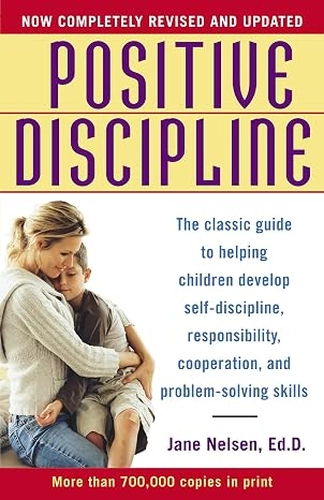
A child refuses to help clean up, so a parent removes a privilege. The child becomes angry, the parent doubles down, and the next request is met with even more resistance. Positive Discipline examines why punishment and permissiveness can both fall short when the goal is to help children develop responsibility and cooperation.
Jane Nelsen’s approach emphasizes firmness alongside kindness. Children need boundaries, but they also need opportunities to learn problem-solving, contribute to family life, and understand the effects of their choices. Instead of relying solely on penalties, parents are encouraged to involve children in age-appropriate solutions and focus on teaching skills that can improve future behavior.
This perspective is useful when discipline has become a repeated cycle of punishment, temporary compliance, and renewed conflict. For example, a parent dealing with a messy bedroom might establish a clear expectation and a regular cleanup routine, then allow the child to participate in working out how to meet it. The boundary remains, but the child has a role in learning how to follow through.
Positive Discipline is not a promise that children will cooperate immediately. Its value lies in helping parents move away from the idea that harsher reactions automatically produce better behavior and toward consistent teaching that builds responsibility over time.
Best for: Parents who want to combine firm expectations with respect, cooperation, and long-term behavior skills.
5. How to Talk So Kids Will Listen & Listen So Kids Will Talk by Adele Faber and Elaine Mazlish
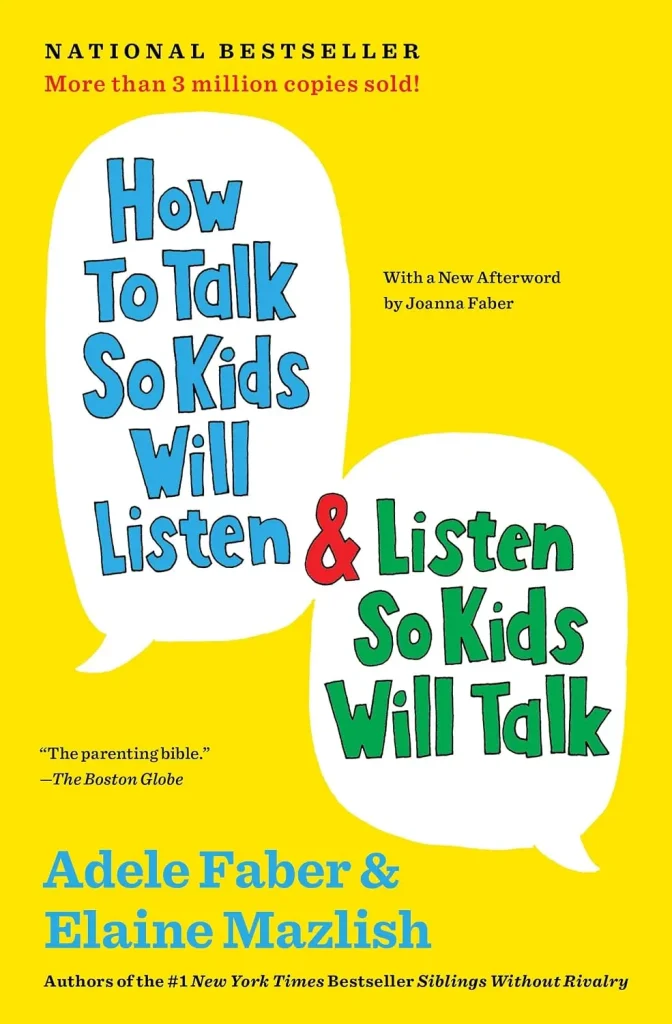
A familiar exchange begins with a simple request: “Please put your shoes away.” The child says no, the parent repeats the instruction, and within minutes both are arguing about attitude rather than shoes. Sometimes the issue is not that the rule is unreasonable, but that the way the conversation unfolds leaves neither person willing to cooperate.
Adele Faber and Elaine Mazlish focus on communication strategies that help parents acknowledge children’s feelings while setting expectations and encouraging cooperation. The book offers practical ways to describe problems without attacking a child’s character, invite cooperation, and respond to strong emotions without dismissing them. These skills can help parents correct behavior without making every mistake feel like a personal criticism.
For instance, instead of calling a child lazy for leaving their belongings everywhere, a parent can describe the specific problem and state what needs to happen next. This keeps attention on the behavior that needs to change rather than turning the conversation into a judgment about the child. Children may still object, but respectful and clear language can reduce unnecessary escalation.
Communication alone will not solve every behavior problem, particularly when a child needs a consistent routine or a clear consequence. However, it can make discipline easier to understand and help preserve the relationship while a parent follows through.
Best for: Parents who want to replace nagging and criticism with clearer instructions and more cooperative conversations.
When Yelling Becomes the Default Response
Parents rarely start the day planning to shout. Often, yelling follows a long series of reminders, rushed transitions, unfinished tasks, or conflicts that seem to happen at the same time every day. If this is becoming a pattern, it may help to focus on one recurring situation rather than trying to change every part of family life at once.
Choose a behavior that frequently leads to conflict, such as stopping screen time or starting homework. Then make the expectation specific, decide in advance how you will respond if your child refuses, and keep your words brief when emotions are high. Once everyone is calmer, talk about what happened and what needs to be different next time.
It is also worth checking whether the expectation is realistic. A child who struggles to begin a task may need help breaking it into smaller steps; a child who repeatedly argues during transitions may benefit from advance warnings and a predictable routine. Looking at the circumstances around a behavior does not mean excusing it. It helps you choose a response that teaches the skill your child is missing.
Of these five books, The Parent You Aspire to Be by Miles Carter is a relevant option for parents looking for practical guidance on specific behavior challenges, including communication, emotional regulation, and consistent correction. The goal is not to become a parent who never feels frustrated. It is to build a way of responding that makes expectations clearer, reduces repeated conflict, and helps children learn what to do differently next time.
Did this article help you see things differently? Our books turn helpful ideas into practical tools you can return to anytime.



Break the Anxiety Circle
$19.90

From Debt to Wealth
$19.90


