I started reading again at 3am, which tells you most of what you need to know about the season I was in. I was the kind of tired that sleep does not fix. Someone in a group chat mentioned the best books on dealing with anxiety and depression, and I remember thinking, who has the energy to read a book about being tired?
But I ordered one anyway. Then another. Reading became the one thing I did only for myself, ten minutes at a time, usually with a baby monitor crackling beside me.
This is not a list from a magazine. These are three books that stayed on my nightstand, with coffee rings on the covers, because each one gave me something I could actually use the next morning.
Quick Answer: Which books actually help with anxiety and depression?
Three that worked for me. Break the Anxiety Circle by Miles Carter for quieting the loop. Unf*ck Your Brain by Dr. Faith G. Harper for understanding the machinery. Heal Your Hurting Mind by Craig Groeschel and Dr. Wayne Chappelle for reminding you that you are not alone.
Why Do We Replay the Same Thing at Midnight?
There is a specific kind of tiredness that comes from replaying your day on a loop. The sharp thing you said at pickup. The look on someone’s face when you raised your voice over a shoe. Around midnight, your brain turns into a committee meeting where every member is angry at you.
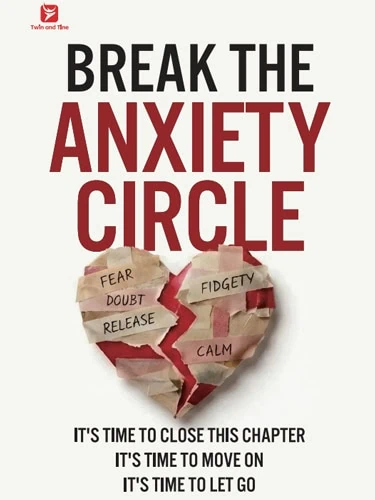
Break the Anxiety Circle by Miles Carter addressed this directly. The subtitle says it plainly. How to stop replaying everything in your head. I laughed when I read that, in a slightly bitter way, because replaying is basically my evening hobby.
What I liked is that it does not treat the overthinking as a mystery. Carter walks through the patterns. Self-blame. People-pleasing. The difficulty of letting go of things that ended years ago. And he keeps returning to one idea. You cannot out-argue the loop. You have to respond to it differently.
Did it cure anything? No. But about two weeks after I finished it, I noticed something small. When the 2am committee started, I caught myself thinking, oh, this again. That tiny bit of distance helped. The loop lost some of its grip.
A Book That Skips the Lecture and Hands You Tools
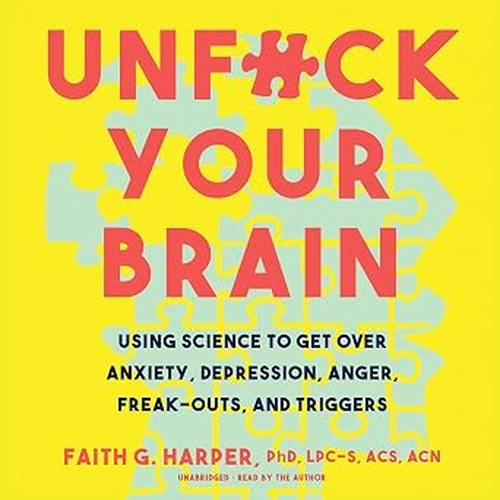
Unf*ck Your Brain by Dr. Faith G. Harper is loud, funny, and profane, which was exactly what I needed after weeks of gentle advice that made me want to throw a pillow.
Harper writes like a friend who happens to know a lot about how the brain handles stress. She explains why your mind treats a minor setback like an emergency, and she gives you language for it. I remember reading a section on triggers while hiding in a bathroom during a birthday party, and actually laughing out loud.
The big takeaway for me was this. Your brain is doing its best with old information. It learned to brace for danger in a situation that ended long ago, and now it braces at birthday parties. That reframing did more for me than a hundred reminders to just relax.
The Day Someone Asked Why My Face Looked Like That
Here is the moment that changed how I thought about all of this. Someone maybe five at the time climbed onto the couch, looked at me for a long second, and asked, why is your face like that?
I knew exactly what face they meant. The tight one. The one I wear when I am somewhere else entirely, running through worst-case scenarios while my body sits in the living room.
I said something like, my brain is being noisy today. They nodded, satisfied, and went back to their blocks. But I sat there thinking about how much of my interior weather they absorb without understanding any of it.
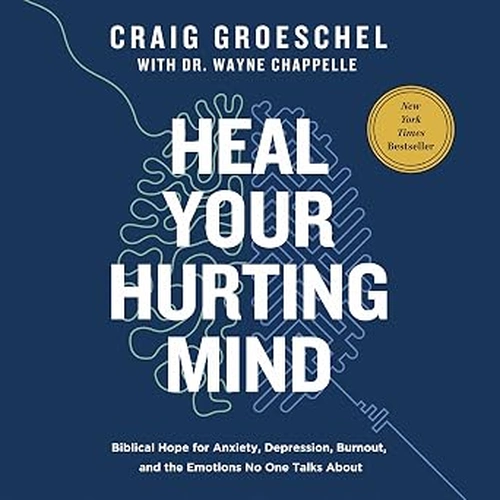
That is when I picked up Heal Your Hurting Mind by Craig Groeschel and Dr. Wayne Chappelle. One is a pastor, one is a psychologist, and the blend works better than I expected.
The book asks questions I had been avoiding. Why am I so anxious. Why can I not shake this. It does not promise a quick fix. What it does is normalize the whole thing. Mental health moves. It is dynamic, not fixed. Some weeks are heavy. Some are not. That sounds obvious written down, but in the middle of a hard month, it was a relief.
Which One Is Best?
I am not going to tell you which of the three is best. They do different jobs.
| Book | What It Does |
|---|---|
| Break the Anxiety Circle | Calms the loop. Gives you a different way to respond to overthinking |
| Unf*ck Your Brain | Explains the machinery. Why your brain treats small things like emergencies |
| Heal Your Hurting Mind | Reminds you that you are not alone. Normalizes the ups and downs |
Some nights I needed the first. Some the second. The third I read slowly, a few pages at a time, the way you would sip something hot.
When the Words on the Page Become Words in Your House
Something unexpected happened as I read. Someone in my house started showing their own version of the loop. They would lie in bed listing everything that might go wrong tomorrow. The spelling test. The kid who did not pick them for soccer. A dog barking three streets away.
And I heard myself using the books on them. Not lectures. Just small phrases. Your brain is trying to protect you. It is just a little over-eager. Or, that worry came back? Okay. It is allowed to visit. It does not get to move in.
One night they said, my worry is visiting again. Then they fell asleep in about ten minutes. I nearly cried in the hallway.
That is the thing nobody tells you about reading this kind of book. You think you are fixing yourself. Half the time, you are quietly handing your kids a vocabulary they will use long after you have forgotten which chapter helped you.
A Truth About Best Book Lists
If you are searching for the best books on dealing with anxiety and depression, you will find lists of twenty titles, and you will feel tired just looking at them.
Here is my honest take. Pick one. Read it badly. Ten minutes at a time, out of order, with a kid on your lap. The book does not have to be finished to work.
None of these three replaced sleep, or a walk, or a friend who lets you talk without fixing. They were companions during a stretch when I felt like I was the only person in the world whose mind would not quiet down.
Turns out I was not. Turns out none of us are, really.
FAQ
Do I need to read all three books?
No. Start with the one that matches your biggest struggle right now. If you overthink, start with Break the Anxiety Circle. If you want to understand why your brain does this, start with Unf*ck Your Brain.
Can a book really help with anxiety and depression?
A book is not a replacement for therapy or medical care. But the right book can give you language, tools, and the feeling that you are not alone. That matters.
What if I do not have time to read?
Ten minutes at a time. Out of order. With a baby monitor beside you. The book does not have to be finished to work.
Which book is best for parents?
All three can work. Break the Anxiety Circle is especially useful because it gives you phrases you can use with your kids when they start showing their own worry patterns.
What if none of these books help?
Then try another. Not every book fits every person. The important thing is to keep looking. The fact that you are searching at all means some part of you still believes things can get softer.
One Last Thing
If you are reading this at 3am, with the monitor crackling beside you, I hope you know this. The fact that you are searching at all means some part of you still believes things can get softer.
That part is right. Start with one book. Start with one page.
The circle does not break all at once. It loosens, a little at a time, usually right around the time you least expect it.
References
- Carter, Miles. Break the Anxiety Circle.
- Harper, Faith G. Unf*ck Your Brain. Microcosm Publishing, 2017.
- Groeschel, Craig, and Wayne Chappelle. Heal Your Hurting Mind.

