You have been confused by people before.
Someone said one thing and did another. Someone seemed trustworthy until they were not. Someone acted against their own interests and you could not understand why.
You are not alone. Human behavior is confusing because most people do not understand their own motives. They act on emotions they cannot name, driven by fears they do not acknowledge.
The three books below each approach human psychology from a different angle. One gives you a practical framework for understanding everyday behavior. One explains the cognitive biases that shape every decision you make. One reveals the hidden forces that influence what people choose and why.
Why Most Psychology Books Leave You More Confused
Here is the problem with most books on human psychology. They either give you theories you cannot apply or case studies you cannot relate to. You learn about the science but you still do not know why your colleague takes credit for your work or why your friend keeps making the same bad decisions.
What you need is not more theory. You need a framework you can actually use.
The first book below gives you exactly that. It is not about how the brain works. It is about how people actually behave in real life.
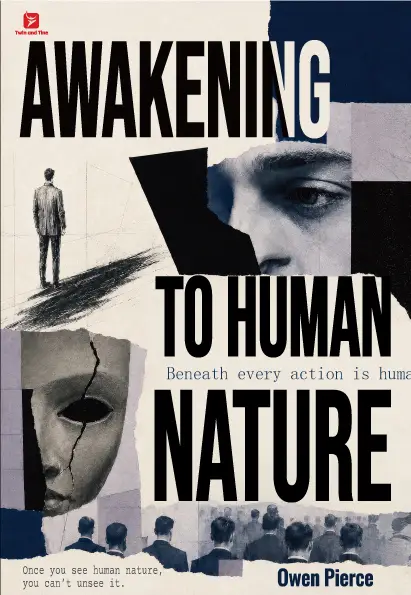
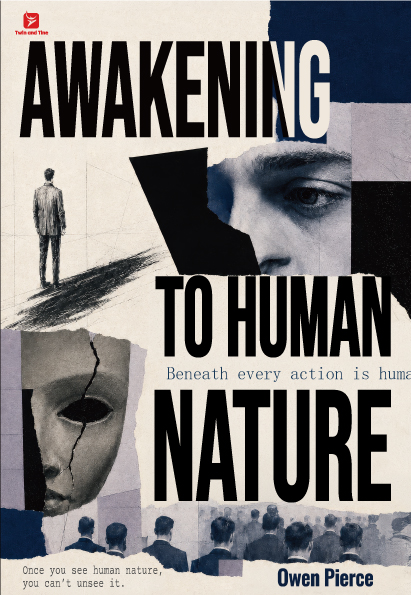
Awakening to Human Nature by Owen Pierce
A practical framework for understanding why people do what they do.
Most books on human psychology explain what people do. This one explains why they do it.
Pierce organizes the book around seven sections: cognitive laws, emotional patterns, desire and interest rules, social dynamics, workplace realities, manipulation tactics, and survival wisdom. Each section targets a specific area where people get blindsided.
Why do people say they value honesty but punish the truth-teller? Why does loyalty expire when needs change? Why is kindness sometimes read as permission to take?
The book answers these questions not with theory but with observation. It explains why self-deception is more common than people admit. Why double standards exist in every relationship. Why the smartest voices are often attacked. Why people crave validation over truth.
It does not teach you to manipulate. It teaches you to recognize manipulation before it costs you.
What makes this book valuable is the practical application. You learn to see through appearances, recognize hidden agendas, and protect yourself without becoming cold. It is not about becoming cynical. It is about becoming clear.
For anyone who wants to stop being confused by people’s behavior.
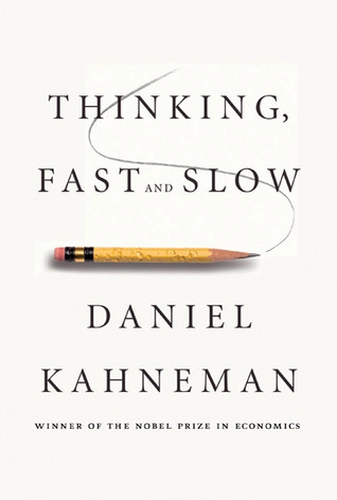
Thinking, Fast and Slow by Daniel Kahneman
Understand the two systems that drive every decision you make.
Kahneman is a Nobel Prize-winning psychologist who spent decades studying how people actually think. His conclusion is uncomfortable: most of your decisions are not made by the rational part of your brain. They are made by a fast, automatic, emotional system that operates below your awareness.
You think you are rational. You are not.
The book explains the two systems that drive human thinking. System 1 is fast, intuitive, and emotional. System 2 is slow, deliberate, and logical. Most of your decisions are made by System 1. System 2 only shows up when System 1 cannot figure it out.
This explains why people make decisions that seem irrational. Why they buy things they do not need. Why they stay in relationships that do not work. Why they believe things that are not true. They are not being stupid. They are being human.
Once you understand the biases, you stop being controlled by them.
For anyone who wants to understand why even smart people make bad decisions.
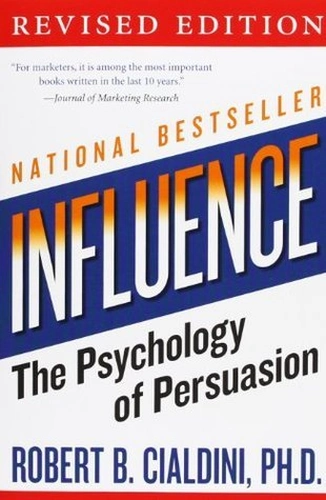
Influence by Robert Cialdini
Understand the hidden forces that shape what people choose.
Cialdini spent years studying why people say yes. He embedded himself in sales, fundraising, and marketing to understand what actually persuades people to agree.
His conclusion is that influence operates through six universal principles. Reciprocity: people feel obligated to return favors. Scarcity: people want what is rare. Authority: people follow experts. Consistency: people stick with what they have committed to. Liking: people say yes to people they like. Social Proof: people follow the crowd.
These principles work because they tap into automatic, unconscious patterns. Most people do not know they are being influenced. They just say yes.
Understanding these principles changes how you see persuasion. You stop being manipulated without realizing it. You start recognizing when someone is using a tactic on you. And you learn to use these principles ethically—to communicate more effectively, not to manipulate.
For anyone who wants to understand why people say yes.
These three books each approach human psychology from a different angle. Pierce gives you a practical framework for everyday interactions. Kahneman explains the cognitive biases that shape every decision. Cialdini reveals the hidden forces that influence what people choose.
They complement each other. But if you are looking for something you can actually use in your daily life—something that changes how you see the people around you right now—start with the one that does not require a psychology degree to understand.