I used to think I was a good listener. Then my wife said something that stopped me cold. “You hear me,” she said, “but you don’t listen.” Ouch. She was right. I was always waiting for my turn to speak, planning my response while she was still talking. Sound familiar?
That conversation sent me on a quest. I needed books to become a better listener, not just in theory but in practice. What I found surprised me. The best listening books are not really about listening at all. They are about slowing down, shutting up, and actually paying attention.
Quick answer: How do I become a better listener?
Stop planning your response while the other person is talking, ask more questions than you give advice, and resist the urge to fix things. Just be present.
Here are three books that take different approaches to listening. One gives you practical scripts and phrases for everyday conversations. One teaches you to read body language and understand what people are really saying. One explores the psychology of why listening is so hard and how to get better at it.
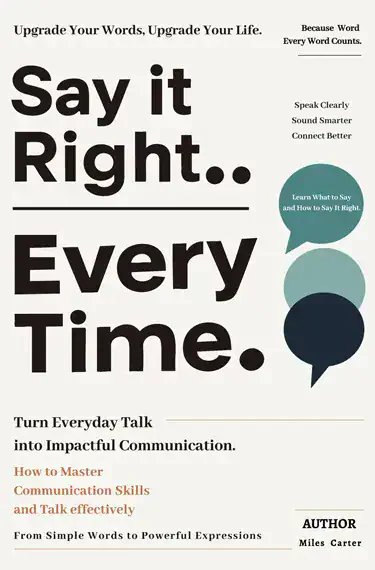
Say It Right Every Time
Practical tools for the moments that matter. Say what you mean, calmly.
This book by Miles Carter is not about theory. It is about what to say when you are on the spot. And it turns out, knowing what to say starts with knowing how to listen.
What makes this book valuable for listeners is the side-by-side comparisons. Carter shows you a basic response and then a more mature response. For example, when someone shares a problem, the basic response is to jump in with your own story. The mature response is to ask a follow-up question.
The book covers daily conversations, workplace interactions, and emotional connections. You learn how to respond effectively, handle conflict, set boundaries, and make requests. Each chapter includes real-life scenarios with specific scripts.
If you want to know what to say after you have actually listened, this book gives you the words.
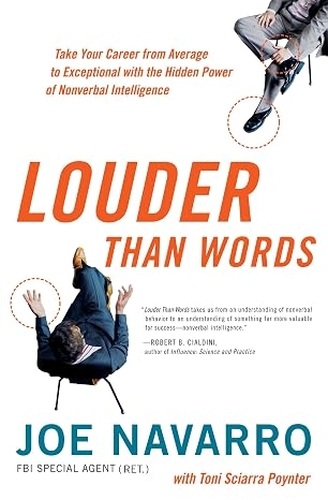
Louder Than Words
The hidden signals that reveal what people are really thinking.
Joe Navarro spent 25 years as an FBI agent specializing in behavioral analysis. He has interviewed spies, criminals, and witnesses. He learned to read people by watching their bodies, not just listening to their words.
In this book, Navarro applies those skills to everyday communication. He introduces the Comfort/Discomfort Paradigm. It is a simple way to gauge how someone really feels. Watch their body language. Are they relaxed and open, or tense and closed off? That tells you more than their words ever will.
For listeners, this book is invaluable. It trains you to notice the subtle cues that reveal what someone is truly thinking. When you can read these signals, you know when to lean in and when to give space. You know when someone is saying yes but meaning no.
This is not about manipulation. It is about understanding. Real listening means hearing what is not being said as much as what is.
You’re Not Listening
Why we fail to hear each other and how to fix it.
Kate Murphy is a journalist who spent years interviewing people about their listening habits. Her book is a wake-up call. She argues that we are living in a culture that rewards talking over listening.
Murphy explains why listening is so hard. It requires us to set aside our own agenda. It asks us to be curious about someone else’s experience, even when we would rather talk about ourselves. It is exhausting. But it is also where real connection happens.
The book is full of fascinating stories. People who have mastered the art of listening. People who have failed spectacularly. Murphy also offers practical tips for improving your own skills.
This book will make you want to put down your phone and actually pay attention to the person in front of you.
Which Book Should You Read First?
If you want practical scripts and know exactly what to say, start with Say It Right Every Time. It gives you words to use in real situations.
If you want to read body language and understand hidden signals, pick up Louder Than Words. It trains you to see what people are not saying.
If you want to understand the psychology of listening and why it is so hard, go with You’re Not Listening. It is inspiring and eye-opening.
Many people read all three. Each one offers something the others do not.
Frequently Asked Questions
Can books really teach you to be a better listener?
Yes, but only if you practice what you read. Books give you frameworks and examples. The real learning happens when you apply those ideas in real conversations.
What is the single most important listening skill?
Staying present. Everything else follows from that. If you can quiet your inner voice and focus entirely on the speaker, you are already better than most people.
How long does it take to become a better listener?
It depends on your starting point. Most people see improvement within a few weeks of conscious practice. The key is consistency.
Which book should I start with?
Say It Right Every Time is a great starting point because it is practical and specific. If you prefer a broader approach, You’re Not Listening is inspiring and accessible.
Final Thought
I still remember that night my wife said I did not listen. It stung, because I knew she was right. But it also started a journey. I have read dozens of books, practiced countless conversations, and built a toolkit of strategies. And you know what? I am still learning.
Maybe you are reading this because someone told you the same thing. Or maybe you just sense that your conversations are missing something. Either way, I want you to know this. Listening is a skill, not a talent. It can be learned. It can be practiced.
Start with one book. Pick one technique. Try it in your next conversation. The person you are talking to will notice the difference. And so will you.