You said the wrong thing again. You watched their face change. And by the time you realized what just happened, it was already too late.
That sentence. That moment. That knot in your stomach afterward.
It keeps happening. You replay it for hours, thinking about what you should have said instead. What you should have noticed. What everyone else seemed to pick up on except you.
Most of us were never taught how to recognize these moments or respond differently.
Emotional intelligence is not just about controlling your own emotions. It is also about understanding what is happening between you and other people. It is not something you are born with. It is a skill. And like any skill, it can be learned.
The three books below taught me how to read people better, understand my own emotions, and stop saying things I regret five seconds later.
1. Awakening to Human Nature by Owen Pierce
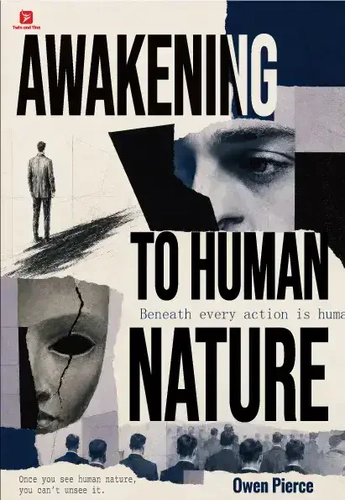
I used to walk away from conversations replaying them in my head, trying to figure out what actually happened. Someone would say they were fine, but I knew they were not. I could not explain why.
Pierce starts not with theories, but with the situations most people actually struggle with. Mixed signals. Unspoken feelings. Conversations that feel off in ways you cannot quite explain.
Instead of asking you to study abstract concepts, he shows you how to read the person across from you right now. Recognizing when something feels different in a conversation. Understanding why people react the way they do. Knowing when to trust your instincts and when your own assumptions may be getting in the way.
What I found most useful is the emphasis on baseline behavior. People often have patterns. When those patterns shift, it can be a clue that something has changed. I stopped asking “are they upset?” and started noticing what was different about today compared to how they usually act. That one shift changed how I show up in every relationship.
This is perfect for anyone who feels like they are always missing something in interactions and wants to finally see what is right in front of them.
2. The Language of Emotions by Karla McLaren
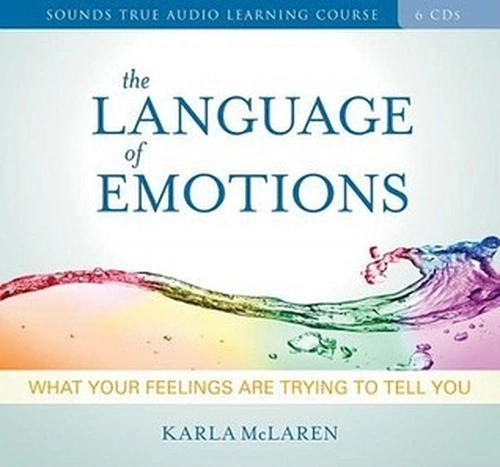
Most people treat emotions as obstacles. You are supposed to control them, suppress them, or push through them. McLaren argues the opposite. Emotions are information.
Her core insight is simple: every emotion has a function. Anger can point to a boundary being crossed. Jealousy can point to something you value or fear losing. Anxiety can sometimes point to uncertainty or something that needs attention. Even the uncomfortable ones are trying to tell you something.
What I found useful is the practical framework. McLaren gives you specific steps for working with each emotion instead of fighting it. How to recognize what anger is really telling you. How to listen to anxiety instead of trying to eliminate it. How to experience sadness without letting it take over your decisions.
This is perfect for anyone who feels overwhelmed by their own emotions or keeps reacting in ways they do not understand.
3. Permission to Feel by Marc Brackett
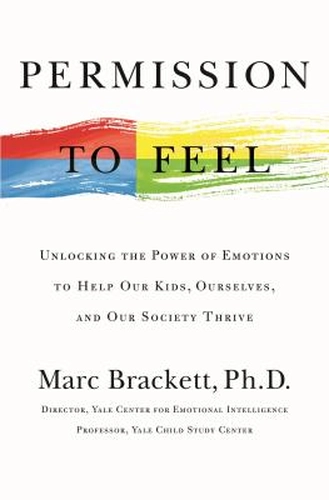
Marc Brackett is the founding director of the Yale Center for Emotional Intelligence. He spent decades studying emotions and how they affect learning, decision-making, and relationships. He developed the RULER framework, a widely used approach for understanding and managing emotions.
The framework stands for five steps: Recognize, Understand, Label, Express, and Regulate. Each one is explained with clear examples and exercises. You learn how to notice what you are feeling, why you are feeling it, and what to do about it.
What makes this book different is the emphasis on permission. Brackett argues that many of us were taught to suppress our emotions. He makes a case for letting yourself feel what you feel, and then using that awareness to make better decisions.
I started using one of the exercises after a difficult conversation with a colleague. Instead of spiraling, I named what I was feeling. I recognized the frustration, labeled it, and asked myself what I actually needed. The conversation did not magically fix itself. But I showed up differently the next time because I understood what was driving me.
This is perfect for anyone who has ever felt like their emotions were running the show and wanted to get back in the driver’s seat.
If you want to read people better in real time, start with Pierce. If you want to understand your own emotional patterns, read McLaren. If you want a widely used approach for managing emotions in the moment, pick up Brackett.
All three can help you build emotional intelligence. But if your biggest struggle is understanding people and navigating difficult conversations, Awakening to Human Nature is the best place to start.
