When I bought our first encyclopedia, I thought I was being a good parent. Hardcover. Thick. Beautiful photos. It sat on the shelf for eight months.
Then one rainy Sunday my daughter pulled it down herself, not because I asked, but because she was bored. That afternoon changed how I think about the best encyclopedia books for kids. The book did not matter as much as the moment.
Quick answer: How do I choose an encyclopedia my child will actually read?
Pick one with pictures that tell a story, one topic per page, and fun facts that make your kid say “did you know?” Then read one spread together and stop before they are ready to stop.
Here are three encyclopedias that earned their place on our shelf.
Why Do Kids Put Down an Encyclopedia After Two Pages?
Because we buy for the shelf, not for the child.
I did this twice. The first book was too advanced. My son was five. The text assumed a reader of ten. He looked at two pages, felt stupid, and never went back. A book that makes a child feel stupid is a bad book, no matter what the reviews say.
The second mistake was the opposite. I bought something too simple for my seven-year-old. She finished it in one sitting and said, “That’s it?” Curiosity needs a little resistance. Not frustration. Just enough to pull.
How Do I Pick One That Actually Gets Read?
Look for three things.
| What to look for | Why it matters |
|---|---|
| Pictures that tell a story | A child who cannot read the text can still learn from the images |
| One topic per page | A child can open anywhere and get a complete thought |
| “One more page” hooks | Fun facts, top ten lists, strange numbers. The kind of thing a kid repeats at dinner |
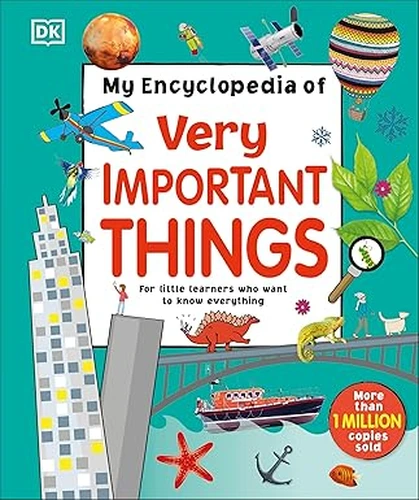
My Encyclopedia of Very Important Things
By DK Children
This one is for the 5 to 9 crowd.
What makes it different: It is written from a child’s point of view. That sounds like marketing until you see your kid reading about volcanoes and then asking about their own backyard.
What you get:
- A child-friendly introduction to the world
- Pictures that carry the story for pre-readers
- Topics that spark real questions
- A padded cover and ribbon bookmark that make it feel special
One key idea: A five-year-old notices the ribbon. That small detail makes the book feel like it belongs to them.
Best for: Younger kids who learn best through pictures and simple explanations.
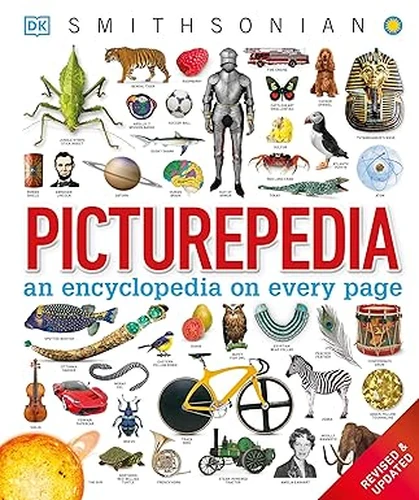
Picturepedia, Second Edition
By DK Children
This one is for the 9 to 12 crowd.
What makes it different: Over 150 topics, each on one spread, with up to 100 images per topic. My daughter calls it “the book that knows everything.” She is not wrong.
What you get:
- Over 150 topics, each on a single spread
- Up to 100 images per topic
- Timelines, top ten lists, step-by-steps
- A book that doubles as homework help
One key idea: A good encyclopedia grows with a child. This one works at nine and still works at twelve.
Best for: Older kids who want a little bit of everything and need it for school projects too.
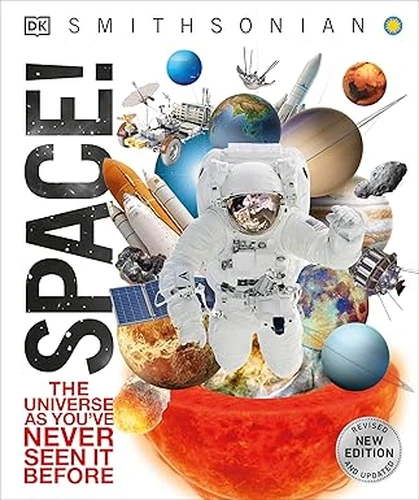
Knowledge Encyclopedia Space!
By DK Children
This one is for the kid who looks up at night.
What makes it different: Fully updated with newer discoveries and 3-D imagery. My son read the page about the moon once being part of the Earth and announced it to the whole family at breakfast.
What you get:
- Updated discoveries and 3-D imagery
- Facts that stick with kids for years
- A deep dive into space for curious young minds
One key idea: A day on Venus is longer than a year. My son still brings that one up.
Best for: Any kid who has ever asked what is out there.
The Ten Minute Discovery
The book is only half of it. The other half is a ritual.
We call ours The Ten Minute Discovery. Every night, after teeth, before lights out, we open one spread. That is all.
| Rule | Why it works |
|---|---|
| The child picks the page | Even if it is the same shark page for the eleventh night |
| I do not teach. I ask. | “Why do you think that is?” “What would happen if…?” |
| We stop at one spread | Even if they beg. Especially if they beg. |
That last rule felt cruel the first week. Now it is the engine. Ending on wanting more is the whole trick.
Why does stopping matter more than reading on? Because curiosity gets full. Feed it too much, and it will not be hungry tomorrow.
Adjusting for Age
| Age | What works |
|---|---|
| 5-7 | You read, they point. Let them choose the page. Ask silly questions. The goal is warmth, not information. |
| 8-10 | They read, you listen. Let them teach you. This is the age where being the expert feels amazing. |
| 11-12 | They read alone, then tell you at dinner. Just say, “Tell me the weirdest thing you learned today.” |
What If Your Child Just Won’t Read an Encyclopedia?
Then do not force it. Seriously.
My nephew ignored every encyclopedia until he was eleven. Then he found one about the human body, and now he wants to be a doctor. The book was there. That was enough.
Try this. Leave it somewhere visible, open to a strange page. Not on the shelf. On the couch. Walk away. Do not mention it.
One Last Thing
The 4.9-star book is not always the right book. I have bought highly rated books that gathered dust. I have bought quiet, less famous ones that got read to pieces.
Reviews tell you about quality. They cannot tell you about your child. Only your child can.
So read the reviews, then close the tab, then think about the last weird question your kid asked you. Buy that book.
That rainy Sunday, my daughter did not learn anything important from that first encyclopedia. She just learned that the shelf was hers to reach into. Three years later, she still reaches. That is the only review that ever mattered to me.
References
DK. My Encyclopedia of Very Important Things. DK Children, Hardcover.
DK. Picturepedia, Second Edition. DK Children, Hardcover.
DK. Knowledge Encyclopedia Space! DK Children, Hardcover.

