You have probably experienced this. Someone surprises you. A friend makes a decision you cannot understand. A leader changes after gaining authority. A group ignores obvious warning signs.
People are not confusing because they are complicated. They are confusing because they operate on different levels. There is the individual level—what is this person thinking? There is the power level—how does authority change behavior? And there is the social level—why do groups act the way they do?
Most books only cover one of these. The three below cover all three. Each answers a different question about human nature.
Quick Comparison: Which Book Matches Your Question?
| Your Question | Start With |
|---|---|
| Why is this person hard to read? | Awakening to Human Nature |
| Why do people change when they get power? | The 48 Laws of Power |
| Why do groups act differently than individuals? | The Social Animal |
1. Awakening to Human Nature by Owen Pierce

You leave a conversation knowing something was off, but you cannot point to what. Someone’s words and behavior do not match. You have probably had this experience more times than you can count.
Pierce gives you a way to notice what is already there. He does not teach you to memorize gestures or decode micro-expressions. He teaches you to pay attention to patterns most people miss. Small changes in communication. A different tone. A hesitation before answering. A mismatch between words and actions.
What makes this book different is the focus on baseline. Most people have patterns in how they communicate and respond. When those patterns change, it is worth paying attention to. Not because you should assume the worst about everyone, but because noticing change is how you stop being confused by the people around you.
The book covers specific situations: workplace dynamics, personal relationships, and moments of tension or conflict. It does not ask you to memorize theories. It teaches you to pay attention.
If you want to understand the person in front of you right now, this is the book to read first.
What you will learn:
- How to notice patterns in communication that most people overlook
- How to interpret gaps between words and actions
- How to protect yourself without becoming cynical
- How to build stronger relationships through awareness
This is perfect for anyone who has ever walked away from a conversation wondering what they missed.
2. The 48 Laws of Power by Robert Greene
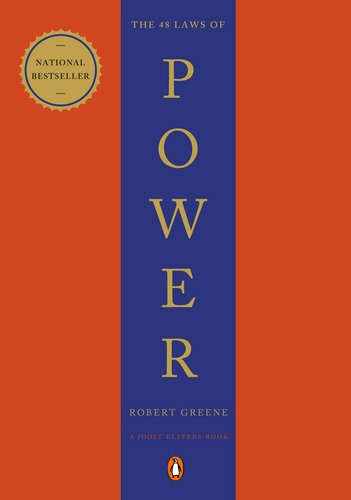
Some people change when they gain authority. They become more confident, but also less empathetic. They make decisions that seem self-serving. They ignore advice. They surround themselves with people who agree with them.
Greene wrote this book to explain why.
It is not a book about being a good person. It is a book about how power actually works. Each law is based on historical examples—figures like Machiavelli, Louis XIV, and Bismarck who understood that power has its own rules.
Some laws are uncomfortable. “Never outshine the master.” “Use enemies to your advantage.” But Greene does not pretend the world is fair. He shows you what people do when they are competing for status, resources, and influence.
What makes this book essential is the honesty. You do not have to agree with every law to benefit from reading it. But you will start noticing the patterns: why some people rise, why others fall, and how authority changes the way people think and act.
What you will learn:
- How people gain and maintain power
- Why the powerful often ignore good advice
- How to recognize when someone is using power against you
- Why power changes behavior
- How to protect yourself in competitive environments
This is perfect for anyone who has watched a colleague, leader, or friend change when they got more authority.
3. The Social Animal by Elliot Aronson
Most people act differently in groups than they do alone. Aronson explains why.
He is one of the most respected social psychologists in the field. His book covers the classic topics of social psychology: why people conform to group pressure, why they develop prejudices, why they justify their own mistakes, why they help or fail to help others in need.
What makes this book readable is the structure. Aronson uses the story of two fictional characters to illustrate the research. You follow their lives from childhood to adulthood, seeing how social psychology plays out in real situations. You do not just learn the theories. You see how they show up in everyday life.
What you will learn:
- Why people conform to group pressure even when they know better
- How prejudice forms and how it can be reduced
- Why we justify our mistakes instead of learning from them
- Why groups often make worse decisions than individuals
- How social forces shape behavior in ways we rarely notice
This is perfect for anyone who has ever been in a group that made a decision they did not agree with—and wondered how it happened.
Frequently Asked Questions
Which book should I read first?
It depends on your biggest frustration. If you are confused by individuals, start with Awakening to Human Nature. If you are confused by power dynamics at work, read The 48 Laws of Power. If you are confused by why groups behave the way they do, pick up The Social Animal.
What is the best book for understanding human behavior?
If you want to understand human behavior, start with Awakening to Human Nature. It focuses on individual motives, communication patterns, and the reasons behind people’s actions. The other two books go deeper into power and group dynamics.
Do I need a psychology background to read these?
No. All three are written for general readers. They avoid jargon and focus on explaining ideas clearly.
Can I read just one?
Yes. Each book stands on its own. They cover different parts of human nature. Pick the one that matches your biggest frustration.
These three books each answer a different question.
Pierce explains why individuals are hard to read. Greene explains why power changes people. Aronson explains why groups behave the way they do.
Pick the one that matches your biggest question. Then take the next step.
