2026 has been the year of the “casual investor.” Millions of people opened brokerage accounts for the first time. Most of them have no idea what they are doing.
The problem with most investing books is that they assume you are already past the starting line. They assume you have savings, no debt, and a basic understanding of the market. For most people, that is not where they are.
The three books below do not start with jargon or complicated strategies. They start with the stuff that actually matters for beginners: what you need to know before you invest, how to think about risk, and what to do with your money once you finally have some.
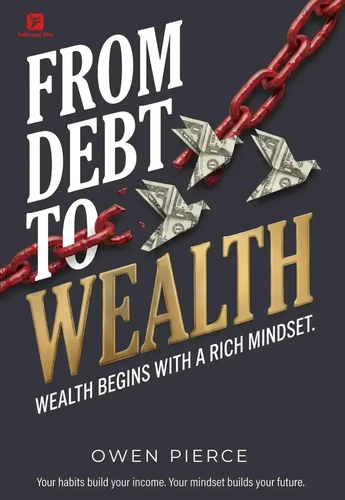
From Debt to Wealth by Owen Pierce
The first book on any investing list for beginners is not actually about investing. It is about getting to the point where investing is a real option. If you are still in debt, still living paycheck to paycheck, still wondering where your money went at the end of every month, the investing books will not help you yet.
Pierce wrote the book that comes before investing. He starts with a question most finance books avoid: why does your income never seem to be enough? The answer is not that you are bad with money. It is that you have been playing by rules that were never designed to make you wealthy. You work harder, you earn a little more, but your expenses grow right along with it. You buy things to feel better and end up deeper in the hole. The cycle is not about willpower. It is about habits you were never taught to break.
The book walks you through a complete reset. How to stop the paycheck-to-paycheck cycle. How to eliminate bad debt without feeling deprived. How to build savings when you have never been able to keep them. It does not tell you to “just invest more.” It tells you to stop the bleeding first. Once you have done that, the investing books will actually make sense. Until then, they are just words on a page.
If you are still figuring out how to get out of debt or stop living paycheck to paycheck, this is where you start. Everything else comes after.
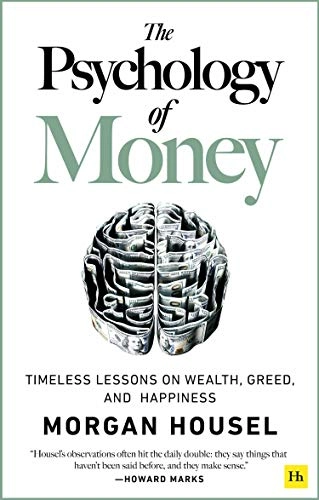
The Psychology of Money by Morgan Housel
Once you have stopped the bleeding, the next question is not which stocks to buy. It is how to think about investing in a way that does not make you anxious, impulsive, or self-destructive. This is where most new investors fail—not because they pick the wrong stocks, but because they cannot handle the emotions that come with investing.
Housel’s book is not a how-to guide. It is a book about behavior. He argues that doing well with money has surprisingly little to do with how smart you are and everything to do with how you behave. A person of average intelligence who can control their emotions will outperform a genius who cannot stop checking their portfolio and panicking at every dip.
The book is a collection of short, readable chapters, each one built around a single idea. One chapter explains why wealth is invisible—you see people spending money, but you do not see the ones who quietly save and invest, which creates a distorted picture of what wealth actually looks like. Another chapter covers the power of compounding—not the math, but the psychology of staying patient long enough for it to work.
Housel does not tell you what to do. He helps you understand yourself so you can make better decisions. For a new investor, that is more valuable than any stock pick. If you cannot control your own behavior, no strategy will save you.
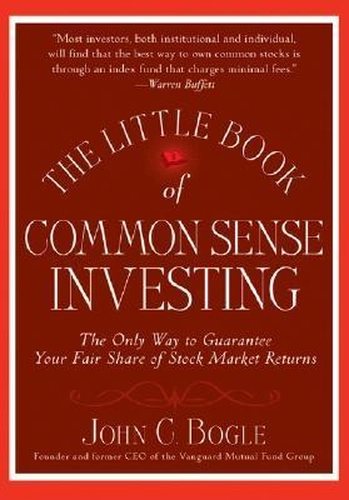
The Little Book of Common Sense Investing by John C. Bogle
This is the book that tells you exactly what to do once you are ready. Bogle is the founder of Vanguard, the company that pioneered index fund investing. His argument is simple, boring, and backed by decades of data: buy low-cost index funds and hold them for the long term.
Bogle wrote this book as a counterpoint to the financial industry’s obsession with active trading. He shows that over time, active fund managers consistently underperform the market. They charge high fees, they trade too much, and they rarely beat a simple index fund. His advice is not sexy. It does not promise huge returns or secret strategies. But it works.
What makes this book essential for new investors is its clarity. Bogle does not assume you already know how the market works. He explains the basics in plain language, with enough detail to make you feel informed without overwhelming you. He covers asset allocation, expense ratios, and the importance of staying invested through market fluctuations.
The book is short, direct, and written for someone who does not want to become a professional investor—just someone who wants to build wealth over time. If you are ready to put money into the market and want a strategy that has been proven to work, this is the simplest and most reliable guide you will find.
The order of these books matters.
Read Pierce first if you are still in debt or living paycheck to paycheck. He gets you to the starting line.
Read Housel second if you have money to invest but need to understand your own behavior. He keeps you from sabotaging yourself.
Read Bogle third when you are ready to put your money in the market. He gives you a proven strategy that requires no special skill, just patience.
You do not need to be an expert to build wealth. You just need to get out of debt, understand your own behavior, and follow a simple strategy. These three books cover exactly that path.
