When Your Mind Keeps Reopening the Same Problem
You finish a conversation, then spend the evening wondering whether you sounded rude. You have an important task tomorrow, so your mind rehearses everything that might go wrong. Even when the day is finally quiet, your thoughts keep moving from one concern to the next.
Overthinking can make small uncertainties feel like problems that must be solved immediately. Journaling offers a way to slow that process down. Putting a thought on paper lets you examine what happened, separate facts from assumptions, and decide whether something actually needs your attention.

Still, not every journal works the same way. Some provide structured exercises for anxiety, others use humor to make difficult feelings easier to approach, and some offer a wider space to explore personal experiences. These five books take different approaches, so the right choice depends on what happens when your mind gets stuck.
1. The Anxiety Happens Guided Journal by John P. Forsyth and Georg H. Eifert
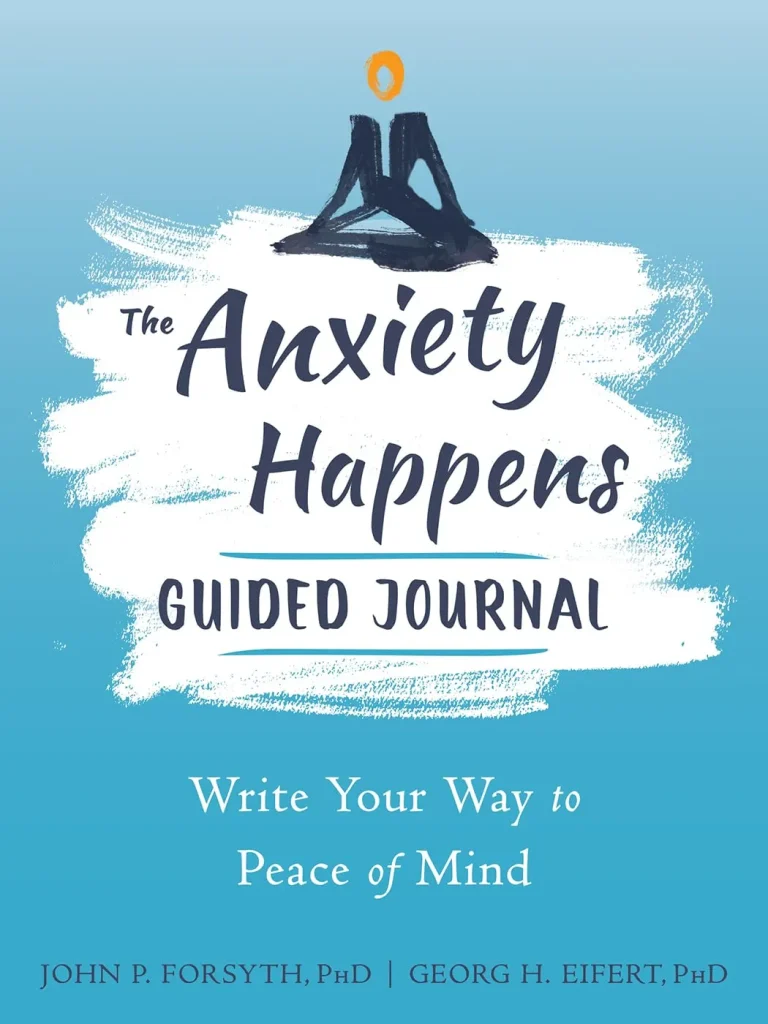
Best for: People who want practical exercises for recurring anxiety
Sometimes, writing down a worry is only the first step. You may understand that you’re imagining the worst and still struggle to stop treating that possibility as a certainty. A journal with guided exercises can help you practice responding to anxious thoughts instead of automatically following them.
The Anxiety Happens Guided Journal draws on acceptance and commitment therapy (ACT), an approach that helps readers change how they relate to difficult thoughts and feelings. Rather than making the elimination of anxiety the only goal, its approach encourages greater flexibility in how you respond to discomfort.
This may be a good fit if you prefer purposeful exercises over free-form diary entries. It is particularly relevant when you repeatedly worry about the future or find yourself mentally revisiting the past.
A question to consider: Am I trying to solve a real problem, or am I trying to make uncertainty disappear?
2. 777 Little Moments in My Life: Heal Your Heart, Mend the Relationship and Elevate Your Thinking by Grace Willow

Best for: People who want to understand their experiences and emotional patterns
Not all overthinking begins with one obvious fear. Sometimes, a difficult conversation brings back an old disappointment. A change in a relationship makes you question your past choices, or a quiet moment reminds you of something you wish you had handled differently. The thought you are struggling with today may be connected to a much bigger story about how you see yourself and your life.
777 Little Moments in My Life takes a broader reflective approach. It encourages readers to look at personal experiences, relationships, regrets, and everyday lessons with greater awareness. Rather than functioning as a specialized anxiety workbook, it offers space to examine the experiences that shape your thinking and emotional responses.
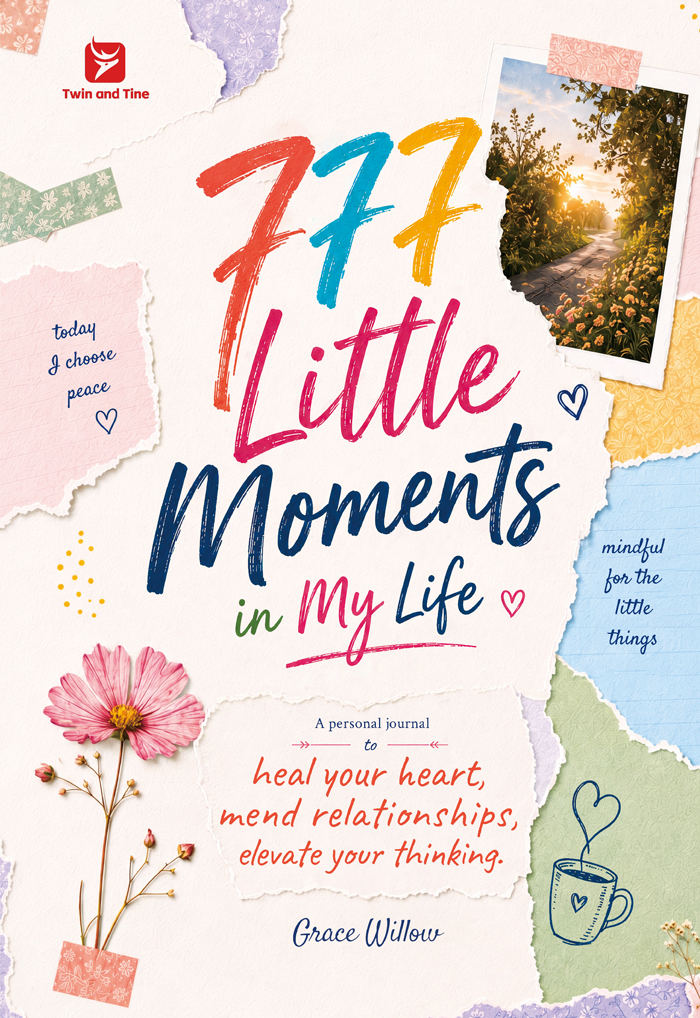
777 Little Moments in My Life
Grace Willow777 prompts to unpack old wounds, release buried emotions, and understand yourself more deeply.
That broader focus can appeal to readers who want more than a collection of anxiety-management exercises. If your thoughts often circle around past events, relationship experiences, or questions about personal growth, reflective writing can help you explore those themes at your own pace.
The book is less suited to someone seeking a tightly structured, anxiety-specific program. Its value lies in broader self-reflection, especially when understanding your life experiences is part of what you want to work through.
A question to consider: What does this recurring thought reveal about an experience I have not fully understood?
3. The Big Journal for Anxious People by Jordan Reid and Erin Williams
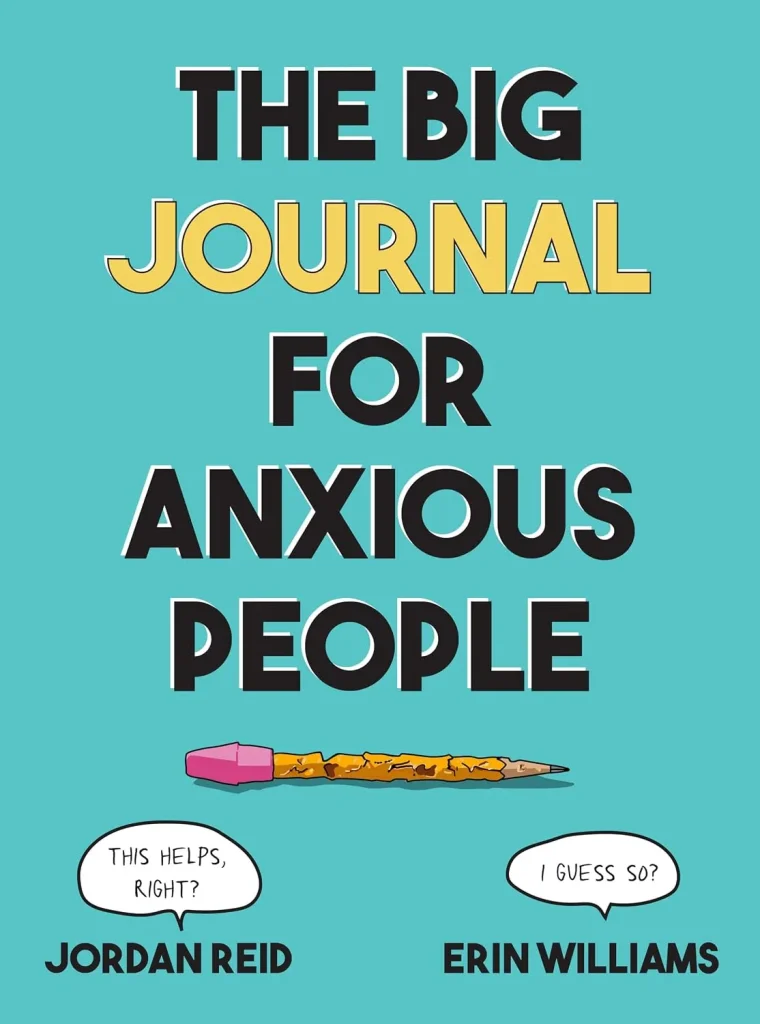
Best for: Readers who prefer humor and a less serious tone
Anxiety can make every thought feel urgent and important. You might spend twenty minutes analyzing a short text message or invent an entire chain of disasters from one unanswered email. A serious, highly structured workbook may not always feel inviting when you’re already mentally exhausted.
The Big Journal for Anxious People takes a more playful route. It combines humorous prompts, illustrations, relatable observations, and space for writing or drawing. Its tone acknowledges the absurdity that can accompany anxious thinking without suggesting that every anxious feeling is trivial.
This style may suit people who find conventional self-help books too formal or emotionally heavy. Humor can create a little distance from a worry, making it easier to notice how far a thought has traveled from the original event.
It is not a substitute for a structured therapeutic workbook, and readers looking for detailed step-by-step exercises may want a more technique-focused option. But if you need a journal that feels approachable rather than like another assignment, its format has appeal.
A question to consider: If I described this worry to a friend, what parts might sound less certain than they do in my head?
4. Own Your Calm: A Guided Journal for Overcoming Anxiety by Jo Usmar
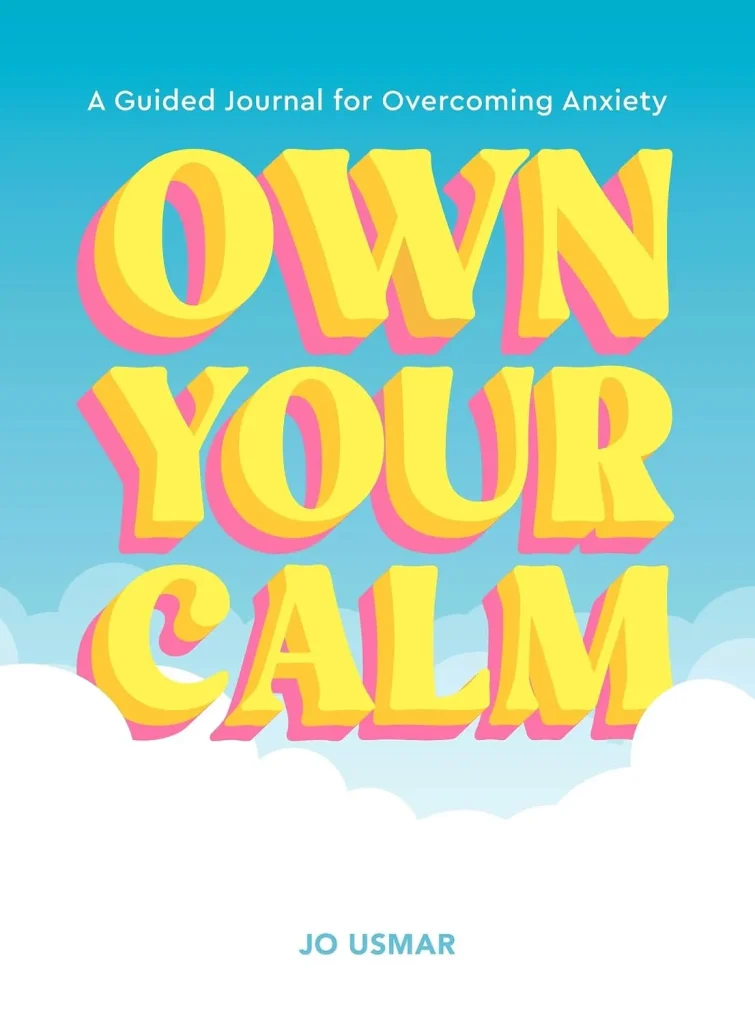
Best for: People who want a regular, organized journaling routine
Some people overthink most intensely when they have no clear way to process what they are feeling. Their concerns accumulate throughout the day until every unfinished task, uncomfortable interaction, and future responsibility seems to demand attention at once.
Own Your Calm combines guided writing prompts with practical self-care exercises, anxiety education, and mood tracking. Its organized format is designed to help readers recognize their triggers and build a more deliberate response to everyday stress.
The tracking element is especially useful for readers who want to notice patterns over time. You might begin to see that your worries intensify after poor sleep, during periods of heavy workload, or when you have left a difficult conversation unresolved. Recognizing those patterns does not automatically remove anxiety, but it can help you identify where to begin.
Because the journal offers a structured routine, it may appeal to people who prefer clear prompts and a visually engaging format over writing whatever comes to mind. Those who want completely open-ended reflection may find it more guided than necessary.
A question to consider: What tends to happen before my anxious thoughts become difficult to manage?
5. Put Your Anxiety Here by Lisa M. Schab
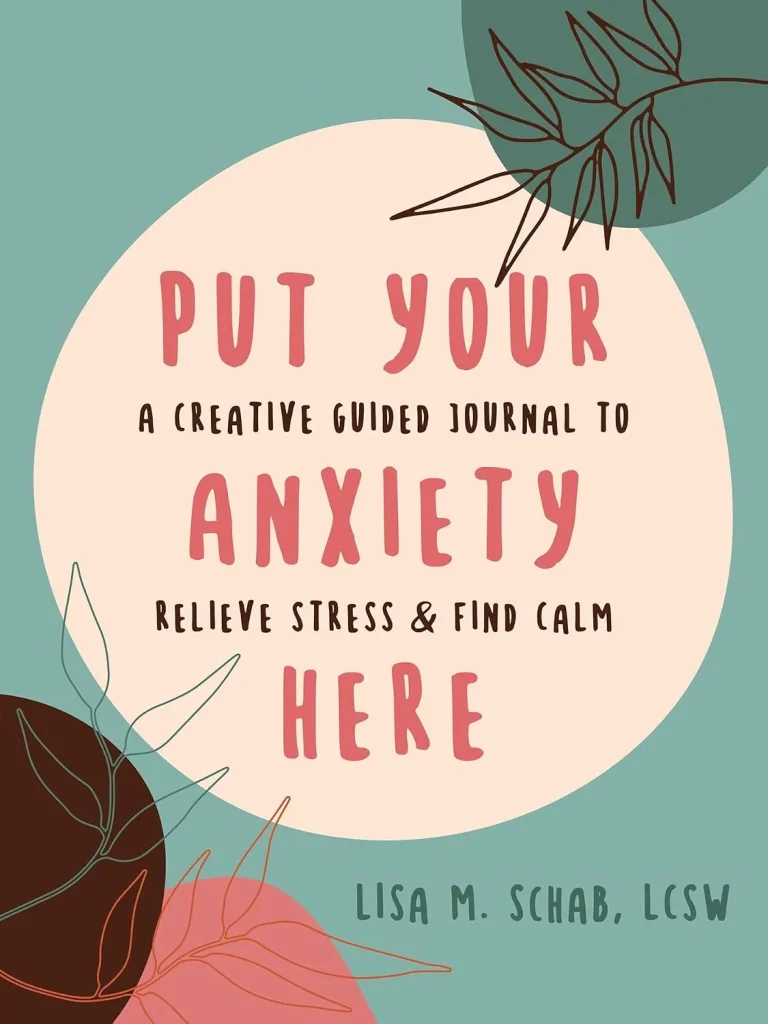
Best for: Readers who need creative ways to get thoughts out of their heads
A blank page can feel surprisingly difficult when your thoughts are racing. You may know that writing could help, yet have no idea where to start. Trying to produce a neat explanation of your feelings can become another task to worry about.
Put Your Anxiety Here uses creative guided journaling to make that first step easier. It offers prompts and activities intended to help readers express worries, release tension, and explore their emotional responses. The emphasis is on engaging with thoughts through writing rather than waiting until everything feels clear enough to explain.
This format may suit people who struggle with conventional diary entries or prefer a more flexible, activity-based approach. You do not need to produce polished paragraphs or arrive at a conclusion every time you open the journal.
Its creative format may be less appealing to readers who want a consistent daily tracking system or a detailed sequence of cognitive exercises. For those who simply need an accessible starting point, however, a prompt can make writing feel less intimidating.
A question to consider: What would I write if I did not need to make my thoughts sound logical or reasonable?
A Small Writing Practice for When Overthinking Starts
You do not need to write for an hour or record every thought to get something useful from journaling. When a worry keeps returning, try this short exercise before deciding whether you need a longer reflection.
- Write the thought exactly as it appears. Instead of polishing it, record the sentence your mind keeps repeating, such as “I probably ruined that conversation.”
- Separate what happened from what you fear. Note the observable facts, then identify the assumptions or predictions you have added.
- Name the feeling underneath. Is it embarrassment, uncertainty, disappointment, fear of rejection, or something else?
- Choose one response. You might take a practical step, ask for clarification, accept that you cannot know the outcome yet, or return to what you were doing.
If the same concern comes back later, you do not necessarily have to start the entire process again. You can remind yourself that you have already examined it and decide whether any new information has changed the situation.
Journaling is not about forcing every negative thought to disappear. Sometimes the useful outcome is simply recognizing that a thought is present without allowing it to dictate the rest of your day. If anxiety is persistent, overwhelming, or interfering with daily life, journaling can complement professional support rather than replace it.
Which Journaling Style Fits You?
The most useful journal is the one that matches the kind of help you are looking for. Choose The Anxiety Happens Guided Journal for structured ACT-informed exercises, The Big Journal for Anxious People for a lighter and more humorous approach, or Own Your Calm if you want a more organized routine for noticing triggers and managing everyday worries.
If your overthinking is closely tied to personal experiences, relationships, or regrets, 777 Little Moments in My Life offers a wider space for reflection. And if starting to write is your biggest obstacle, Put Your Anxiety Here provides creative prompts to help you get going.
You do not have to find the perfect explanation for every feeling before you can move forward. Sometimes, the first useful step is giving a thought somewhere to land, looking at it with a little more distance, and deciding what deserves your attention now.

