Modern parents have access to more parenting advice than ever before, yet many still feel overwhelmed. The best parenting approach books do more than tell parents what to do. They help us understand children’s behavior while also helping us reflect on our own responses.
Two books that explore modern parenting from different perspectives are Daniel J. Siegel and Tina Payne Bryson’s The Whole-Brain Child and Miles Carter’s The Parent You Aspire to Be. Both focus on building healthier parent-child relationships, yet they approach parenting challenges in different ways.
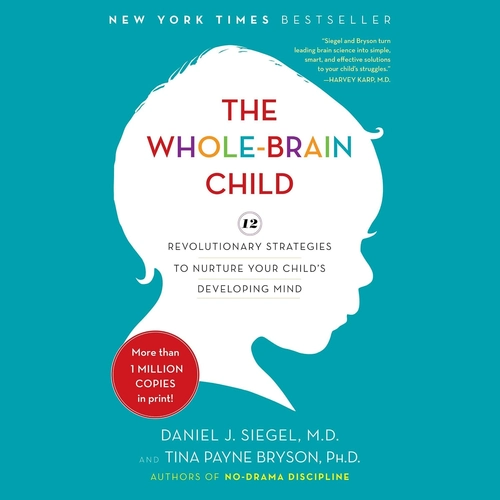
The Whole-Brain Child
Daniel J. Siegel & Tina Payne Bryson
I’ve always found that one of the most confusing parts of parenting is this question:
“If my child knows the rules, why do they still struggle to follow them?”
A child may know they should not yell, yet lose control when emotions become overwhelming. They may understand what parents expect, while still lacking the skills to manage frustration, regulate emotions, and solve problems.
The Whole-Brain Child explains these moments through the lens of child development and neuroscience. The authors explore how different parts of the developing brain influence emotions, decisions, and behavior. The book helps parents understand that many difficult moments are not simply about disobedience. Sometimes children are still learning the skills needed to handle complicated feelings.
What I appreciate about this book is the way it changes how parents see behavior. Instead of immediately asking how to correct a child, it encourages parents to first understand what is happening inside the child’s mind.
This book is especially valuable for parents who want to understand child development and approach parenting through psychology and science.
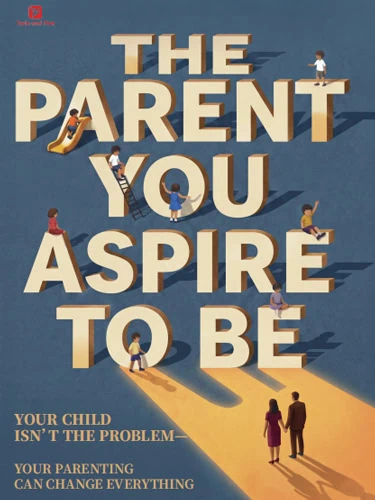
The Parent You Aspire to Be
Miles Carter
Understanding children is important, but many parenting struggles also come from something happening inside the parent.
I’ve always found that many parents do not struggle because they lack love or knowledge. The harder challenge is staying calm and connected during moments of stress, exhaustion, and repeated conflict.
The Parent You Aspire to Be explores not only why children behave in difficult ways, but also why parents sometimes react in ways they later regret. The book examines children’s emotional needs while also exploring how parental stress, anxiety, control, and personal experiences influence the parent-child relationship.
What makes this book meaningful is that it does not treat parenting problems as something that can be solved by simply changing the child. It focuses on transforming the entire relationship: understanding behavior, creating healthy boundaries, improving communication, and becoming the parent you want to be.
For example, when a child refuses to do homework, this book does not only ask, “How can I make my child cooperate?” It encourages parents to ask deeper questions: Why is my child resisting? Is my reaction making the conflict worse? How can I maintain boundaries while still creating connection?
For parents who often find themselves caught in arguments and wondering why they cannot respond the way they want to, this book offers a broader perspective.
The Main Difference: Understanding the Child vs Transforming the Relationship
These two books are not answering exactly the same question.
The Whole-Brain Child asks:
“Why does my child behave this way?”
It helps parents understand child development and the reasons behind emotional reactions.
The Parent You Aspire to Be asks:
“How should I respond when these challenges happen?”
It focuses not only on children’s behavior, but also on parents’ emotions, communication patterns, and parenting approach.
One book helps parents understand what is happening inside a child’s mind.
The other helps parents change the way they interact with their child.
Which Parenting Approach Book Should You Choose?
If you want to understand child development and learn how emotions and behavior connect with the developing brain, The Whole-Brain Child is an excellent choice.
If you are dealing with everyday parenting struggles such as backtalk, procrastination, screen addiction, emotional outbursts, or communication problems, The Parent You Aspire to Be may feel more directly useful.
I’ve always believed that effective parenting is not about finding a way to control children.
It is about finding a better way to understand them.
When parents begin to see the needs behind their child’s behavior and understand their own emotional responses, the parent-child relationship has the opportunity to truly change.
