A Gentle Guide for Tired Moms and Dads
This article is for the new parent who swore they would do things differently, and then found themselves yelling at 7am over socks. It is about one book that helped me keep that promise on the hard days.
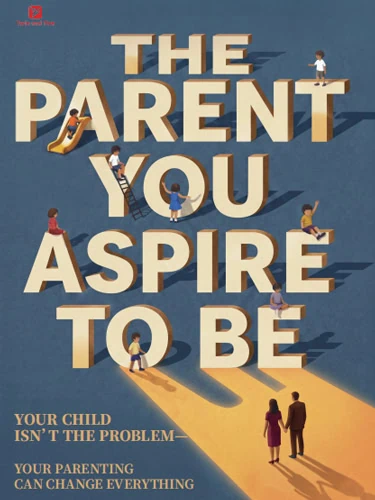
When I was pregnant with my first, I bought a stack of parenting books for new parents. I read maybe two. The rest sat on the shelf like little accusations. Then my daughter turned three, and I yelled at her for spilling milk. Not a big yell. A tired one. She looked at me the way you look at someone you thought you knew. That night I picked up a book called The Parent You Aspire to Be by Miles Carter. I did not expect much. I had read enough advice to last a lifetime.
Quick answer: What is the best parenting book for new parents?
Start with one that helps you manage your own emotions first, gives you real scripts for tantrums and lying, and teaches you how to repair after you lose your temper.
What made this one different was the first line on the cover. It said something like: you promised to break the cycle for your kids, and you still find yourself repeating the very things you swore you would change. I sat on the bathroom floor and cried a little.
Why New Parents Do Not Need More Techniques
Most books for new parents pile on techniques. Sleep schedules. Feeding charts. Discipline scripts. Milestone lists. Useful, yes. But none of it matters if you are running on four hours of sleep and your own childhood is quietly speaking through your mouth.
This book starts somewhere else. It starts with the parent. Are you stressed? Do you feel out of control? Are you reacting to your child, or to something older inside you?
I remember reading a chapter on yelling and thinking, “How did he know?” He described the exact moment. The child does something small, and the parent’s reaction is three sizes too big. That gap, he says, is where the real work lives.
The book does not promise perfect kids. It promises a calmer home. That felt honest to me.
What to Do When Kids Cry, Lie, or Refuse to Turn Off Screens
Here is where the book earns its place on your shelf. Instead of stopping at the behavior, it asks what the behavior is trying to say.
| Behavior | What it is often really about |
|---|---|
| Meltdown over the wrong cup | Not the cup. A need for control or closeness. |
| Lying | A child protecting themselves from a reaction they fear. |
| Screen battle | A battle about feeling heard, not about pixels. |
Carter shows two responses side by side. The reactive one. The connecting one. Then he gives you the actual words.
For example, when my son lied about finishing his vegetables, my old script was: “Why did you lie to me?” The new script, from the book, was: “You told me something that wasn’t true. I wonder if you were worried about how I’d react.” He froze. Then he nodded. Then he told me the truth.
I am not saying it works every time. It works maybe half the time. Half is a lot more than zero.
A Tool You Can Try Tonight: The Three-Breath Pause
The book has a small practice I now use daily. I call it the Three-Breath Pause. Before you respond to anything that stings, take three slow breaths. Not to calm the child. To calm yourself.
Three breaths is about fifteen seconds. In those fifteen seconds, three things happen. Your heart rate drops. The first hot sentence in your head loses some of its charge. And your child, watching you, learns that big feelings do not have to become big reactions.
I tried it during a tantrum in a grocery store last month. My daughter was screaming about a cereal box. I breathed. I said, “You really wanted that.” She screamed louder for ten seconds. Then she climbed into the cart and put her head on my arm. People stared. I did not care.
What This Looks Like by Age
| Age | What the book teaches |
|---|---|
| 0-1 | Lower the bar. Your job is presence, not performance. Hold the baby. Hold yourself. |
| 1-3 | Tantrums are a need for closeness, not defiance. Sit on the floor. Say less. Stay close. |
| Two kids | Comparison sneaks in. Praise each child for their own effort, in their own moment, out of earshot of the other. |
The Lines That Stayed With Me
Children cooperate when they feel understood, not controlled.
I have tested this more times than I can count. It holds.
Calm is borrowed, not taught.
My daughter does not learn patience from a lecture. She learns it from sitting next to me while I stay steady.
Step back so they can step up.
I still hover. I am working on it.
Your hard work is not their burden.
This one undid me. I had been quietly letting my kids feel responsible for my sacrifices. They never asked for that.

The Mistakes I Still Make, and the Repair
I still yell sometimes. Last Tuesday I snapped at my son for losing his shoes. He cried. I sat down next to him and said, “I was wrong to shout. I was tired and I took it out on you. I’m sorry.” He hugged me. That was it.
Carter calls this repair after rupture. The rupture is not the problem. The silence after it is. Children do not need a parent who never breaks. They need one who comes back.
Final Thought
I do not know if The Parent You Aspire to Be is the best parenting book for new parents. I have not read them all. But it is the one that stayed on my nightstand, dog-eared and coffee-stained, through the years when I needed it most.
If you are a new parent reading this at 2am with a baby on your chest, here is what I want you to know. You are not behind. You are not broken. You are becoming. That is the whole job.
Start with one book. Try one technique. See what happens.

