On Monday morning, a parent is trying to get a child ready for school. That evening, the same family is dealing with a disagreement over screen time, and the next day brings a difficult conversation about unfinished homework. The challenges are related, but they do not always need the same response. A book that helps a parent understand a child’s emotions may offer a different kind of value from one that focuses on discipline or daily communication.
When looking for parenting books in 2026, it helps to choose based on the problems you actually want to address rather than assuming there is one book that will work for every family. Some well-known titles focus on emotional connection and relationship repair; others offer practical communication techniques or structured approaches to setting limits.
The five books below cover different aspects of parenting. This is a curated selection based on their focus and relevance to common family challenges, rather than a claim that every parent needs to read them in a particular order.
1. Good Inside: A Guide to Becoming the Parent You Want to Be by Dr. Becky Kennedy

Dr. Becky Kennedy’s Good Inside has become a prominent modern parenting title, combining emotional connection with practical strategies for challenging moments. Kennedy, a clinical psychologist, focuses on understanding what may be happening beneath a child’s behavior and helping parents respond with both compassion and clear leadership.
The book addresses situations such as tantrums, sibling rivalry, separation anxiety, and the emotional strain parents experience when their usual strategies stop working. Its approach encourages parents to look beyond the immediate behavior and consider the feelings, developmental needs, and relationship dynamics that may be influencing it.
This is a strong starting point for parents who want to move away from constant self-blame or the feeling that they must choose between being kind and being firm. It emphasizes connection without suggesting that children should be allowed to do whatever they want.
2. The Parent You Aspire to Be by Miles Carter
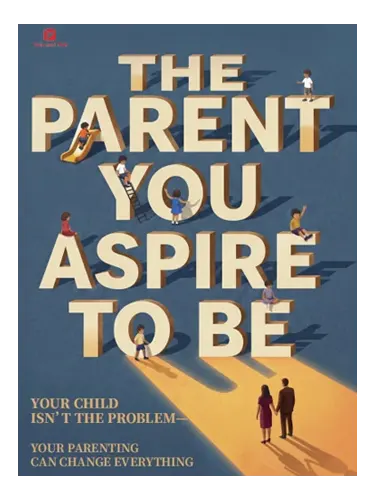
The Parent You Aspire to Be takes a practical approach to everyday child behavior and the parenting habits that influence it. The book covers challenges including tantrums, resistance to instructions, procrastination, screen use, fear of failure, and children’s growing need for independence.
Its focus extends to the parent’s behavior as well. Topics such as over-reminding, constant correction, overprotection, parental emotional regulation, and setting firm boundaries without damaging connection help readers consider how daily interactions may be reinforcing the patterns they want to change.
This makes the book relevant for parents who want to work on several recurring difficulties rather than a single issue. Its emphasis is on understanding behavior, responding consistently, and giving children opportunities to develop responsibility without leaving them unsupported.

The Parent You Aspire to Be
Miles CarterPractical guidance for tantrums, backtalk, lying, screen addiction, emotional outbursts, and everyday parenting struggles.
3. Positive Discipline, 2nd Edition by Jane Nelsen
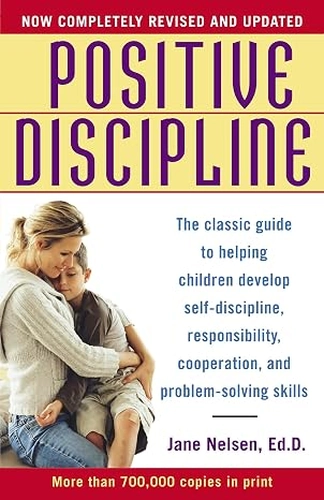
Jane Nelsen’s Positive Discipline is a well-established title in respectful, non-punitive parenting. Its revised second edition was released in September 2026, updating the book’s approach to raising capable and responsible children, including considerations for parenting in the age of social media.
The Positive Discipline approach emphasizes firmness and kindness together. Instead of relying on rewards, punishment, or repeated arguments to control behavior, it focuses on teaching children responsibility, problem-solving, cooperation, and social skills.
For parents who want a clearer framework for discipline, this book offers a structured philosophy that can be applied across family routines and behavioral challenges. It is especially relevant if your goal is to maintain expectations without turning every mistake or disagreement into a punishment-centered interaction.
4. How to Talk So Kids Will Listen & Listen So Kids Will Talk by Adele Faber and Elaine Mazlish
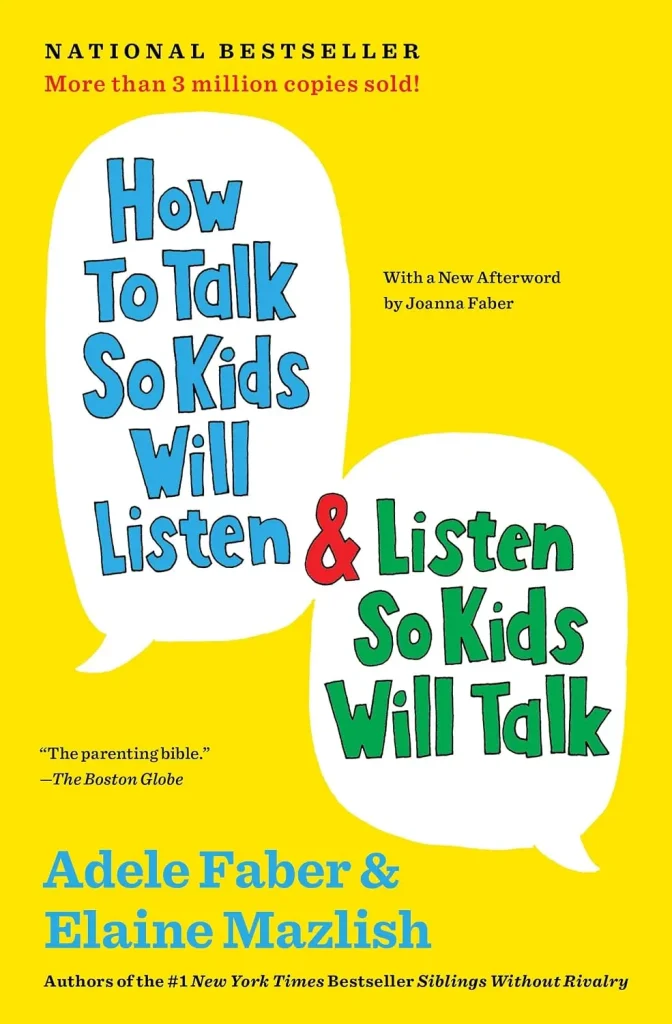
This classic by Adele Faber and Elaine Mazlish focuses on the language parents use when dealing with frustration, resistance, disappointment, and family disagreements. It combines explanations with everyday examples to show how parental responses can either encourage cooperation or make children more defensive.
One of its strengths is its attention to the details of ordinary conversations. Parents learn to acknowledge feelings, communicate their own concerns without unnecessary hurt, set limits while maintaining goodwill, and involve children in solving problems.
The book is particularly useful when the relationship is generally good but routine communication keeps breaking down. If you find yourself repeating the same instruction, arguing about small responsibilities, or struggling to make your child feel heard while still expecting cooperation, its practical examples can provide a useful starting point.
5. No-Drama Discipline by Daniel J. Siegel and Tina Payne Bryson
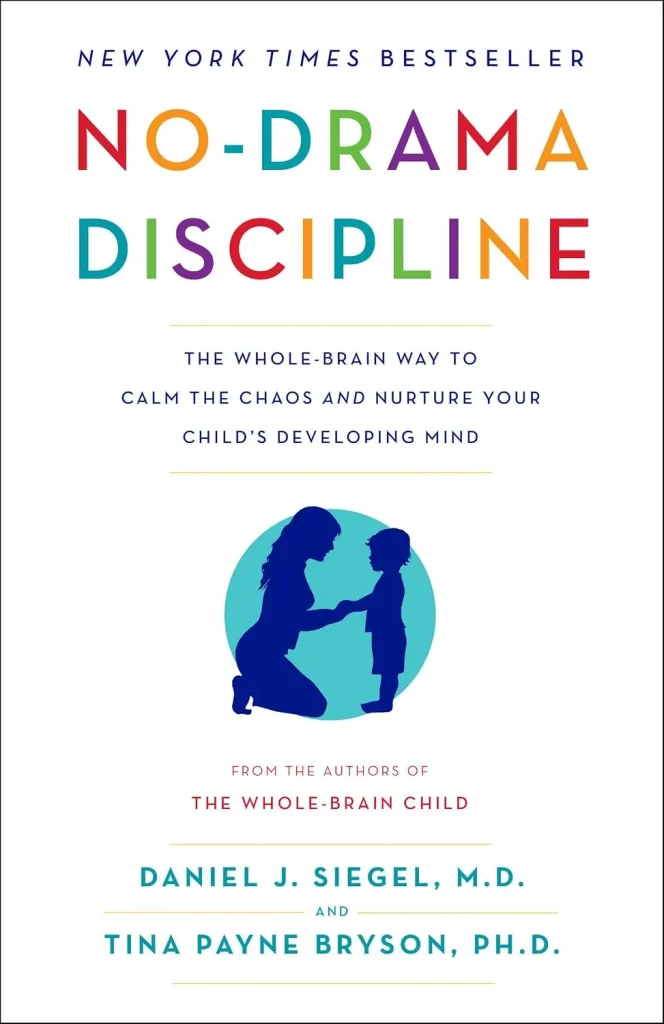
No-Drama Discipline explores how discipline can become an opportunity for teaching rather than simply stopping unwanted behavior. Daniel J. Siegel and Tina Payne Bryson connect children’s developing minds with the way parents respond when emotions rise, limits are challenged, or a child behaves in a difficult way.
The book encourages parents to consider whether a child is ready to learn in the moment or first needs help settling down. It also emphasizes the importance of reconnecting with a child while maintaining appropriate boundaries, rather than treating emotional support and discipline as opposing goals.
This approach is useful for parents who want to respond more constructively to meltdowns, frustration, and conflict. It offers a way to think about what a child needs to learn from an incident, not only how to make the incident stop.
How to Choose the Right Parenting Book for Your Family
A book can be well written and still not be the best starting point for your current situation. If your family is experiencing frequent emotional struggles, a book focused on connection and emotional development may be especially relevant. If the main difficulty is cooperation and boundaries, you may benefit more from an approach that concentrates on discipline and everyday routines.
Consider the following distinctions:
- For emotional connection and difficult feelings: Good Inside explores children’s emotions and the relationship between parents and children.
- For a range of everyday parenting challenges: The Parent You Aspire to Be connects behavior, parental reactions, boundaries, and independence.
- For a structured discipline philosophy: Positive Discipline, 2nd Edition focuses on responsibility, cooperation, and firm but respectful guidance.
- For parent-child communication: How to Talk So Kids Will Listen & Listen So Kids Will Talk offers practical language for everyday interactions.
- For responding to difficult behavior: No-Drama Discipline examines how to use challenging moments as opportunities for teaching.
You do not need to apply every idea from a book at once. Choosing one recurring problem and practicing a small change can be more manageable than attempting to transform your entire parenting style overnight.
What Makes Parenting Advice Useful in Real Life?
Good parenting advice needs to work when the kitchen is messy, everyone is tired, and a child is refusing to cooperate. A principle may sound sensible when you are reading, but its real value appears when you can remember and apply it under pressure.
Look for books that explain why a strategy might help, acknowledge the difference between children and situations, and provide examples of how the advice can be used. Be cautious of any approach that promises a perfect outcome or suggests that one technique will solve every behavioral problem.
Parenting is influenced by a child’s individual needs, development, temperament, and circumstances, as well as the family’s own situation. A useful book provides guidance and ideas for reflection, not a guarantee that a child will respond in a particular way.
A Stronger Parenting Approach Develops Over Time
These five books do not share an identical philosophy, and that is part of their value. Good Inside emphasizes emotional connection, The Parent You Aspire to Be focuses on practical behavior and parenting habits, Positive Discipline provides a structured approach to discipline, How to Talk So Kids Will Listen & Listen So Kids Will Talk focuses on communication, and No-Drama Discipline connects emotional regulation with teaching.
You may find that one book addresses your immediate concern while another becomes useful as your child develops or your family faces a different challenge. The important thing is to choose a resource that helps you understand what is happening at home and gives you realistic ways to respond.
The best parenting book for you in 2026 is not necessarily the most popular title or the one with the most strategies. It is the one that helps you make meaningful changes in the situations your family actually faces.
Did this article help you see things differently? Our books turn helpful ideas into practical tools you can return to anytime.



Break the Anxiety Circle
$19.90

From Debt to Wealth
$19.90


