You are not bad with people.
You just never learned how to read the signals, understand your own reactions, or recognize the patterns shaping everyday interactions.
Psychology is not just for academics or therapists. It is the framework that explains why people do what they do. And once you understand it, you stop being confused by the people around you.
The problem is, most psychology books are not written for beginners. They assume you already know the jargon. They dive into dense studies without explaining why they matter. The three books below are different. They are written for people who are just starting out.
Quick Comparison
| Book | Best For | Main Focus |
|---|---|---|
| How to Read Someone’s Mind | Understanding people | Social cues and behavior patterns |
| Permission to Feel | Understanding emotions | Emotional awareness and regulation |
| The Like Switch | Building relationships | Rapport and connection |
1. How to Read Someone’s Mind by Miles Carter
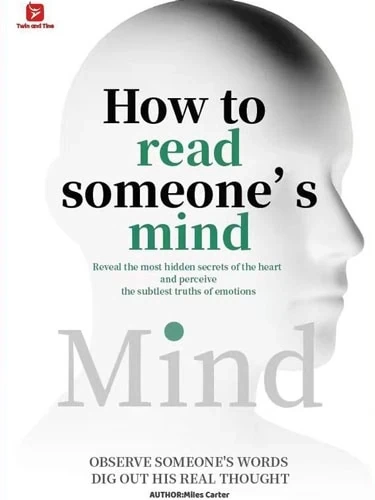
I used to walk away from conversations replaying them in my head, trying to figure out what actually happened. Someone would say they were fine, but I knew they were not. I could not explain why.
Carter gave me a psychology-based framework for understanding what I was already sensing. His book is about reading people in real time—not as a way to guess someone’s thoughts, but as a way to notice patterns and communicate more clearly.
He breaks it down into practical, observable signals: mixed signals, unspoken feelings, conversations that feel off. Instead of asking you to memorize abstract concepts, he teaches you to recognize when something feels different and understand why people react the way they do.
What I found most useful is the emphasis on baseline behavior. People often have patterns. When those patterns shift, it can be a clue that something has changed. I stopped asking “are they upset?” and started noticing what was different about today compared to how they usually act. That one shift changed how I approach difficult conversations.
If you are just starting out and want to understand the person across from you right now, this is the book to read first.
2. Permission to Feel by Marc Brackett
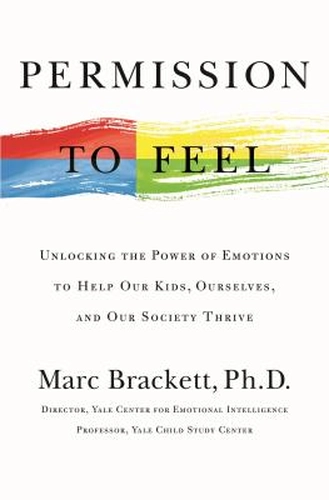
Most people learn to ignore their emotions. Push through. Pretend they are not there. Brackett argues that ignoring emotions often creates more problems than understanding them.
Brackett is the founding director of the Yale Center for Emotional Intelligence. His book is built around the RULER framework, a widely used approach for understanding and managing emotions. The framework breaks down into five steps: Recognize, Understand, Label, Express, and Regulate.
What I found most useful is the emphasis on permission. Brackett argues that many of us were taught to suppress our emotions. He makes a case for letting yourself feel what you feel, and then using that awareness to make better decisions.
I started using one of the exercises after a difficult conversation with a colleague. Instead of spiraling, I named what I was feeling. I recognized the frustration, labeled it, and asked myself what I actually needed. The conversation did not fix itself, but I showed up differently the next time.
This is the book for someone who wants to understand their own emotional world—and stop being controlled by it.
3. The Like Switch by Jack Schafer
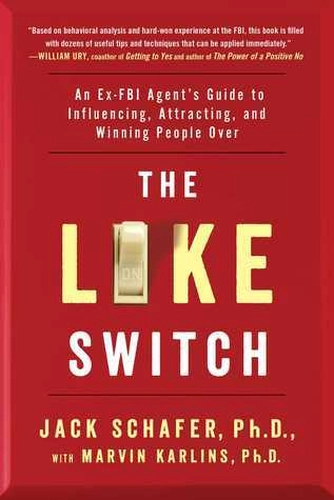
Schafer is a former FBI agent who specialized in recruitment and source development. His work involved understanding human behavior, building rapport, and recognizing social cues. The Like Switch distills that experience into a set of practical techniques anyone can use.
The book focuses on behavioral patterns that signal safety and trust. How to read someone’s willingness to connect. How to create a sense of rapport without forcing it. How to tell the difference between someone who is genuinely interested and someone who is performing interest.
What I appreciate most is that Schafer does not teach manipulation. He teaches awareness. He shows you what people are signaling—and how to respond in a way that builds genuine connection. It is practical, grounded in real experience, and refreshingly free of fluff.
This is the book for someone who wants to improve their ability to create rapport and connection with others.
If you are completely new to psychology, start with the book that answers the question you find yourself asking most often.
- Why do people act this way? → Carter. He gives you tools to understand the people around you, starting with your next conversation.
- Why do I feel this way? → Brackett. He gives you a practical system for recognizing and managing your emotions.
- How do I connect better? → Schafer. He gives you the tools to build rapport and trust with others.
All three will change how you see people. But the right first book is the one that matches your biggest curiosity right now.
