Human behavior is one of the most fascinating things we study. Why do people say one thing and do another? Why do we make choices that go against our own interests? Why are we so confident in beliefs that turn out to be wrong?
These questions have shaped psychology for over a century. The answers are not always intuitive. Sometimes they are unsettling. But once you start seeing the patterns, you stop being confused by the people around you—and by yourself.
Here are three books that helped me understand human behavior. Each one covers a different angle. One explains why people act the way they do. One reveals how decisions are shaped without us knowing. One shows why our own brains are not as reliable as we think.
Quick Comparison: Which Psychology Book Should Beginners Read First?
| Book | Best For | Main Focus |
|---|---|---|
| Awakening to Human Nature | Understanding people | Human behavior patterns |
| Nudge | Understanding decisions | Behavioral psychology |
| You Are Not So Smart | Understanding yourself | Cognitive biases |
1. Awakening to Human Nature by Owen Pierce
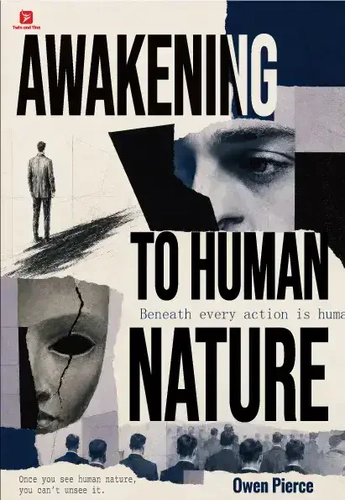
Most books about human behavior focus on what people do in general. This one focuses on the person in front of you right now.
You have probably had this experience. Someone says all the right things. Their tone is friendly. But something underneath feels different. You cannot explain why. You just know.
Pierce does not give you a list of gestures to memorize. He teaches you to notice patterns instead. Small changes in how someone communicates. A hesitation before answering. A tone that does not match the words. A gap between what someone says and what their actions tell you.
What makes this book different is the focus on baseline. Most people have consistent patterns in how they communicate and respond. When those patterns change, something has shifted underneath. Not because you should assume the worst about people, but because noticing change is how you stop being confused by the people around you.
The book covers specific situations: workplace dynamics, personal relationships, and moments of tension or conflict. It does not ask you to memorize theories. It teaches you to pay attention.
This is perfect for anyone who has ever walked away from a conversation wondering what they missed.
2. Nudge by Richard Thaler and Cass Sunstein
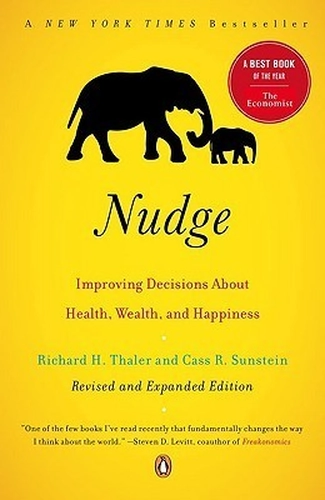
One of the most surprising discoveries in psychology is that our decisions are not always as independent as we believe. Nudge explores the hidden forces that shape our everyday choices.
You have probably been nudged without realizing it. The cafeteria that puts fruit at eye level so you grab it instead of the cake. The email that makes you click “sign up” because it is the default option. The organ donation form where you have to opt out instead of opt in.
These are nudges—small design changes that influence decisions without removing choice. Thaler won a Nobel Prize for this work. His argument is simple: humans are not perfectly rational. We take shortcuts. We go with the default. We are influenced by things we do not consciously notice.
What makes Nudge perfect for beginners is the examples. You do not need to understand psychology to get it. The book is full of everyday situations that are easy to relate to. The chapters are short. The ideas stick. And once you see nudges, you start noticing them everywhere.
This is perfect for anyone who wants to understand why they make the decisions they do—and how small changes can lead to better outcomes.
3. You Are Not So Smart by David McRaney
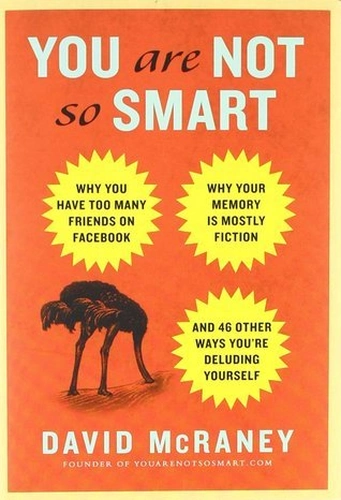
Most of us believe we are rational. We think we see the world clearly. We trust our memory. We assume our opinions are based on logic.
McRaney says you are wrong. Not because you are stupid. Because your brain is built to take shortcuts.
The book is a collection of cognitive biases—one per chapter, each explained with humor and real-world examples. You learn why you rationalize bad decisions. Why you believe you are smarter than average. Why you see patterns where none exist. Why you think you would act differently in a crisis than you actually would.
What I found valuable is the tone. McRaney is not condescending. He includes himself in the examples. He admits he falls for these biases too. The book feels like a conversation with a smart, funny friend who is showing you the hidden flaws in your thinking.
This is perfect for anyone who has ever made a bad decision and honestly believed it was the right one at the time.
If you want to understand the person in front of you, start with Pierce.
If you want to understand why you make the decisions you do, read Nudge.
If you want to understand why your own brain keeps tricking you, pick up McRaney.
Each one changed how I see people, including myself. The right one to start with depends on what confuses you most.
