You are curious about psychology. But you do not know where to start.
You have seen the big textbooks. You have heard of the famous experiments. But they all feel dense and academic. You want something you can actually read—something that explains why people behave the way they do without putting you to sleep.
The three books below are perfect for beginners. They are not textbooks. They are readable, practical, and full of insights you can use immediately.
Why Most People Miss What Is Right in Front of Them
Here is the problem with most psychology books for beginners. They start with history, or brain anatomy, or famous experiments from the 1970s. You learn about Pavlov’s dogs and Milgram’s shocks. It is interesting, but it does not help you understand the person sitting across from you at dinner.
The first book below takes a different approach. It does not start with theory. It starts with observation.
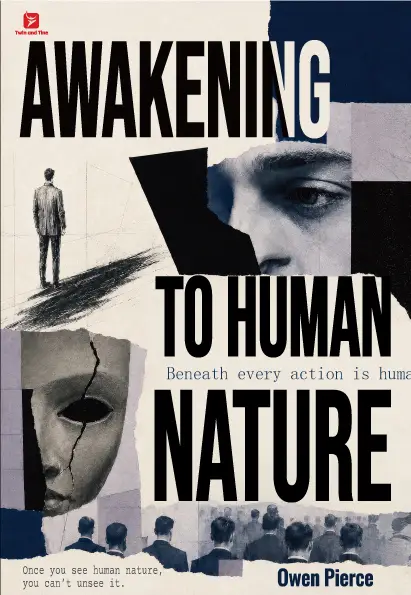
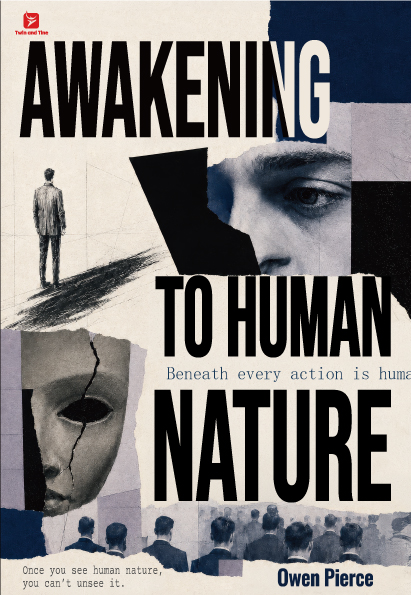
Awakening to Human Nature by Owen Pierce
The psychology you can actually use every day.
This book strips away the politeness and reveals how people actually operate. It covers why loyalty expires when needs change, why honesty is often punished, why people reward flattery and punish truth, and why kindness is sometimes read as permission to take.
Understanding human nature is not about becoming cynical. It is about becoming clear.
The book is organized around practical themes: cognitive biases, emotional patterns, hidden motives, social dynamics, and manipulation tactics. Each chapter shows you a pattern you have probably noticed before—but never had language for.
It does not require any background in psychology. It does not use academic jargon. It just shows you how to see people more clearly.
For anyone who wants to understand why people do what they do—without a degree in psychology.
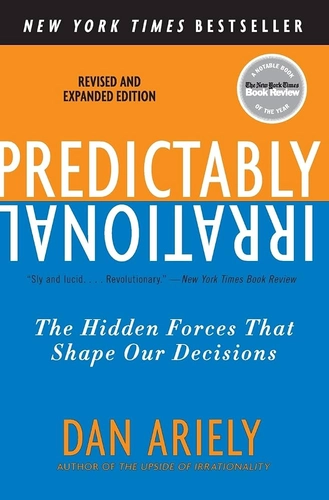
Predictably Irrational by Dan Ariely
Why do smart people make such irrational decisions?
Ariely is a behavioral economist who studies why people make bad decisions. His experiments are creative, his writing is engaging, and his conclusions are surprising.
You will learn why free things make us irrational. Why we procrastinate even when we know better. Why we overvalue what we already own. Why we make decisions based on how options are presented to us.
We are not as rational as we think. And understanding our irrationality is the first step to making better choices.
What makes this book perfect for beginners is the format. Each chapter stands alone. You can read one, learn something useful, and apply it immediately. No prerequisites. No jargon.
For anyone who wants to understand why they keep making decisions they later regret.
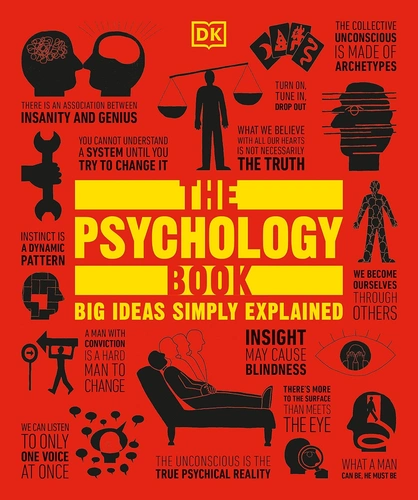
The Psychology Book by DK Publishing
A visual introduction to every major idea in psychology.
If you want a broad overview of psychology without reading a textbook, this is the book.
It covers the major figures: Freud, Jung, Pavlov, Skinner, Piaget, Maslow. It explains the big ideas: conditioning, attachment, cognitive dissonance, the unconscious. It uses simple language, clear examples, and visual diagrams.
You do not need to memorize dates and names. You just need to understand the ideas.
What makes this book ideal for beginners is the accessibility. It is designed for people with no background in psychology. Each concept is explained in two to four pages. You can skip around. You can read what interests you and come back later.
For anyone who wants a broad introduction to psychology without the academic overwhelm.
These three books each offer a different entry point.
Pierce gives you practical insights you can use immediately. Ariely shows you the hidden irrationality behind everyday decisions. DK gives you a visual overview of the entire field.
If you are new to psychology, start with the one that matches your interest. Need practical tools for understanding people? Start with Pierce. Need to understand your own bad decisions? Start with Ariely. Need a broad overview? Start with DK.