You thought you understood someone. Then they did something completely unexpected.
You thought you knew yourself. Then you caught yourself repeating the same mistake again.
Understanding people is hard enough. Understanding yourself is even harder. The books below cover both sides of the equation. One helps you read other people more accurately. One helps you see your own blind spots. One explains the hidden forces that shape behavior—yours and theirs.
Quick Comparison
| Book | Best For | Main Focus |
|---|---|---|
| How to Read Someone’s Mind | Reading others | Understanding signals and patterns |
| Insight | Understanding yourself | Self-awareness and blind spots |
| The Person and the Situation | Understanding behavior | How situations shape actions |
1. How to Read Someone’s Mind by Miles Carter
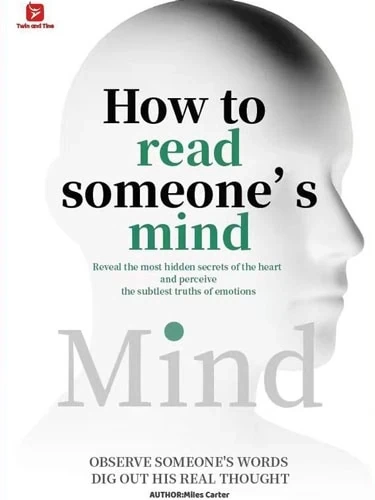
You leave a conversation knowing something was off, but you cannot explain what. Someone’s words and behavior do not match. You have probably had this experience more times than you can count.
Carter gives you a framework for understanding those moments. He does not teach you to memorize gestures or decode micro-expressions. He teaches you to notice patterns most people overlook. Changes in tone. Hesitation before answering. Mismatches between what someone says and what they actually do.
Most people have consistent patterns in how they communicate. When those patterns break, something has shifted underneath. The signal is not in the words. The signal is in how the words come out.
Learning this does not mean becoming suspicious of everyone. It means becoming better at noticing patterns before you ignore your own instincts.
What you will learn:
- How to notice changes in communication patterns
- How to interpret gaps between words and actions
- How to read people without becoming cynical
- How to build stronger relationships through awareness
This is perfect for anyone who has ever walked away from a conversation wondering what they missed.
2. Insight by Tasha Eurich
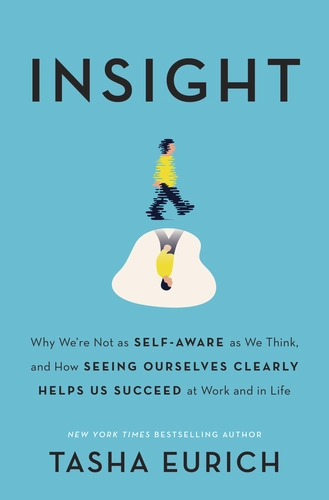
Most people think they are self-aware. Most people are wrong.
Eurich is an organizational psychologist who spent years studying self-awareness. Her research suggests that genuine self-awareness is much rarer than most people assume. The rest of us are walking around with blind spots we do not know we have.
The book breaks self-awareness into two categories: internal self-awareness (how well you understand yourself) and external self-awareness (how well you understand how others see you). Most people are strong in one and weak in the other.
What makes this book useful is the practical framework. Eurich gives you specific exercises for getting honest feedback from people who know you. She also challenges the common assumption that simply asking yourself “why do I feel this way?” is always helpful. Sometimes it can lead to more overthinking instead of real clarity.
If you have ever felt like you keep repeating the same patterns and cannot figure out why, this book will show you what you are missing.
What you will learn:
- The difference between internal and external self-awareness
- How to get honest feedback from people who know you
- Why introspection sometimes backfires
- How to identify your blind spots
- How to become more self-aware without overthinking
This is perfect for anyone who feels stuck in repeating patterns and wants to understand why.
3. The Person and the Situation by Lee Ross and Richard Nisbett
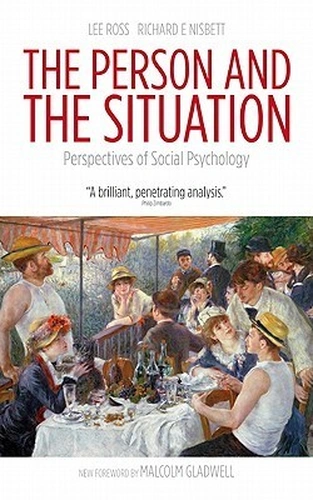
Most of us believe people act the way they do because of their personality. Someone is generous because they are a generous person. Someone is angry because they have an angry personality. This is the default way we explain behavior.
Ross and Nisbett argue that this default is often wrong. Situations shape behavior more than we realize. A person can be generous in one context and selfish in another. Someone can be calm in one situation and explosive in another. The same person, different conditions, completely different behavior.
A mistake most people make: assuming someone’s personality explains everything. Psychologists call this the fundamental attribution error. Once you understand it, you stop making the mistake of assuming people are “just like that.”
What you will learn:
- Why we overestimate personality and underestimate situations
- How context changes behavior
- The fundamental attribution error and how to avoid it
- How to understand people without oversimplifying them
This is perfect for anyone who wants to stop misjudging people based on their personality alone.
Frequently Asked Questions
What psychology book should I read first to understand myself and others?
If your goal is understanding other people’s behavior, start with How to Read Someone’s Mind. If you want to understand your own patterns, start with Insight.
Can psychology books actually change how you see people?
The best psychology books do not give you a way to “read minds.” They give you better frameworks for noticing patterns, questioning assumptions, and understanding why people behave the way they do.
Do I need a psychology background to read these books?
No. All three are written for general readers. They avoid jargon and explain ideas clearly with real-world examples.
These three books cover different layers of understanding. Carter helps you read others. Eurich helps you see yourself. Ross and Nisbett help you understand the hidden forces shaping behavior.
If you want practical tools for understanding people, start with Carter.
If you want to understand your own patterns, read Insight.
If you want to understand why behavior changes so much across situations, pick up Ross and Nisbett.
