Living with frequent anxiety can make ordinary situations feel much harder than they need to be. A busy schedule, an uncertain decision, a difficult conversation, or even a small mistake can trigger a long chain of worry that is difficult to switch off. For many people, the hardest part is not simply feeling anxious but understanding why the same patterns keep appearing.
Self-help books can give anxious readers a useful place to start. The right book can help you recognize recurring thought patterns, look at your reactions more objectively, and develop a better understanding of what may be keeping worry going. The three books below take different approaches, making them useful for readers with different experiences of anxiety.
1. Break the Anxiety Circle by Miles Carter
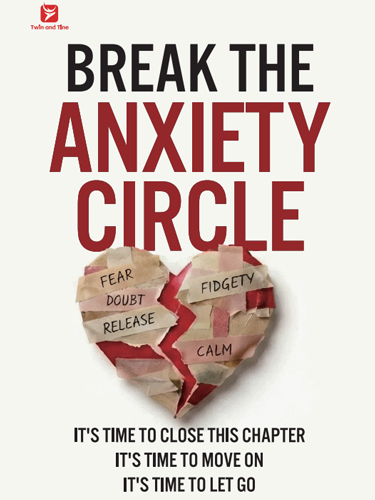
Break the Anxiety Circle
Miles CarterA mental reset for people trapped in the overthinking loop. Understand why your mind won’t stop racing — and how to break free from anxiety, people-pleasing, and emotional exhaustion.
Best for: Readers who want to understand the cycle behind recurring anxiety and worry.
Break the Anxiety Circle by Miles Carter focuses on the patterns that can keep anxiety going long after an initial stressful thought or situation has passed. Anxiety is not always a single moment of fear. It can become a repeating cycle in which a thought creates emotional tension, that tension leads to a familiar reaction, and the reaction then reinforces the original concern.
This can make anxiety feel unpredictable even when there is actually a recognizable pattern underneath it. You may repeatedly check, avoid, overthink, seek reassurance, or mentally replay situations without noticing how those responses are connected.
The book encourages readers to step back from the immediate feeling and examine the larger cycle. That shift can be useful because it moves the focus away from simply trying to get rid of anxious thoughts and toward understanding what happens before, during, and after those thoughts appear.
For anxious readers, the book can help explore questions such as:
- Why do certain worries keep coming back?
- What habits make anxious thinking stronger?
- How do thoughts, emotions, and behaviors influence one another?
- Why can temporary relief sometimes lead to more anxiety later?
- How can you become more aware of automatic reactions?
This makes Break the Anxiety Circle a strong starting point for readers who feel caught in repetitive worry rather than dealing with occasional stress alone. Instead of approaching every anxious thought as a separate problem, the book encourages readers to look for the pattern connecting them.
2. Don’t Feed the Monkey Mind by Jennifer Shannon
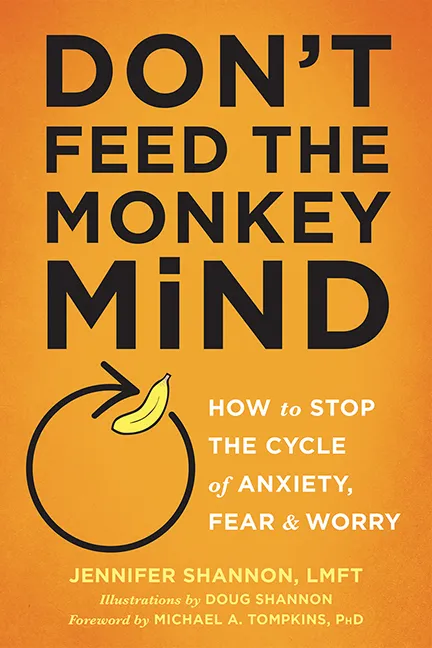
Best for: Readers who want practical help with repetitive worry and anxious mental habits.
Don’t Feed the Monkey Mind explores the way anxious thinking can become repetitive and self-reinforcing. When the mind starts generating one possible problem after another, it can feel natural to keep analyzing until you finally reach certainty. The problem is that this search for certainty can sometimes create even more mental noise.
The book takes a practical approach to changing the way you respond to anxious thoughts. Rather than treating every worry as a problem that must be solved immediately, it encourages readers to recognize unhelpful patterns and develop different responses.
This makes it a useful companion to Break the Anxiety Circle. Both books can help readers move away from automatically following every anxious thought, although they approach that goal from somewhat different perspectives.
3. The Worry Trick by David A. Carbonell
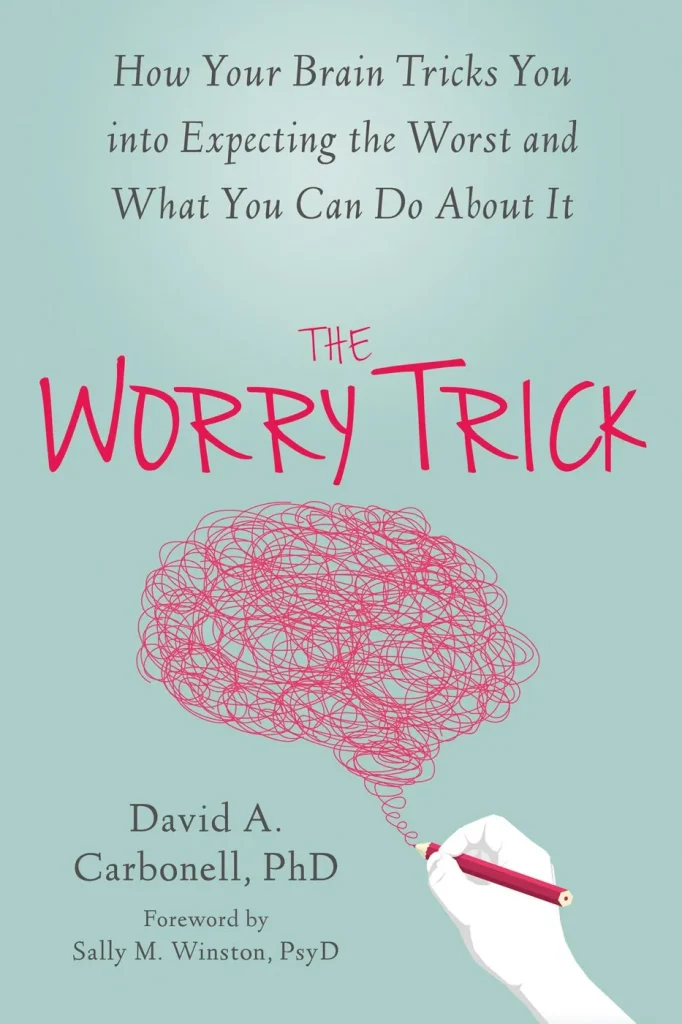
Best for: Readers who feel that worrying has become a habit they cannot easily turn off.
The Worry Trick looks at one of the most familiar experiences among anxious people: knowing that you are worrying too much while still feeling compelled to keep worrying.
The book explains how worry can become a habit and why attempts to completely eliminate anxious thoughts may sometimes make them feel even more persistent. By changing the relationship with worry rather than constantly trying to win an argument with every anxious thought, readers can begin approaching those thoughts differently.
For someone creating a self-help reading list for anxiety, this perspective can be especially valuable. It offers another way to think about the problem: instead of asking, “How do I make myself stop worrying right now?”, you can start asking, “What am I doing in response to this worry, and is that response actually helping?”
How These Self-Help Books Approach Anxiety Differently
These three books are useful together because they do not all approach anxiety in exactly the same way. Break the Anxiety Circle places strong emphasis on understanding the broader cycle connecting thoughts, emotions, and behaviors. Don’t Feed the Monkey Mind focuses more directly on repetitive anxious thinking and the habits surrounding it, while The Worry Trick examines why worry itself can become such a persistent pattern.
That difference matters because anxiety does not look exactly the same for everyone. One reader may spend hours analyzing future possibilities, another may repeatedly seek reassurance, and someone else may avoid situations that create discomfort. Understanding your particular pattern can make it easier to identify which ideas are most relevant to you.
A good self-help book should not make you feel as though every anxious person needs to follow exactly the same formula. Instead, it should give you a clearer way to observe your own experiences and make more intentional choices about how you respond.
What to Look for in a Self-Help Book About Anxiety
A useful anxiety book should do more than tell you to think positively or simply relax. For readers dealing with recurring anxiety, it can be more helpful to find a book that explains how anxious patterns develop and why certain reactions may continue even when they are no longer useful.
Practicality also matters. A book can be interesting to read, but its ideas are more valuable when they help you recognize something in your own life. The most useful books often encourage reflection, awareness, and changes in everyday responses rather than presenting anxiety as a problem that can be solved with one simple tip.
It is also worth choosing a book that matches the kind of anxiety you experience. Someone who struggles mainly with repetitive worry may want something different from a reader whose biggest difficulty is avoidance or emotional overwhelm.
Why Start With Break the Anxiety Circle?
For readers who feel that anxiety keeps returning in different forms, Break the Anxiety Circle offers a useful way to step back and examine the full pattern. Instead of focusing only on the anxious feeling itself, it encourages readers to consider the thoughts, emotional reactions, and behaviors that may keep the cycle moving.
That broader perspective can be useful when you have already tried to “stop worrying” but find yourself repeating the same mental habits. Understanding the cycle can give you a clearer starting point for deciding what needs to change.
The goal is not to expect yourself to never feel anxious again. A more realistic goal is to become better at recognizing anxious patterns and responding to them with greater awareness. For many readers, that can be a more meaningful first step toward feeling less controlled by worry.