You got the raise. You make more than you did a few years ago. But somehow, your bank account still does not look the way you expected. Rising costs have made this even harder.
The traditional advice—“just save more and invest in index funds”—feels like it was written for someone else. It assumes you already have money to work with. It assumes you are not bleeding cash every month. It assumes you already know how to stop the financial leaks in your everyday life.
The three books below approach wealth from different angles. One helps you get out of the hole you are already in. One teaches you the foundational habits of wealth. One gives you a simple path to long-term growth.
Quick Comparison
| Book | Best For | Main Lesson |
|---|---|---|
| From Debt to Wealth | Getting financially stable | Fixing money habits and debt |
| The Richest Man in Babylon | Building wealth habits | Pay yourself first |
| The Simple Path to Wealth | Long-term growth | Index investing & simplicity |
1. From Debt to Wealth by Owen Pierce
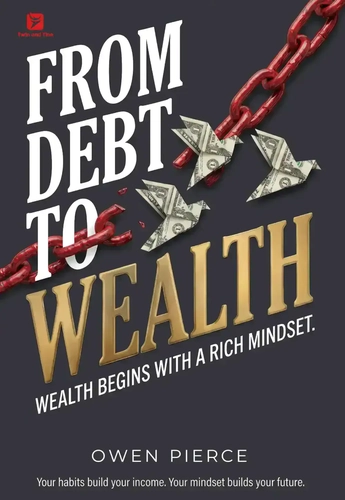
Most wealth-building books talk about investing, portfolios, and passive income. But those ideas do not help much when you are still trying to stop the financial leaks in your everyday life.
Pierce starts with a question most books avoid: why does your income never seem to be enough? The answer is not about willpower. It is about habits you were never taught to break. Your expenses grow right along with your paycheck. You buy things to feel better and end up deeper in debt. You tell yourself you will start saving next month—and next month never comes.
What makes this book different is that it assumes you are starting from behind. It does not tell you to save 20% of your income or max out your retirement accounts. It walks you through the mechanics of breaking the cycle with what you already have. How to pay down debt without feeling deprived. How to build savings when you have never been able to keep them.
This is not a book about getting rich. It is a book about stopping the bleed. About getting to solid ground so you can actually start building something.
What you will learn from ‘From Debt to Wealth’:
- How to break the paycheck-to-paycheck cycle without feeling deprived
- How to eliminate bad debt in a way that actually sticks
- How to build savings when you have never been able to keep them
- Why earning more money does not solve the problem if your habits stay the same
- How to shift from survival mode to building mode
This is perfect for anyone who is still paying off debt, living paycheck to paycheck, or feeling like they are running in place.
2. The Richest Man in Babylon by George S. Clason
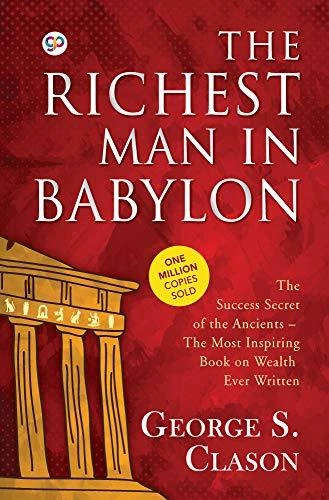
Most people think wealth starts when you earn more money. Clason argues it starts with what you do with the money you already have.
This book was first published in 1926, but its principles have not aged a day. It is written as a collection of parables set in ancient Babylon, telling the story of people who learned the timeless rules of money. The language is simple. The lessons are direct. And they stick with you.
The core ideas: pay yourself first—save at least 10% of everything you earn. Live below your means—do not confuse your needs with your wants. Make your money work—put your savings to work so they earn more for you. Seek advice from people who know what they are talking about. And learn to distinguish between what is truly necessary and what is just a habit.
What makes this book essential is its clarity. There is no jargon. No complicated formulas. Just simple rules that have worked for thousands of years. It is the kind of book you could hand to a teenager and they would understand it. But it is also the kind of book that you will come back to years later and realize you still have not mastered all its lessons.
What you will learn from ‘The Richest Man in Babylon’:
- The “pay yourself first” principle and why it works
- How to live below your means without feeling deprived
- Why your savings need to work for you, not just sit there
- How to distinguish between needs and wants
- The importance of seeking good advice and learning continuously
This is perfect for anyone who wants to build solid financial habits but does not know where to start.
3. The Simple Path to Wealth by JL Collins
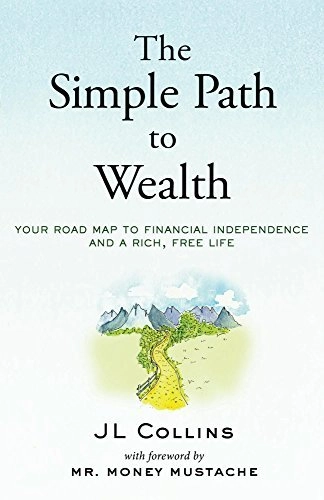
Once you have stopped the bleeding and built the basic habits, the next question is: what do you do with your money now?
Collins started writing letters to his daughter about money. He wanted to give her everything she needed to know about investing in one place. No jargon. No complicated strategies. Just a simple path: spend less than you earn, invest the rest in low-cost index funds, and hold them for decades.
The book explains why active trading, stock picking, and timing the market are losing games. It shows you how fees eat your returns and how to avoid them. It covers what to do with your money at different life stages: what to focus on when you are just starting out, how to adjust as your income grows, what changes when you get closer to financial independence.
What makes this book essential is its clarity. Collins does not leave you guessing. He gives you one simple strategy that has been proven to work over decades. You do not need to follow the market. You do not need to make complicated decisions. You just need to set up the system and let it run.
What you will learn from ‘The Simple Path to Wealth’:
- Why index funds are the simplest path to wealth
- Why active trading and stock picking usually fail
- How to avoid fees that eat your returns
- What to focus on when you are just starting out
- How to build wealth without becoming an expert
This is perfect for anyone who is tired of complicated investing advice and wants a clear, straightforward strategy.
The best wealth book is not necessarily the one with the most advanced strategies. It is the one that solves the problem you are actually facing right now.
Still paying off debt? Start with Pierce.
Ready to build the habits that create wealth? Read Clason.
Want a simple strategy for long-term growth? Pick up Collins.
All three will change how you think about money. But the right first book is the one that matches where you are right now.
