The Answer Was There Until Someone Asked You
During a team meeting, Sarah had been quietly following the discussion for twenty minutes. She had a clear opinion about the new project and had already explained it to a coworker earlier that morning. Then her manager turned to her and asked, “What do you think?”
Her mind went completely blank.
She knew the answer. She knew the subject. But for several seconds, nothing useful seemed available. She eventually said something vague and spent the rest of the meeting thinking about the much better response she could have given.
Moments like this can make people think they are bad at speaking. Often, the real problem is what happens when attention, pressure, and self-consciousness all hit at once.

Why Does Your Mind Go Blank?
A blank mind does not always mean you have nothing to say. Sometimes you are trying to do too many things at the same time: find the right words, predict how the other person will react, make sure your answer sounds intelligent, and avoid making a mistake.
That internal traffic can make it surprisingly difficult to access information you already have. The more important the moment feels, the more aggressively you may start searching for the “perfect” answer.
A useful first step is to stop treating the blank moment as an emergency. You do not need to fill the silence immediately. Taking a brief pause can give your brain enough room to organize what you already know.
What to Do When Your Mind Suddenly Freezes
There are a few simple ways to make these moments easier without trying to memorize complicated speaking techniques:
- Pause before answering. A short silence feels much longer to you than it usually does to the other person.
- Start with the main idea. You can add details once your first point is out.
- Use the question as your structure. Answer the specific thing you were asked instead of trying to predict everything else the listener might want to know.
- Let yourself clarify. You do not have to produce a polished answer in one attempt.
These habits reduce the pressure to construct an entire response in your head before you say the first sentence.
When the Real Problem Is Fear of Saying the Wrong Thing
For some people, going blank is closely connected to self-consciousness. The moment they begin speaking, they hear their own voice internally and start evaluating it.
“Does that sound stupid?”
“Was that too simple?”
“Should I have said it differently?”
That kind of self-monitoring takes attention away from the actual conversation. Instead of listening and responding, you are watching yourself perform.
This is why building speaking confidence is often more useful than trying to memorize better phrases.
Say It Right Every Time by Miles Carter
Say It Right Every Time addresses this problem through several parts of the book, particularly Confidence in Your Voice, Even Under Pressure and Speak with Credibility and Kindness. The emphasis is not on sounding perfect. It is on becoming comfortable enough with your own voice that you can continue communicating even when you feel pressure.
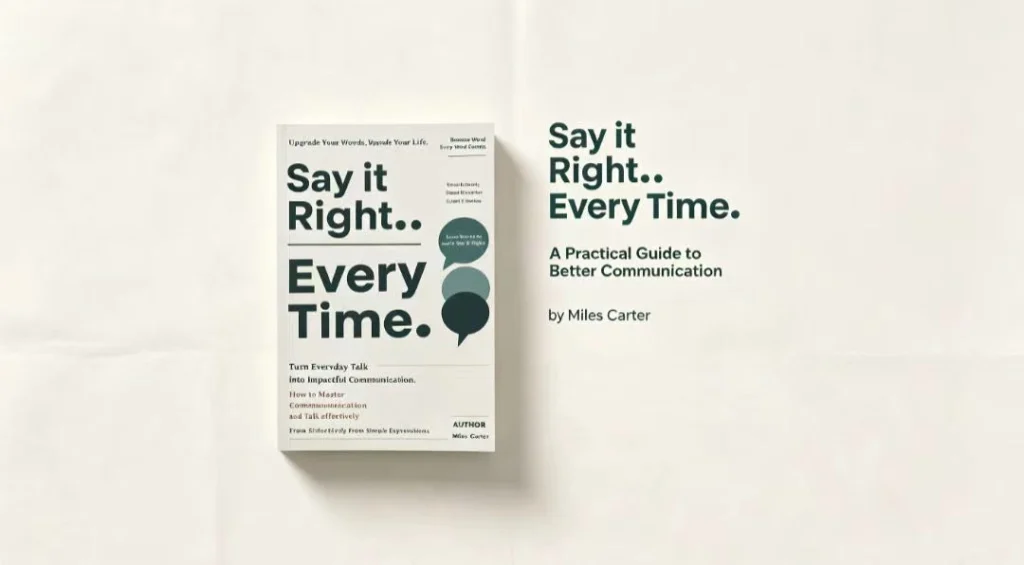
The book also includes How to Share Ideas So Others Listen, which is important when your mind goes blank because you are unsure how to organize what you want to say. Having a simple structure for an opinion or idea makes it easier to find your way back to the point when you lose your train of thought.
Another relevant part is Strategic Pausing: Why Saying Nothing Is Sometimes the Smartest Move. A pause is not necessarily evidence that you are nervous or unprepared. Used naturally, it gives you time to think and can actually make your response sound more deliberate.
For readers searching for a book for mind going blank when speaking, Say It Right Every Time offers a practical way to work on the deeper issue behind the blank moment: trying so hard to get your words right that you make it harder to speak at all.

Say it Right..Every Time.
Miles CarterPractical communication tools for the moments that matter — say what you mean, calmly and confidently.
You Do Not Have to Answer Everything Immediately
A confident speaker is not someone who always has a perfect response ready. Sometimes the better response is to take a breath, think for a moment, and then answer.
You can also say that you need a second to think, ask the other person to clarify the question, or begin with the part you are most certain about. Those are normal communication behaviors, not signs that you have failed.
The more comfortable you become with small pauses and imperfect first sentences, the less likely a moment of mental blankness is to turn into panic.
Confidence Comes From Staying in the Conversation
The goal is not to make sure your mind never goes blank again. That would put even more pressure on every conversation.
A better goal is knowing what to do when it happens. You pause, find the main point, start somewhere, and allow the conversation itself to help you shape the rest.
That is the kind of speaking confidence Say It Right Every Time is designed to build: not perfect performance, but the ability to keep communicating when your thoughts do not arrive in perfect order.
Did this article help you see things differently? Our books turn helpful ideas into practical tools you can return to anytime.




Imagine The Other Half
$24.99

