When Olivia was asked to share her opinion during a team meeting, she already knew what she wanted to say. She had thought about the issue beforehand and even had a solution in mind. But when everyone turned toward her, she became overly aware of every word, added several unnecessary explanations, and ended by saying, “I’m not sure if that makes sense.” Her idea was solid. It was the delivery that made her sound less certain than she actually was.
This is one of the frustrating things about confidence in communication. You can know exactly what you think and still struggle to express it when other people are listening. Sometimes the hesitation comes from worrying about being judged; sometimes it comes from trying too hard to find the perfect words before speaking.
Speaking confidently does not mean becoming louder or more forceful. It usually comes from being comfortable with your own thoughts, giving yourself enough time to express them, and trusting that you do not need to make every sentence perfect.

Start Before You Feel Completely Ready
A common mistake is waiting for confidence to appear before speaking. You tell yourself that you will contribute once you have a better idea, that you will ask the question when you have phrased it correctly, or that you will speak up once you feel less nervous.
That moment does not always arrive.
Confidence often develops after you start doing the thing that makes you uncomfortable. The first time you speak in a meeting, your voice may still feel shaky. The first time you disagree openly, you may still wonder whether you sounded too direct. With repeated practice, however, the situation becomes more familiar and your mind spends less energy treating it as a threat.
Stop Apologizing for Every Opinion
People who lack confidence in conversation often soften their statements before anyone has even challenged them.
You hear phrases such as “I’m probably wrong, but…” or “This may sound silly…” or “Sorry, I just wanted to ask…” These expressions can be useful occasionally, but when they become automatic, they make you sound uncertain before you have even explained your point.
Try removing the apology and saying the actual message instead. “I have a question about the timeline” is clearer than “Sorry, I just wanted to ask about the timeline.” “I see the situation differently” is more confident than “Maybe I’m wrong, but I don’t know if I completely agree.”
You do not have to make yourself smaller in order to sound polite.
Give Yourself Permission to Pause
Confident speakers are not necessarily the people who answer the fastest. In many situations, a short pause makes a response sound more thoughtful because it shows that the person is considering what they want to say instead of reacting automatically.
When someone asks you an unexpected question, you can take a moment to organize your answer. A phrase such as “Let me think about that for a second” gives your brain time to catch up without creating an awkward situation.
The same applies when you are searching for the right word. You can pause, rephrase, or start the sentence again. A small correction is usually less noticeable than the rush and confusion that come from trying to avoid any pause at all.
Make Your Point Before You Explain Everything
Another habit that can undermine confidence is over-explaining. You make a simple point, then immediately start adding context, qualifications, exceptions, and reasons because you are worried that the other person might disagree.
Consider the difference between saying, “I think we should move the meeting to Thursday because the current schedule is too tight,” and spending several minutes explaining everything that happened during the week before finally making that suggestion.
The first response gives people something clear to react to. If they want more information, they can ask for it. You do not have to provide a complete defense before your opinion is allowed to exist.
Confidence Is Easier When You Listen
Speaking confidently is not only about producing stronger sentences. Good listening can actually reduce the pressure of having to come up with everything yourself.
When you pay attention to what someone has just said, you have something concrete to respond to. You can ask a follow-up question, acknowledge a point, add your own experience, or explain where your perspective differs.
This is especially helpful in social conversations, where people often become nervous because they are already planning their next sentence while the other person is still talking. Staying engaged with what is happening now makes your responses feel more natural and takes some of the pressure off.
Practice the Situations That Make You Hesitate
Generic confidence exercises can only take you so far. A better approach is to think about the specific situations where you tend to lose your voice.
Maybe you find it difficult to disagree with coworkers. Perhaps introductions make you uncomfortable, or you struggle when someone asks you a question unexpectedly. You may be perfectly confident with close friends but become much quieter around people you do not know well.
Those situations are worth practicing directly. Try saying your opinion out loud before a meeting, rehearse a simple introduction, or practice answering an unexpected question without writing out a full script. The more familiar the situation becomes, the less mental energy you need to spend worrying about how you will perform.
Where Say It Right Every Time Fits
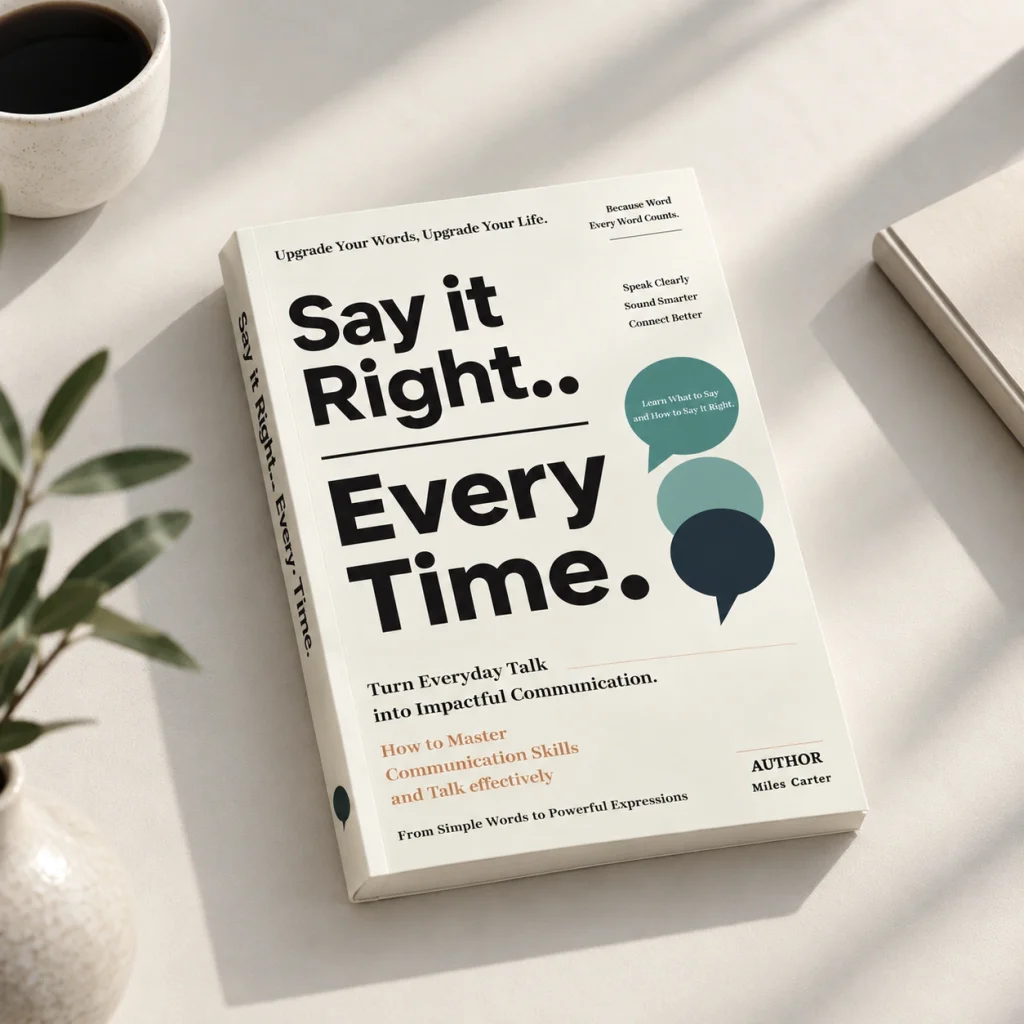
Say It Right Every Time by Miles Carter is designed around the moments when knowing what you want to say is not enough and you need to communicate it clearly in real time. The book covers speaking with confidence under pressure, sharing ideas so people will listen, expressing honest opinions without alienating others, and responding without losing your composure when a conversation becomes difficult.
It also addresses several situations where confidence tends to disappear. There are sections on setting boundaries with calm power, making respectful requests, saying no without guilt, disagreeing without creating distance, and moving away from people-pleasing so you can own your voice more comfortably.
Another useful part of the book is its focus on everyday conversations rather than confidence as an abstract personality trait. It looks at awkward conversations, starting a conversation with anyone, responding to compliments, handling unwanted advice, and staying grounded when someone is rude. Those moments may seem small, but they are often where people notice their lack of confidence most clearly.

Say it Right..Every Time.
Miles CarterPractical communication tools for the moments that matter — say what you mean, calmly and confidently.
The book also includes workplace communication, such as introducing yourself professionally, speaking when you are under pressure, handling difficult people, and responding to rude comments at work. That makes it particularly relevant for readers whose confidence changes depending on who is in the room or how much is at stake.
Confidence Comes From Trusting Your Own Voice
You do not have to become the loudest person in the room to communicate confidently. You can speak more slowly, use simpler language, disagree respectfully, admit when you need a moment to think, and still come across as capable and self-assured.
The bigger change happens when you stop treating every conversation as a test of whether you are saying the perfect thing. A clear opinion does not need ten explanations. A reasonable question does not need an apology. And a brief pause does not mean you have lost control of the conversation.
Confidence becomes much easier when you trust yourself enough to speak before every doubt has disappeared.
Did this article help you see things differently? Our books turn helpful ideas into practical tools you can return to anytime.




Imagine The Other Half
$24.99

