The Text Message Was Already Sent
At 2:17 p.m., you send a perfectly ordinary text to a friend. Then you reread it.
Maybe the wording sounded a little too short. Maybe the joke did not land. Maybe you should have added something at the end. You check it again, then notice a different phrase that suddenly seems strange.
Nothing has changed. The message is still the same message. But now your mind has turned a thirty-second interaction into something you keep analyzing.
That is the exhausting side of overanalyzing everything. The subject can be tiny while the amount of mental energy you spend on it is enormous.

When Reflection Stops Being Useful
There is nothing wrong with thinking carefully. You need reflection to solve problems, make decisions, and learn from mistakes.
The problem is what happens when the analysis keeps going after you have already done the useful part. You look for hidden meanings, compare alternative interpretations, imagine different outcomes, and revisit details that cannot provide any new information.
A simple question can help: Am I learning something new, or am I trying to make uncertainty disappear?
If it is the second one, more analysis may not give you what you are looking for.

The Need to Get It Exactly Right
Overanalyzing is often connected to the idea that there is a perfect response, perfect decision, or perfect interpretation waiting to be discovered.
That belief can turn ordinary situations into endless mental projects. You do not just choose a restaurant; you compare every option. You do not just send a message; you analyze the tone. You do not simply remember a conversation; you keep searching for what the other person “really” meant.
The common thread is the assumption that one more round of thinking will finally remove the uncertainty.
It rarely does.
Break the Anxiety Circle by Miles Carter
Break the Anxiety Circle by Miles Carter focuses on the mental cycles that can make overanalysis so persistent. The book connects overthinking with anxiety, self-doubt, regret, people pleasing, emotional patterns, and difficulty letting go, giving readers a broader explanation for why the mind keeps reopening situations that are technically finished.
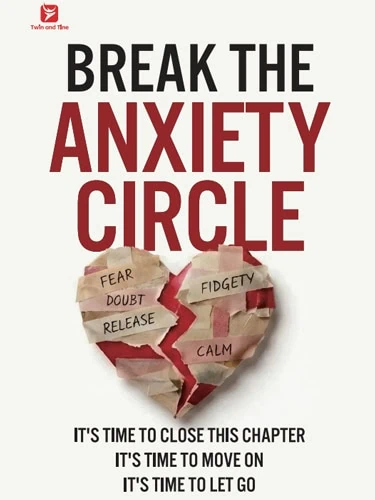
One of its practical strengths is the emphasis on recognizing the transition from useful thought to repetitive thought. A decision can require careful consideration, but there is a point when more analysis stops improving the decision and simply makes you less confident in it.
The book also explores the role of reassurance. You may ask someone else for their opinion, feel better for a while, then start questioning their answer too. That pattern can make it increasingly difficult to trust your own judgment without outside confirmation.
Other themes in the book are closely connected:
- Self-worth: A mistake does not need to become evidence that you are incapable.
- People pleasing: You do not need to predict and manage every other person’s reaction.
- Regret: You can learn from the past without continually reopening it.
- Boundaries: Not every problem or emotion belongs to you to solve.
- Emotional regulation: A calmer emotional state can make it easier to evaluate a situation without immediately spiraling.

Break the Anxiety Circle
Miles CarterA mental reset for people trapped in the overthinking loop. Understand why your mind won’t stop racing — and how to break free from anxiety, people-pleasing, and emotional exhaustion.
For readers searching for a book on how to stop overanalyzing everything, Break the Anxiety Circle is useful because it does not focus on one type of overthinking. It examines the broader pattern that keeps the same mental habits appearing across decisions, conversations, relationships, and everyday mistakes.
Give Yourself a Stopping Point
One practical way to interrupt overanalysis is to decide what enough thinking looks like before you begin.
You might give yourself a limited amount of time to compare options. You might read a message once more, correct anything genuinely unclear, and then send it. You might decide that after asking one trusted person for an opinion, you are going to make your own choice.
The point is not to rush. It is to prevent “careful” from quietly becoming “endless.”
Trust Does Not Require Perfect Decisions
A lot of overanalysis comes from believing that a mistake would prove you should have thought longer. But even careful decisions can turn out differently than expected.
Self-trust develops when you learn that you can handle that possibility. You make a thoughtful choice, see what happens, adjust if necessary, and keep going.
That is far more sustainable than demanding certainty before every action.

You Can Think Carefully Without Thinking Forever
The mind will always generate another possibility if you give it enough time. There will always be another interpretation, another option, another detail you could reconsider.
At some point, moving forward becomes more valuable than finding the final answer.
Break the Anxiety Circle helps readers recognize that point and understand why it can feel so difficult to reach. The goal is not to stop thinking deeply; it is to stop turning every ordinary uncertainty into a problem that must be analyzed until there is nothing left to analyze.
If you found this helpful, these books go deeper into the same themes.



Break the Anxiety Circle
$19.90

From Debt to Wealth
$19.90

