On Sunday evening, Mark received an email saying that his manager wanted to discuss an upcoming project on Monday morning. There was nothing alarming in the message, but that did not stop his mind from filling in the gaps. By bedtime, he had imagined getting the project wrong, disappointing his team, losing his manager’s trust, and dealing with consequences that had never actually occurred.
This is what makes future worry so tiring. The mind is trying to prepare you for uncertainty, but it often goes much further than preparation. One possibility becomes another, then another, until you are emotionally reacting to an entire chain of events that exists only in your imagination.
The useful question is not how to guarantee that nothing will go wrong. Nobody can do that. A better approach is learning how to separate reasonable preparation from repeated mental rehearsal of situations that may never happen.

Ask What You Actually Know
Worry tends to fill empty spaces with assumptions.
You know that a meeting is scheduled for tomorrow. You do not know that your manager is unhappy with you. You know someone has not replied yet. You do not know that they are upset. You know there is a difficult conversation coming. You do not know exactly how it will go.
Keeping those distinctions clear can make uncertainty feel less threatening. When the mind starts turning a possibility into a prediction, return to the facts that are actually available.
That does not mean pretending everything will be fine. It simply means refusing to treat an imagined outcome as though it has already happened.
Prepare for What You Can Control
There is a difference between preparing for a possibility and repeatedly imagining it.
If you are worried about a presentation, you can review your notes, think through likely questions, and make sure you know the key information. If you are concerned about an upcoming conversation, you can decide what you want to say and what outcome you would like.
Once you have taken the useful steps, more worrying may not improve your preparation. It may only make you more emotionally exhausted before the event has even arrived.
A good test is to ask, “Is there something I can do about this today?” If the answer is yes, take that action. If the answer is no, continuing to rehearse the problem usually does not create more control.

Be Careful With “What If” Questions
“What if” can be a useful planning tool, but it can also become an endless chain.
What if the meeting goes badly? What if they disagree? What if I make a mistake? What if that causes another problem? What if that leads to something even worse?
The questions may sound different, but they often belong to the same mental pattern. The brain keeps moving farther into the future, searching for an outcome it can finally feel certain about.
You rarely reach that certainty. There is always another possibility waiting behind the previous one. Sometimes the healthier response is to stop the chain at the first realistic question and deal with that one instead of building an entire future around it.
Give Uncertainty Somewhere to Sit
Many people try to get rid of uncertainty as quickly as possible. They check messages repeatedly, ask for reassurance, search for more information, or mentally review every detail of a situation.
These actions can feel calming for a few minutes because they create the impression that you are doing something. But reassurance often fades, which can send you back to the same question again.
Learning to tolerate a little uncertainty is uncomfortable, but it can reduce the need to keep checking for answers that are not available yet. Sometimes you really do have to wait and see what happens.
Bring Your Attention Back to Today
Future worry becomes especially powerful when the present moment starts feeling like a waiting room for something bad.
You are having dinner, but thinking about tomorrow’s meeting. You are spending time with your family, but imagining how a future problem might unfold. You are trying to sleep, but mentally preparing for conversations that have not happened.
Coming back to what is actually happening now can interrupt that pattern. Notice what you are doing, what information you have, and what matters today. Tomorrow will bring information that you simply do not have yet.
Where Break the Anxiety Circle Fits In
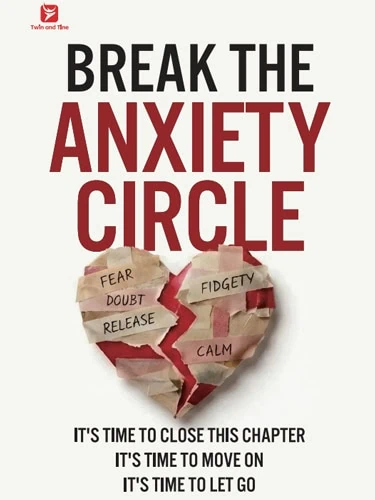
Break the Anxiety Circle by Miles Carter explores the relationship between anxiety, uncertainty, overthinking, and repetitive worry. One of the patterns the book addresses is the tendency to keep mentally revisiting possibilities in an attempt to feel more prepared or more in control.
This can be particularly relevant when worry about the future becomes a daily habit. The book looks at how anxiety loops develop and how self-doubt, fear of judgment, and the need for reassurance can keep them going long after the original concern has passed.
Instead of promising certainty, Break the Anxiety Circle focuses on recognizing when your mind has moved from useful preparation into repetitive forecasting. That distinction can help you spend less time experiencing future problems in advance and more time dealing with what is actually in front of you.

Break the Anxiety Circle
Miles CarterA mental reset for people trapped in the overthinking loop. Understand why your mind won’t stop racing — and how to break free from anxiety, people-pleasing, and emotional exhaustion.
The Future Does Not Need to Be Solved Tonight
You can prepare for tomorrow without living through every possible version of it tonight. Some uncertainty will remain no matter how carefully you think, plan, or rehearse.
The important thing is recognizing when preparation has done its job. Once you have taken the reasonable steps available to you, the rest belongs to a future that has not happened yet.
You do not have to feel completely certain before you let yourself enjoy the present. Sometimes peace comes from accepting that there are questions you are allowed to leave unanswered for now.
If you found this helpful, these books go deeper into the same themes.



Break the Anxiety Circle
$19.90

From Debt to Wealth
$19.90

