Have you ever walked out of a meeting and replayed the whole thing in your head? Not the agenda. Not the numbers. Just that one sentence you said, and the way everyone went quiet for half a second too long.
I have. More times than I want to admit.
I once told a colleague, “You didn’t include me on that email.” Simple fact. True statement. And the temperature in the room dropped about ten degrees. What I meant was: I felt left out, and I wanted to be part of the project. What she heard was: you made a mistake and I’m keeping score.
That gap, between what we mean and what people hear, is why I started collecting books about communication in the workplace. Not the theoretical kind. The kind with actual sentences you can steal.
Quick answer: How do I communicate better at work without making things awkward?
You learn a few sentence-level swaps for real situations, pause before you react, and stop expecting logic from places that do not run on logic.
Here are three books about communication in the workplace. One gives you actual sentences to use. One helps you collaborate with difficult people. One helps you stay sane when the whole environment feels irrational.
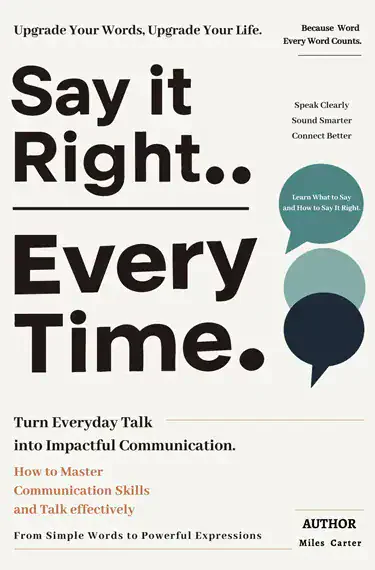
Say It Right Every Time
By Miles Carter
This is the book that made me stop and put it down mid-page.
What makes this book different:
Carter structures the book around a simple move. He puts a “Basic Expression” next to a “Mature Expression” and lets you feel the difference in your chest before your brain catches up.
| Basic | Mature |
|---|---|
| “You didn’t think of me.” | “That made me feel left out.” |
| “Sorry I’m late again.” | “Thanks for waiting.” |
| “That’s not my job.” | “I can’t take that on this week. Here’s what I can do.” |
Same event. Same person. Completely different conversation.
What you get:
- Everyday social skills for the office
- How to handle rudeness and conflict without matching the tone
- Scripts for asking for a raise without apologizing for existing
- How to push back on a decision without becoming the difficult one
- A section on Strategic Pausing. Treat silence as a tool, not an awkward gap.
One key idea: Most workplace friction comes from wording, not from being right. Change the wording. Change the room.
Best for: Anyone who knows what they mean but cannot get it out right in the moment.
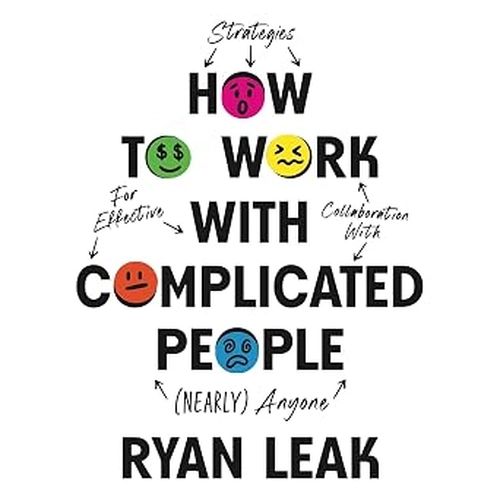
How to Work with Complicated People
By Ryan Leak
This one is for when the problem is not you, not your wording, but the person on the other side of the table.
What makes this book different:
Leak’s premise is blunt. You will not fix the complicated person. You will not outlast them into a better version. Your next job will have one too. So the work is learning to collaborate anyway.
What you get:
- How to see challenging coworkers as people to understand rather than problems to solve
- Strategies for collaborating without fixing anyone
- How to set boundaries without building walls
- How understanding someone’s pressure changes what you say to them
One key idea: Let people into your world without letting them run your world.
Best for: Anyone dealing with one specific person who makes every project harder.
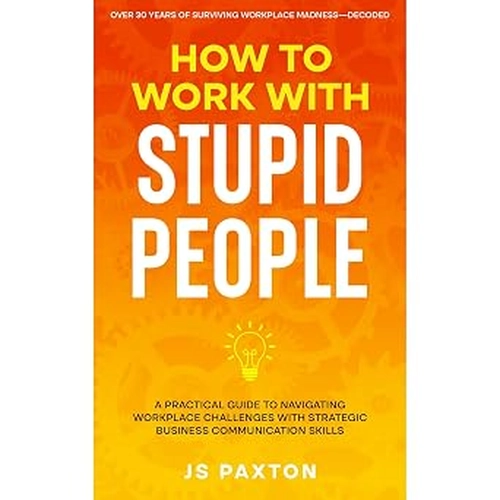
How to Work with Stupid People
By JS Paxton
This one is for a different mood. It is funny. It is also a survival manual.
What makes this book different:
Paxton spent decades inside large organizations. He writes about the meetings, the baffling decisions, the people who seem to have been hired by accident. The book’s real value is emotional detachment.
What you get:
- Permission to stop expecting logic from a place that does not run on logic
- Humor as a shield
- How to stay calm in a room that is not calm
- Categories of difficult coworkers that will make you laugh because you know exactly who they are
One key idea: This is not about becoming cynical. It is about staying sane.
Best for: Anyone who is tired in a way that sleep does not fix.
Three Books, Three Situations
| Situation | Book | What it gives you |
|---|---|---|
| You know what you mean but it comes out wrong | Say It Right Every Time | Sentence-level swaps for real conversations |
| One specific person makes every project harder | How to Work with Complicated People | Strategies for collaborating without fixing anyone |
| The whole environment feels irrational | How to Work with Stupid People | Humor, detachment, and sanity protection |
You do not need all three. Pick the one that matches what you are dealing with right now.
Which Book Should You Read First?
If you only read one, start with Carter. It is the most immediately usable. You will find a sentence in the first fifty pages that you can deploy in tomorrow’s meeting.
If your problem has a name and a face, go to Leak.
If you are tired in a way that sleep does not fix, Paxton first.
Final Thought
None of these books will make you a different person. What they do is smaller and more useful. They give you one more option in the half-second before you speak. That half-second is where most of our working lives are decided.
I still replay meetings sometimes. Less than I used to. What changed was not my personality. It was having a few better sentences ready, and knowing that the pause before them belongs to me.
Start with one book. Try one technique. See what happens.
References
Carter, Miles. Say It Right Every Time.
Leak, Ryan. How to Work with Complicated People: Strategies for Effective Collaboration with (Nearly) Anyone. Maxwell Leadership.
Paxton, JS. How to Work with Stupid People: A Practical Guide to Navigating Workplace Challenges with Strategic Business Communication Skills. TS Publishing.

