Someone lies to you and you don’t find out for months. By then, the damage is done. Or worse, you sense something is false but can’t prove it. You start doubting your own perception. You never get a straight answer, so you let it go, and the doubt stays.
The hardest lies to catch are not the obvious ones. They are the small omissions, the strategic reframing, the truths told at an angle. Most deception is quiet, constant, and invisible unless you know what to look for.
This article explores three books that help you see deception clearly.
Book 1: How to Read Someone’s Mind by Miles Carter
Catching a lie starts with watching the face, not the words.
A liar can choose what to say. They can rehearse the story and keep their voice steady. What they cannot fully control is everything happening underneath.
Microexpressions cross the face in a fraction of a second before the person can hide them. A flash of guilt. A tightened jaw. A smile that appears a beat too late. Body language adds another layer. People who are lying often lean back, angle their feet toward the exit, or touch their neck without realizing it. Tone and pitch shift too, going flat or speeding up when they were calm a moment ago.
What makes this book useful is that it focuses on the whole picture. One signal alone proves nothing. But patterns across multiple signals, repeated over time, reveal the truth.
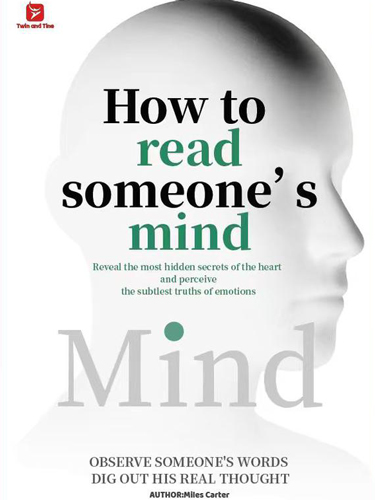
How to Read Someone’s Mind
Miles CarterPractical tools for reading body language, tone, and hidden intentions in real time. Spot what people aren’t saying — before you trust the wrong person.
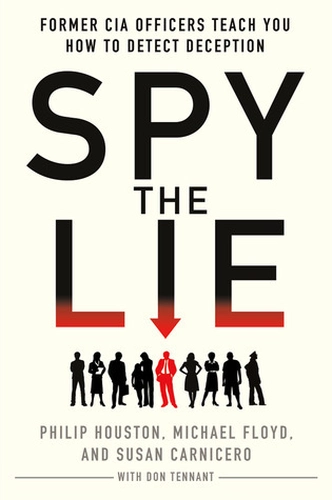
Book 2: Spy the Lie by Philip Houston, Michael Floyd, and Susan Carnicero
This book gives you practical tools for spotting deception in high-pressure conversations.
Written by former CIA and law enforcement interviewers, it focuses on behavior rather than gut instinct. You will learn how people respond when they are under pressure. Where they look. How they pause. When they add unnecessary detail to seem credible. How they dodge a question without appearing to dodge it.
What makes this book valuable is its discipline. It teaches you to separate real signals from nervousness, and to avoid the mistakes most people make when they think someone is lying.
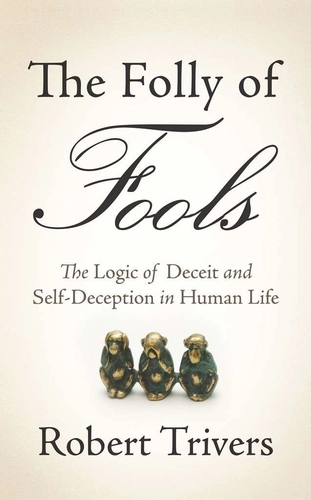
Book 3: The Folly of Fools by Robert Trivers
This book explains why deception is built into human biology, not just human character.
Trivers, an evolutionary biologist, argues that self-deception exists for a reason. If you truly believe your own lie, you tell it more convincingly. Your face, your voice, and your body all cooperate because there is nothing to hide. That is why the most dangerous deceivers are the ones who believe themselves.
You will learn how deception shapes memory and emotion. How we remember events in ways that favor us. How we see ourselves as more honest and more wronged than we actually are.
Putting It All Together
Spy the Lie gives you a professional’s framework for catching deception as it happens. The Folly of Fools explains why deception is wired into us at the deepest level. But How to Read Someone’s Mind is where it becomes real. It gives you the ability to see what is happening in the moment, across a face and a body and a voice, before the lie has time to settle.
You already sense when something is off. You notice the pause, the shift in energy, the words that don’t quite match the face. The problem is you talk yourself out of it. You tell yourself you’re being paranoid. You let it go.
That instinct is not paranoia. It’s information. And with the right framework, you can finally start trusting it.