The House Is Quiet, but Your Head Is Not
It is 10:45 p.m. The dishes are done, your phone is finally down, and there is nothing urgent left on your schedule. Yet instead of feeling relaxed, your mind starts listing everything that could have gone better that day. One unfinished task reminds you of tomorrow’s workload, which reminds you of a conversation from the afternoon, and suddenly you are mentally somewhere else entirely.
This kind of restlessness is not always caused by having too much to do. Sometimes the outside world has gone quiet while the inside remains busy.
Finding inner calm is therefore not simply about creating more free time. It is also about changing the way you respond to the thoughts, emotions, and uncertainties that fill that space.

Inner Calm Is Not the Same as Feeling Good All the Time
A calm mind can still experience disappointment, worry, frustration, and sadness. The difference is that difficult emotions do not automatically pull you into a long chain of reactions.
That is an important distinction when choosing a book about inner calm. Advice that simply tells you to “think positive” can feel unrealistic when your mind is already overloaded. A more useful book helps you understand what makes your thoughts so sticky and gives you a different way to relate to them.
Here are three books that approach that problem from different directions.
1. Break the Anxiety Circle by Miles Carter
Break the Anxiety Circle looks at inner calm through the patterns that repeatedly disturb it. The book focuses on anxiety loops, overthinking, self-doubt, people pleasing, emotional regulation, regret, and the difficulty of letting go, making it particularly relevant for people who feel mentally unsettled even when nothing dramatic is happening.
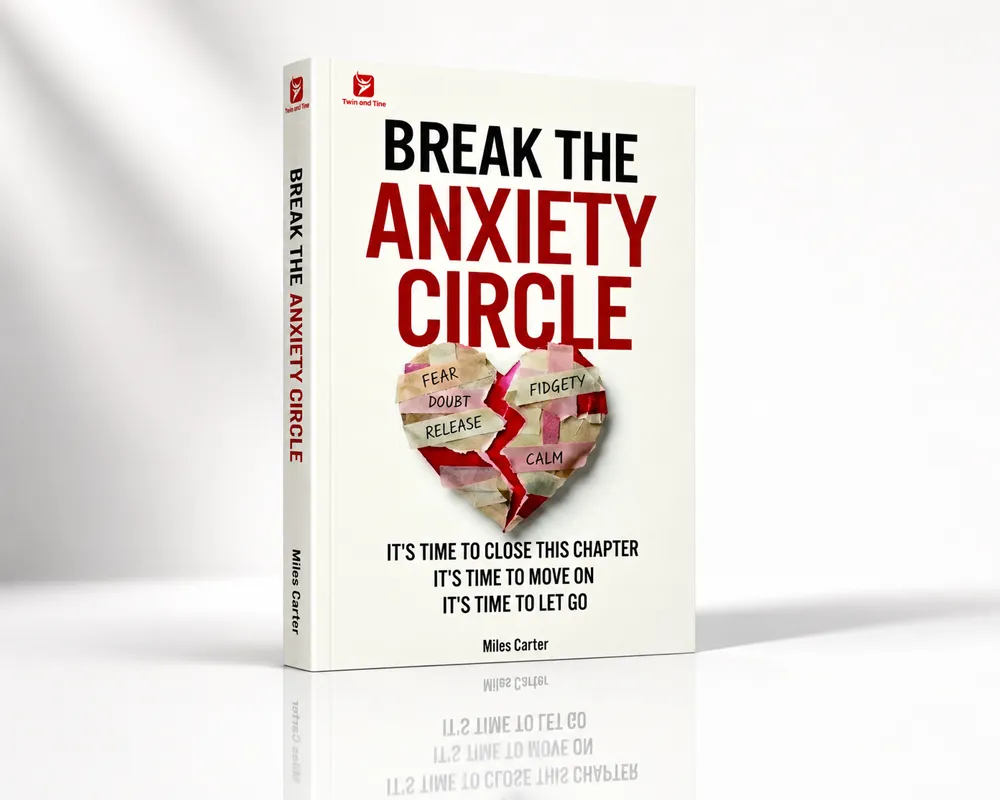
One reason the book works well for this topic is that it does not isolate anxiety from the rest of daily life. Your mind may feel chaotic because several different pressures are feeding each other. You worry about an upcoming conversation, then start questioning yourself, then replay something from yesterday, then feel guilty about not getting enough done. By bedtime, it can feel impossible to remember what actually started the whole chain.
The book encourages readers to recognize these patterns earlier and understand what keeps them going. Rather than trying to eliminate every uncomfortable thought, it focuses on creating more distance between the thought and the reaction that follows.
Its approach touches several areas that can quietly steal mental peace:
- Repeated overthinking: Learning to recognize when reflection has become mental repetition.
- Regret and the past: Stepping out of the habit of mentally rewriting old situations.
- People pleasing: Reducing the pressure to manage everyone’s opinion or emotional response.
- Self-worth: Separating your value from mistakes, criticism, and imperfect outcomes.
- Boundaries: Protecting emotional space instead of constantly taking on more than you can carry.
The broader message is practical: inner calm is easier to build when you stop feeding the patterns that repeatedly disturb it. You do not need to solve every thought. You need to become better at recognizing which thoughts deserve your attention and which ones are simply pulling you into another familiar loop.

Break the Anxiety Circle
Miles CarterA mental reset for people trapped in the overthinking loop. Understand why your mind won’t stop racing — and how to break free from anxiety, people-pleasing, and emotional exhaustion.
2. The Untethered Soul by Michael A. Singer
The Untethered Soul takes a more reflective approach to inner calm. It focuses on the relationship between the person experiencing thoughts and the stream of thoughts itself, encouraging readers to step back from the internal commentary that can dominate their attention.
That perspective can be useful when your mind feels busy because you are constantly reacting to what it says. Instead of trying to argue with every thought, the book invites you to observe the mind with more distance.
Its style is more philosophical than Break the Anxiety Circle, but the underlying appeal is similar: you do not have to follow every thought simply because it appears.
3. The Happiness Trap by Russ Harris
The Happiness Trap explores a different side of inner calm by challenging the idea that emotional well-being depends on getting rid of uncomfortable thoughts and feelings.
Drawing on Acceptance and Commitment Therapy, the book encourages readers to make room for difficult internal experiences while still moving toward what matters to them. This can be helpful for anyone who has turned “feeling calm” into another standard they are failing to meet.
Instead of demanding a perfectly peaceful mind, the approach focuses on becoming more flexible in how you respond to whatever is happening internally.
Calm Can Become a Skill
Inner calm is often described as though some people naturally possess it and others do not. In reality, the ability to notice a thought without automatically following it can be developed gradually.
The three books approach that idea differently. Break the Anxiety Circle examines the recurring patterns that create anxiety and mental noise, The Untethered Soul focuses on stepping back from thought itself, and The Happiness Trap explores how to stop fighting every uncomfortable internal experience.
For readers searching for books about finding inner calm, the most useful choice may depend on what keeps disturbing that calm in the first place. Sometimes the mind needs less stimulation; sometimes it needs a different relationship with uncertainty, emotion, and thought.
If you found this helpful, these books go deeper into the same themes.



Break the Anxiety Circle
$19.90

From Debt to Wealth
$19.90

