You have seen it before.
Someone gets a promotion, and within weeks, they start treating people differently. A friend enters a new relationship and suddenly seems smaller—less opinionated, more agreeable. A colleague who was once collaborative becomes competitive the moment they sense a threat to their status.
Power is everywhere. But most people don’t see it until it affects them directly.
It’s not just about money or titles. Power shows up in conversations, in relationships, in the way people listen or interrupt, in who gets credit and who gets blamed. It shapes how people treat each other, and it changes the people who have it.
The three books below each approach this from a different angle. One helps you understand why people seek power in the first place. One explains what happens when people gain it. One reveals the hidden games people play for control in everyday relationships.
Awakening to Human Nature by Owen Pierce

Why are some people drawn to power while others step back from it?
You have probably noticed that certain people seem wired to seek control. They gravitate toward leadership positions. They want to be the one making decisions. They get restless when they are not in charge.
Others seem indifferent to power. They don’t chase status or attention. They are content to let someone else take the lead.
Pierce’s book helps you understand what drives that difference. He argues that the pursuit of power is rarely about the power itself. It is usually about something underneath: the need for security, the fear of being insignificant, the desire to be recognized, or the terror of being controlled by others.
Someone who constantly needs to be right may not be confident. They may be terrified of being seen as wrong. Someone who dominates conversations may not be arrogant. They may be desperate to be heard. Someone who hoards information may not be strategic. They may be afraid of becoming irrelevant.
This is what makes the book valuable. It reframes power-seeking behavior not as a personality flaw, but as a response to deeper fears and motivations. Once you understand that, you stop reacting to people’s behavior and start seeing what is driving it.
For anyone who wants to understand why some people chase power and what they are really looking for.
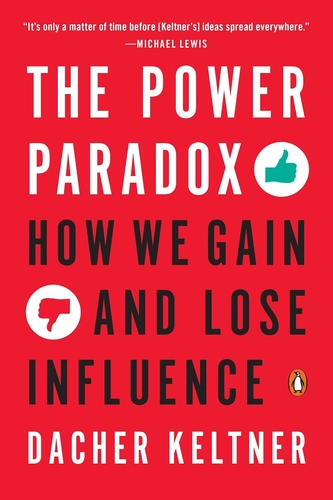
The Power Paradox by Dacher Keltner
Why does power change people—often for the worse?
Here is a strange thing about power. The people who are best at gaining it are often the worst at handling it.
Keltner, a Berkeley psychologist who spent two decades studying power, discovered something counterintuitive. The qualities that help people rise to power—empathy, generosity, social intelligence—are often the same qualities that power erodes once they have it.
People who gain power tend to become more impulsive, less attentive to others, and more likely to see people as tools rather than as human beings. They stop listening. They start interrupting. They assume their perspective is the only one that matters.
This is the paradox. The very skills that earned them influence begin to disappear the moment they have it.
The book explains why this happens and, more importantly, what prevents it. Some people manage to hold onto their empathy and self-awareness even when they have power. They are the ones who are trusted, respected, and ultimately more effective.
For anyone who has ever watched someone change after gaining power—and wondered what happened.
Games People Play by Eric Berne

What hidden games do people play for control in everyday relationships?
You have probably been in a situation like this. Someone keeps saying “I’m fine,” but their behavior suggests otherwise. You try to help, but nothing you do is right. You end up feeling guilty, confused, or like you are the problem.
Berne, a psychiatrist who developed Transactional Analysis, wrote this book to expose the psychological games people play in relationships. These games are not innocent. They are patterns of interaction that allow one person to maintain control—often without the other realizing what is happening.
One of the most common is the victim game. Someone presents themselves as helpless, draws you in, and then rejects every solution you offer. The goal is not to solve the problem. The goal is to keep you in the role of the caregiver while they stay in control of the dynamic.
Other games involve guilt, approval seeking, or emotional withdrawal. Someone withholds affection until you do what they want. Someone uses flattery to get you to lower your guard. Someone plays the martyr to make you feel indebted.
What makes this book essential is that it does not just describe the games. It helps you recognize them in real time. Once you see the pattern, you cannot unsee it. And once you cannot unsee it, you stop getting pulled into the dynamic.
For anyone who has ever felt trapped in a relationship dynamic they could not quite name—and wants to understand what is really going on.
These three books each look at power from a different vantage point.
Pierce helps you see the hidden motivations behind power-seeking behavior—why some people need control and what they are really afraid of. Keltner explains why power changes people and what it takes to stay grounded when you have it. Berne reveals the psychological games people play for control in everyday relationships.
If you are someone who feels like power is something that happens to you rather than something you understand, start with the one that matches where you are stuck. And if you are not sure where to begin, think about this: are you trying to understand someone else, make sense of your own experiences with power, or recognize the hidden games playing out around you?
That question alone might tell you where to start.
