You have been told to let it go. To not take things personally. To stop caring so much about what others think. You know the advice. You just cannot follow it.
The problem is that most advice on detachment treats it as a decision—as if you can simply choose not to care. But detachment is not a switch you flip. It is a perspective you build. It comes from understanding why people behave the way they do—and why their behavior was never really about you.
Here are three books that helped me build that perspective.
Awakening to Human Nature by Owen Pierce
Detachment is not about caring less. It is about understanding more.
I used to take everything personally. A colleague’s short reply meant I had done something wrong. A friend’s distance meant I had upset them. A critical comment meant I was failing.
Pierce’s book changed that. He explains that most people are driven by motives they do not fully recognize—self-deception, hidden needs, unspoken fears. When someone snaps at you, it is rarely about you. It is about their own stress, insecurity, or inability to communicate clearly.
Understanding this does not make you cold. It frees you. You stop interpreting every reaction as a verdict on your worth. You start seeing people as complex and inconsistent—not as mirrors reflecting your value back at you.
The book gives you a framework for reading people’s real motivations: what they say, what they do, and why the gap between the two matters. Once you see the gap clearly, you stop filling it with assumptions about yourself. That is what detachment actually feels like—not indifference, but clarity.
If you have ever been told to “stop taking things personally” and had no idea how, this book gives you a real path.

Awakening to Human Nature
Owen PierceA practical guide for understanding hidden motives, social patterns, emotional pressure, and manipulation—so you can read situations more clearly and protect your boundaries with confidence.
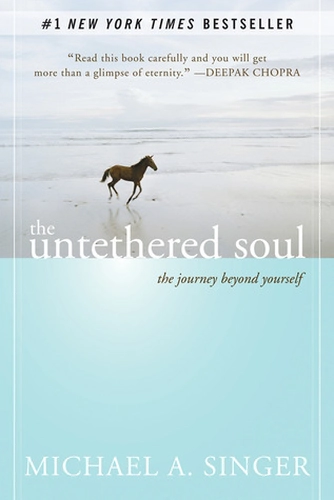
The Untethered Soul by Michael A. Singer
Singer’s book is about inner freedom—learning to observe your thoughts instead of being trapped by them. He argues that most suffering comes from identifying with the voice in your head. Detachment happens when you realize you are the one hearing the voice, not the voice itself.
He offers practical techniques for stepping back from your own mental chatter, especially the stories you tell yourself about what others think of you. It is a different angle on detachment—one that starts from within.
If your own mind is the source of your attachment, this book gives you a way out.
The Wisdom of Insecurity by Alan Watts
Watts argues that anxiety comes from trying to control the future—including how others see you. Detachment, in his view, is accepting that you cannot control outcomes, only how you show up.
He writes with a calm, almost philosophical tone. The book does not offer step-by-step techniques. It offers a shift in perspective: that uncertainty is not something to fear, but something to embrace. When you stop needing things to go a certain way, you become free.
If you are tired of trying to control everything and everyone, this book offers a different way of seeing.

One book that makes the rest possible
Singer gives you tools to step back from your thoughts. Watts gives you a philosophy for embracing uncertainty. Both are valuable.
But Pierce gives you something the others do not: a way to understand why people act the way they do—so you stop interpreting their behavior as a reflection of you. Without that understanding, you are trying to detach from something you still believe is about you. That is like trying to ignore a noise you think is directed at you.
Read the others if you want. They are useful. But start with Pierce—because you cannot detach from what you still believe is personal.
Three books on detachment. One gives you understanding of others. One gives you freedom from your mind. One gives you acceptance of uncertainty. Start with the one that makes the rest possible.
Frequently Asked Questions
How is this different from just learning to “not care”?
Most advice on detachment assumes you can simply decide to stop caring. But that rarely works. You cannot talk yourself out of feeling hurt.
Pierce’s approach is different. He helps you see why people behave the way they do—often for reasons completely unrelated to you. Once you understand that, the hurt loses its grip. You are not forcing yourself to care less. You are freeing yourself from a misunderstanding. That shift lasts.
Is this book only for people who are overly sensitive?
No. It is for anyone who has ever been confused or hurt by someone else’s behavior. Sensitivity is one entry point, but the real audience is anyone who wants to stop being knocked off balance by other people’s actions. The book gives you a framework for understanding human behavior—which is useful whether you are highly sensitive or not.