A meeting ends and everyone files out. On the way back to your desk, someone says, “That got tense fast.” You nod along. You have no idea what they’re talking about. The meeting seemed normal to you.
Or you’re at dinner with a group, and you tell a story that lands wrong. The table goes quiet for a beat. Someone changes the subject. You spend the ride home trying to figure out what happened.
Nothing was said out loud that explains it. The information was in the room, moving faster than the words. Most people pick up on it without knowing how. For everyone else, it can be learned.
Book 1: How to Read Someone’s Mind by Miles Carter

A room has a mood before anyone speaks.
This book teaches you where that mood comes from. It covers the face, the body, the voice, and the context around them, treating them as one system rather than a collection of tricks.
You’ll learn what a pause means when it lasts a beat too long. Why crossed arms signal one thing in a negotiation and something else at a family dinner. How someone’s posture shifts toward or away from a person they haven’t spoken to yet. A glance exchanged across a table carries more information than the conversation happening at it.
The most useful part is learning to read patterns rather than moments. One signal proves nothing. But the same signal appearing across a room, in several people at once, tells you exactly what’s happening.

How to Read Someone’s Mind
Miles CarterPractical tools for reading body language, tone, and hidden intentions in real time. Spot what people aren’t saying — before you trust the wrong person.
Book 2: How to Talk to Anyone by Leil Lowndes
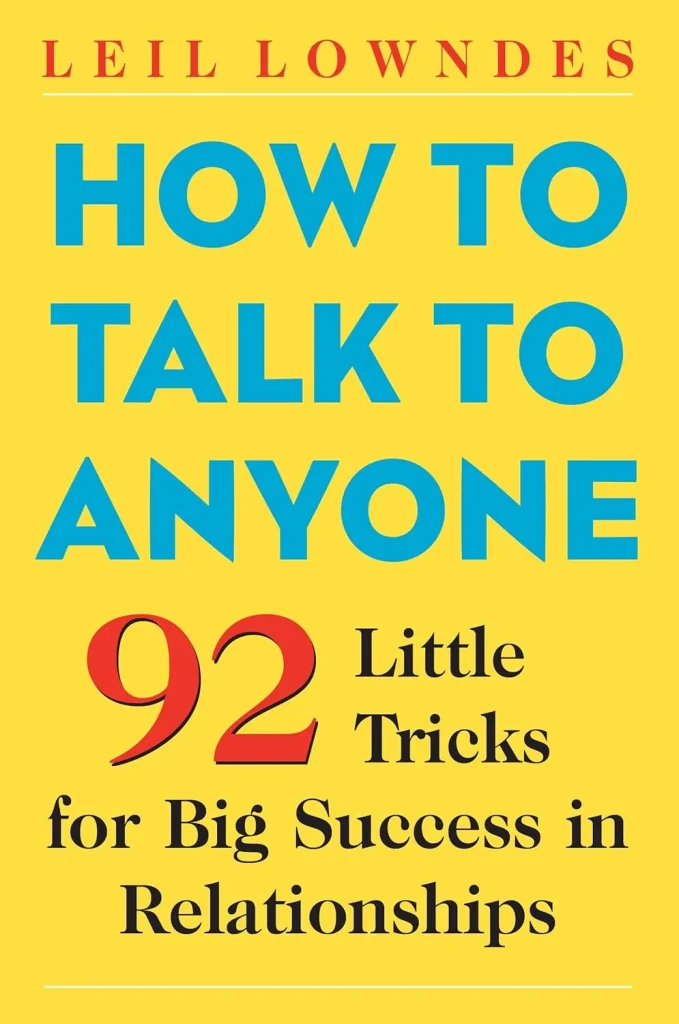
This book offers 92 specific techniques for navigating social situations, and it has sold millions of copies for a reason.
Lowndes covers everything from entering a room to exiting a conversation gracefully. She explains how to read the dynamics of a group before you join it, how to tell when someone wants to keep talking and when they’re waiting for an exit, and how to adjust your approach based on what the room is giving you.
What makes it valuable is the specificity. There are no vague principles about being confident. There are scripts, timing cues, and small adjustments that change how an interaction unfolds. For anyone who has ever stood at the edge of a conversation wondering how to enter it, this book answers the question directly.
Book 3: Cues by Vanessa Van Edwards

This book comes from a behavioral researcher who studies social signals for a living.
Van Edwards breaks down what she calls the “cues” that shape every interaction. Vocal cues, facial cues, body cues, and the way they combine to signal confidence, interest, discomfort, or warmth. She explains why some people seem to read a room effortlessly and others walk into the same room and miss everything.
You’ll learn how to spot the cues that reveal what people aren’t saying, and how to send cues that make others feel at ease. The book is grounded in research but written for anyone, with exercises that let you practice what you’re learning.
What Changes When You Can Read the Room
You stop walking into situations blind. You notice the tension before it becomes a conflict. You catch the shift in someone’s energy before you say the wrong thing.
How to Talk to Anyone gives you the techniques for navigating any social moment. Cues explains the signals underneath it. But How to Read Someone’s Mind is where the skill starts, because reading a room begins with reading the people in it.
The information has always been there. You just needed to know where to look.
If you found this helpful, these books go deeper into the same themes.



Break the Anxiety Circle
$19.90

From Debt to Wealth
$19.90

