Someone promises something and then doesn’t follow through. A partner acts warm one day and distant the next. A colleague agrees with you in a meeting and then does the opposite. You try to make sense of it. You look for a logical explanation. You wonder if you misunderstood.
The confusion isn’t in your head. It’s in the behavior itself. People are not as consistent as we assume. Their actions shift based on needs, emotions, and situations. The question isn’t why they changed. It’s why you expected them to stay the same.
This article explores three books that explain why people act inconsistently and why it’s more predictable than you think.
Book 1: Awakening to Human Nature by Owen Pierce
Inconsistency isn’t a flaw in character. It’s a feature of human nature.
People say one thing and do another because their behavior is shaped by forces they don’t fully control or understand. Their needs shift. Their incentives change. Their emotions override their intentions. What looked like a promise was actually a moment of good feeling that didn’t survive contact with reality.
This book explains why loyalty expires when needs change. Why self-deception allows people to believe they’re being consistent while behaving the opposite. Why the same person can be generous in one context and selfish in another. You’ll learn to see the hidden drivers behind behavior instead of taking words at face value.
Once you understand these patterns, inconsistency stops being confusing. You stop expecting people to be who they said they were. You start seeing who they actually are.

Awakening to Human Nature
Owen PierceA practical guide for understanding hidden motives, social patterns, emotional pressure, and manipulation—so you can read situations more clearly and protect your boundaries with confidence.
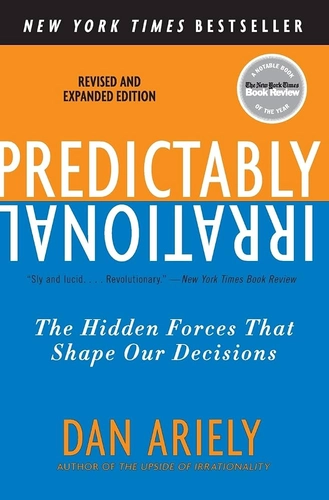
Book 2: Predictably Irrational by Dan Ariely
You don’t just struggle to understand other people’s inconsistency. You struggle to understand your own.
Why did you spend money you promised yourself you’d save? Why did you skip the gym after telling yourself you’d go? Why do you make choices that contradict your stated priorities?
Ariely, a behavioral economist, explains that we are predictably irrational. Our decisions are shaped by hidden forces that operate below awareness. We don’t act based on consistent logic. We act based on how options are framed, what mood we’re in, and what we did five minutes ago.
Once you understand these forces, your own inconsistency stops feeling like failure. It becomes a pattern you can recognize and work with.
Book 3: The Person and the Situation by Lee Ross and Richard Nisbett
This book explains why someone can seem like a completely different person in different environments.
You know someone who is patient at work and explosive at home. Someone who is generous with friends and stingy with family. You assume one version is the “real” them and the other is fake. But the research says something different.
Behavior depends on situation more than personality. We want to believe people have fixed traits that determine how they act. But context shapes behavior in ways we underestimate. The person who seems inconsistent is actually responding predictably to different conditions.
This doesn’t excuse bad behavior. It helps you understand it, which is the first step to knowing how to respond.

Putting It All Together
You’ve been trying to find a logical explanation for behavior that doesn’t have one. You’ve been assuming people are consistent and then feeling confused when they’re not. The problem isn’t your understanding. It’s the framework you’ve been using.
Understanding inconsistency starts with understanding human nature. Why people deceive themselves. Why behavior shifts with circumstance. Why words and actions rarely match perfectly. That understanding is available, and it changes how you see everyone around you. You stop being blindsided. You stop taking it personally. You start seeing clearly.
If you’re tired of being confused by people’s behavior, the answer isn’t more analysis. It’s a better lens.