I used to think I was bad at talking to people. Not shy, exactly. More like I ran out of things to say about ninety seconds in, and then I would watch the other person’s eyes drift toward the door.
So I did what any overthinking person does. I bought books about making conversation. A stack of them. Some helped. Some made me feel worse. Here is what I actually learned, and which ones earned their spot on the shelf.
Quick answer: How do I get better at making conversation without overthinking every word?
You stop treating conversation like a performance, get genuinely curious about the other person, and learn to say the most obvious true thing before your brain talks you out of it.
Here are three books that helped me with conversation, even though not all of them are traditional conversation books. One helps you stop freezing by focusing outward. One explains why people warm up to each other. One teaches you about trust, which is the real currency of any good talk.
Why Do Books About Making Conversation Sometimes Make Things Worse?
Here is the strange thing I noticed. The more techniques I memorized, the stiffer I became. I would be mid-sentence, mentally scanning a checklist. Mirror their posture. Use their name. Pause before answering. Meanwhile the actual conversation was dying in front of me.
What went wrong? I was treating talking like a performance. The books were not the problem. My approach was.
A friend of mine, a sales director who talks to strangers all day, told me something I still think about. She said the best conversationalists she knows are just unusually curious. That is it. They are not running scripts. They genuinely want to know what the other person thinks about their job, their city, their weekend.
That reframe changed everything for me. Conversation stopped being a test I could fail.
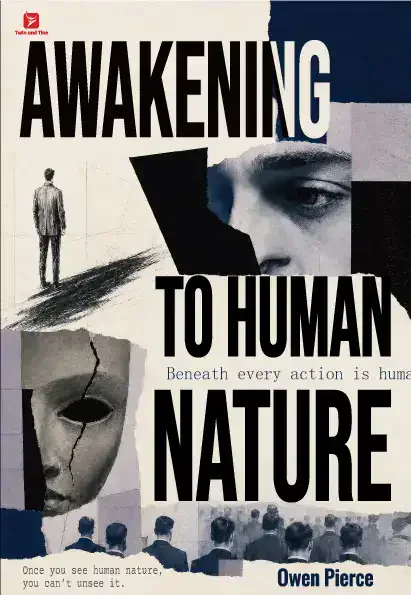
Awakening to Human Nature
By Owen Pierce
For the freezing-up problem, the book that helped me most was not a conversation book at all.
What makes this book different:
The cover promises something about seeing people clearly. The core idea is simple. People’s words and their actions drift apart. You learn more by watching what repeats than by parsing any single sentence.
What you get:
- Why people say one thing and do another
- How to spot hidden motives without becoming paranoid
- Why paying attention outward calms your own anxiety
- How to stop worrying about saying the perfect thing
One key idea: Stop worrying about saying the perfect thing. Start paying attention to what the other person actually wants from the exchange.
Some people want to be heard. Some want a quick answer. Some are just being polite and would rather leave. Once you notice that, your next sentence almost writes itself.
Best for: Anyone who freezes up and overthinks every word.
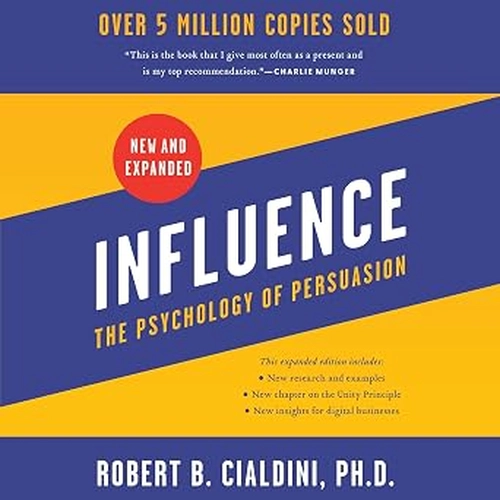
Influence
By Robert Cialdini
I know. This is about persuasion, not chatting. But a huge chunk of it is really about why people say yes, and why they warm up to some people and not others.
What makes this book different:
The chapter on liking alone is worth the price. It explained, finally, why I click with some strangers instantly and struggle with others. Shared background. Shared interests. Genuine compliments. Nothing mystical.
What you get:
- Why people say yes to some requests and not others
- The psychology of liking and connection
- How to build rapport without manipulation
- Why some conversations feel effortless and others feel like work
One key idea: People warm up to you for predictable reasons. Once you understand them, you can stop guessing.
Best for: Anyone who wants to understand the mechanics behind why some conversations click and others do not.
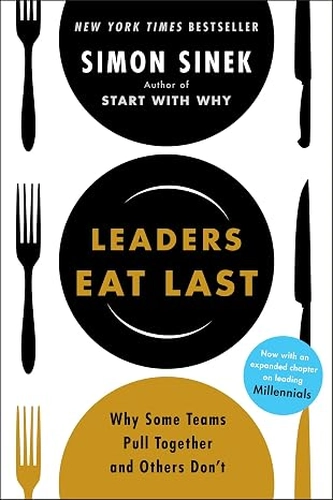
Leaders Eat Last
By Simon Sinek
This is a strange recommendation for a conversation list. But hear me out.
What makes this book different:
It is full of stories about trust. And trust is the actual currency of any good talk.
What you get:
- Why trust is the foundation of every meaningful conversation
- Stories that stick with you, like the Marine Corps chow hall where the most junior people eat first
- How generosity changes the dynamic in a room full of people
- What real leadership looks like in everyday interactions
One key idea: The best conversations are built on trust. And trust is built on small acts of generosity, not clever lines.
Best for: Anyone who responds better to stories than frameworks and wants to understand what makes people open up.
The Three-Second Rule I Stole From a Stranger
A woman at a conference once told me her whole system for talking to anyone. She called it the Three-Second Rule.
When there is a lull, you have three seconds before the silence gets weird. In those three seconds, you do not search for a brilliant topic. You just say the most obvious true thing in the room.
| What to say | Why it works |
|---|---|
| “That coffee is terrible.” | Honest. Invites a real reply. |
| “I have no idea what that speaker was talking about.” | Shared experience. Instant connection. |
| “Did you drive here or take the train?” | Simple. Easy to answer. |
That is it. The obvious true thing. It sounds too simple to work. It works because it is honest, and honesty invites a real reply.
I tested this for a month. At a wedding where I knew four people. At a work dinner next to a stranger. At my neighbor’s barbecue. The Three-Second Rule saved me every single time. Not because I said anything clever. Because I said something real, fast, before my brain could talk me out of it.
What If You Are Talking to Someone Who Gives One-Word Answers?
Some people just do not do small talk. I used to read that as rejection. Now I read it as information.
Try a different door. Skip “how was your week” and ask something specific. “What is the last thing you got weirdly obsessed with?” People who hate surface questions often light up at that one. It gives them permission to be interesting instead of polite.
If that still lands flat, let it go. Not every conversation owes you a connection. I wish someone had told me that ten years ago.
Which Book Should You Start With?
| If you… | Start with… |
|---|---|
| Freeze up and overthink | Awakening to Human Nature |
| Want to understand why conversations click | Influence |
| Respond better to stories than frameworks | Leaders Eat Last |
You could also just start with the Three-Second Rule and skip the reading entirely. I will not tell anyone.
Final Thought
I still have awkward conversations. Last month I told a coworker about my sourdough starter for eleven minutes. His face. I will never forget it.
But here is what changed. Awkward no longer feels like failure. It feels like a door that did not open this time. There are other doors. There are other rooms.
The books helped me stop treating every conversation like a final exam. That alone was worth the shelf space.
Start with one book. Try one technique. See what happens.
If you found this helpful, these books go deeper into the same themes.




Break the Anxiety Circle
$19.90

From Debt to Wealth
$19.90

