I used to think I was bad at talking to people. Not shy, exactly. More like my brain would go blank at the worst moment, usually right after someone said hello. For years I collected books about making conversation, hoping one of them would fix whatever was broken in me. Most of them did nothing. A few changed things.
This piece is about those few. Three books, specifically, and what each one actually gave me. If you have ever stood at a party holding a drink like a shield, or hung up a work call replaying every awkward pause, this might save you some time.
Why Do I Freeze Up When Someone Asks Me a Simple Question?
Here is what I figured out after reading a lot of these books. The freezing is not a personality flaw. It is a preparation gap.
Nobody teaches us how conversation actually works. We learn math and grammar, then get thrown into rooms full of strangers and told to be charming. Of course we panic. The people who seem naturally good at talking usually just have better instincts, and instincts can be borrowed.
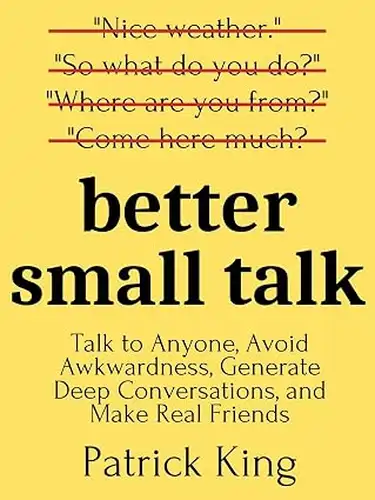
Patrick King says something in Better Small Talk that stuck with me: most people are not waiting for you to be interesting. They are waiting to feel comfortable. That flipped a switch. I stopped trying to perform and started trying to make the other person relax. Weirdly, that made me more interesting.
What Is the Best Book for Learning What to Actually Say?
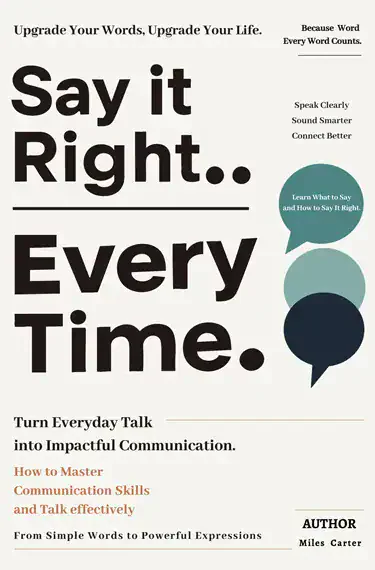
If you want phrases, scripts, exact wording, start with Say It Right Every Time by Miles Carter.
The whole book rests on one idea. It is not what you say. It is how you say it. Carter builds every chapter around side-by-side examples, a blunt version and a calmer version of the same sentence. Basic: “You didn’t think of me.” Mature: “That made me feel left out.”
I started using this with my own family. My brother forgot my birthday last spring. Old me would have said something sharp and we would not have talked for a month. Instead I said, “I felt a bit invisible that day.” He apologized. Actually apologized. That had never happened before.
The book covers four areas: everyday social skills, emotional connection, handling rude people, and work situations. The work section is the strongest. There are scripts for asking for a raise, for dealing with someone who takes credit for your ideas, for saying no without guilt. I used one of them in a meeting last year. My hands were sweating. It still worked.
The Book That Taught Me to Stop Overthinking Every Word
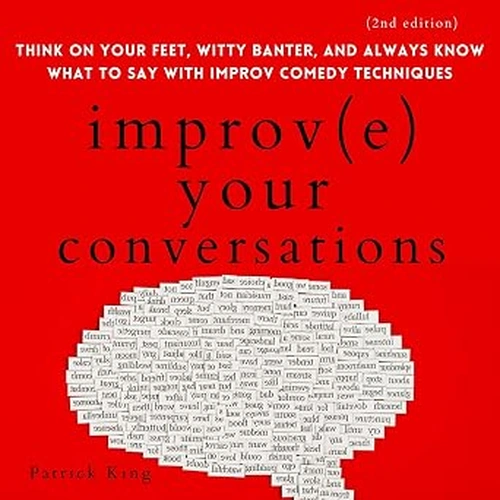
Improve Your Conversations by Patrick King takes a strange approach. It borrows rules from improv comedy.
The core rule is “yes, and.” Whatever the other person gives you, accept it, then add something. Someone says the weather is awful. Instead of agreeing and dying inside, you say, “It really is. I’m treating myself to soup later because of it.” Now there is something to grab onto.
King walks through over fifteen of these techniques. The one about awkward silences helped me most. He explains that silence is not failure. It is a pause. You can let it sit. You can breathe. Nothing terrible happens.
I tested this at a neighbor’s barbecue last summer. Someone mentioned they had just moved from Portland. I said, “Portland, nice. What do you miss most?” Twenty minutes later we were still talking. I have no memory of what we said. That is the point.
The Three-Second Rule That Changed My Small Talk
Here is the one tool I built from all three books. I call it the Three-Second Rule.
When someone finishes speaking, wait three seconds before you answer. Not a dramatic pause. Just a beat. It does two things. It stops you from blurting out the first nervous thing that arrives. And it makes the other person feel heard, because you are actually listening instead of reloading.
Carter calls something like this strategic pausing. King circles the same idea from the improv side. I just needed a name I could remember.
Try it tonight. Someone asks how your week was. Count to three in your head. The answer that comes out will be different. Slower. Better.
What If I Only Have Time for One Book?
Read Say It Right Every Time first. It is the most practical. You can open it to any page and find a sentence you can use tomorrow.
If you struggle more with blanking out than with conflict, go with Improve Your Conversations. If you want a gentle warm-up before either of those, Better Small Talk is the kindest starting point. King wrote it for people who hate networking, and you can feel that on every page.
Do These Books Work for Introverts?
They were basically written for us. King describes himself as a former shy introvert. Carter’s examples assume you would rather say nothing than say the wrong thing.
None of this turns you into a different person. It gives you a few moves. That is enough. I still get quiet at parties sometimes. I just do not dread them anymore.
One Last Thing
I still remember standing in that kitchen years ago, phone in hand, after a call where I said almost nothing. I thought some people were simply born with the gift and I was not.
I was wrong about that. The gift is smaller than it looks. It is a handful of sentences, practiced until they feel like yours. That is all anyone is doing.

