Sibling conflict can turn an ordinary day into a long series of arguments. One child takes something from another, someone complains that a sibling is getting more attention, or a small disagreement suddenly becomes a much bigger fight.
For parents, the hardest part is often figuring out when to step in and when to let children work something out themselves. Constantly taking sides can create another problem, but leaving every conflict alone may not teach children how to handle disagreement more constructively.
Books about parenting and sibling rivalry can give parents a different way to look at these situations. Instead of treating every fight as something that needs to be stopped immediately, parents can begin thinking about the patterns behind the conflict and the skills children need to handle those moments.
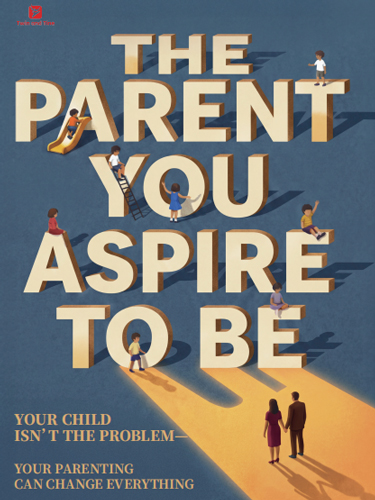
The Parent You Aspire to Be by Miles Carter
The Parent You Aspire to Be
Miles CarterPractical guidance for tantrums, backtalk, lying, screen addiction, emotional outbursts, and everyday parenting struggles.
Best for: Parents who want to understand recurring family conflicts rather than simply stop individual arguments.
The Parent You Aspire to Be by Miles Carter takes a broader approach to difficult family situations. It looks at children’s behavior, communication, emotional reactions, and the parent’s own responses as interconnected parts of the parenting experience.
This perspective can be useful with sibling rivalry because family conflict is rarely about the immediate disagreement alone. Children may be competing for attention, reacting to perceived unfairness, struggling with emotions, or simply trying to establish their own position within the family.
Parents can also become emotionally involved. Hearing children argue repeatedly can make even a patient parent eventually feel frustrated, leading to reactions that unintentionally make the conflict more intense.
The book encourages parents to step back and consider what is happening beneath the surface. Instead of asking only, “How do I make them stop fighting?”, parents can think about what the children are learning from these interactions and what their response is teaching them.
Siblings Without Rivalry by Adele Faber and Elaine Mazlish
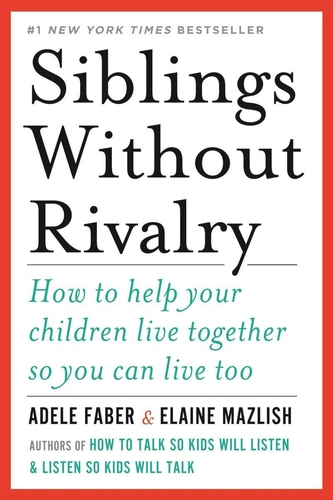
Best for: Parents who want practical ideas for handling conflict and competition between siblings.
Siblings Without Rivalry focuses specifically on the complicated relationship between brothers and sisters. It explores common situations involving jealousy, competition, comparison, and resentment, giving parents practical ways to respond.
One useful idea is that children do not necessarily need parents to make every situation perfectly equal. What they often need is to feel understood as individuals rather than constantly being compared with another child.
This makes the book a natural companion to The Parent You Aspire to Be. While the latter takes a wider view of parenting and family dynamics, Siblings Without Rivalry focuses directly on what happens between children.
Peaceful Parent, Happy Siblings by Laura Markham
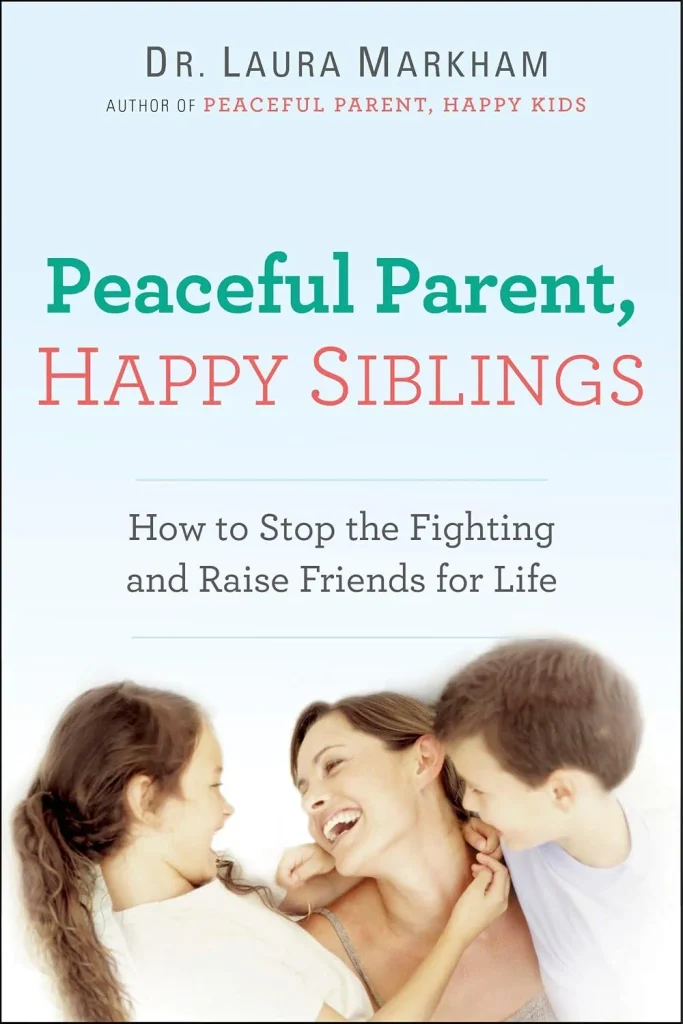
Best for: Parents who want to reduce family conflict while working on their own emotional responses.
Sibling arguments can be especially difficult when parents are already exhausted. A parent may enter the situation calmly but become increasingly frustrated after hearing the same disagreement for the fifth time.
Peaceful Parent, Happy Siblings explores ways parents can respond to sibling conflict while also paying attention to their own emotional state. That is important because children often react not only to the original disagreement but also to the emotional atmosphere created by the adults around them.
The book encourages parents to think about connection, emotional awareness, and the way they intervene in conflicts. This can be useful for families where arguments between siblings often trigger arguments between parents and children as well.
Should Parents Always Intervene in Sibling Fights?
Not necessarily. Some disagreements give children opportunities to practice negotiation, communication, and problem-solving. The bigger question is whether children are learning from those interactions or simply repeating the same destructive pattern.
When a conflict becomes unsafe, cruel, or consistently one-sided, parents may need to step in more directly. In other situations, giving children some space to work through a disagreement can allow them to develop skills they cannot learn if an adult immediately solves every problem.
The parent’s role is therefore not always to decide who is right. Sometimes it is to create enough structure for children to handle disagreements in a healthier way.
Why The Parent You Aspire to Be Is Worth Reading
Sibling rivalry can expose many broader parenting challenges at the same time. Parents have to think about fairness, boundaries, communication, emotional regulation, and their own reactions, often while several children are upset at once.
The Parent You Aspire to Be is useful because it does not reduce these situations to a single technique. It encourages parents to understand the behavior and the relationship surrounding it.
That broader perspective can help parents move away from simply trying to end every argument and toward helping children develop better ways to handle conflict.