You have been in this conversation.
Someone else is talking. They have been talking for a while. You have not said anything in the last several minutes. Every time you try, they interrupt. Every time you start a sentence, they finish it. Every time you steer toward a topic that interests you, they steer it back to themselves.
You walk away feeling unseen. Not angry, exactly. Just… invisible.
The question is not whether these people exist. The question is what you do about them. Because the same pattern shows up in meetings, family dinners, first dates, and group texts. Some people take up all the space. And they often do not realize they are doing it.
The three books below each address a different layer of this problem. One helps you read the signals that tell you when a conversation is becoming unbalanced. One helps you understand the psychology behind why some people cannot stop talking. One gives you the tools to handle them without becoming someone you do not want to be.
How to Read Someone’s Mind by Miles Carter

What signals tell you someone is taking over the conversation?
Here is the thing about people who dominate conversations. They rarely announce themselves. They do not say “I am going to take up all the space now.” They show you through patterns: the way they interrupt without acknowledging it, the way they steer every topic back to themselves, the way their body language shifts the moment you start speaking.
Carter’s book teaches you to read the signals people reveal through their face, body, voice, and behavior over time. The way someone’s posture shifts when you begin to speak. The slight eye roll that happens when you share something about yourself. The loudness that increases when the attention is on someone else.
What makes this book relevant here is the focus on reading the room in real time. You learn to notice when the balance of a conversation tips. When you are becoming the audience instead of a participant. When someone is performing for you rather than connecting with you.
The difference between someone who is passionate and someone who dominates is how they react when you try to contribute.
When you can see these signals, you stop wondering if you are imagining things. You start knowing.
For anyone who keeps walking away from conversations feeling like they were just talked at.
Quiet by Susan Cain
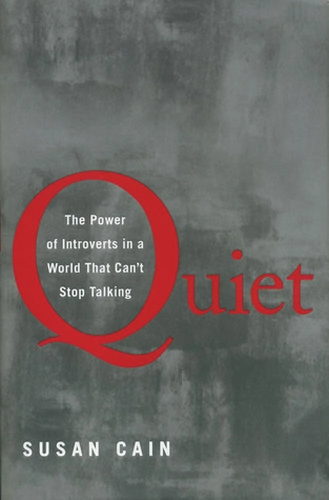
Why do some people have such a strong need to talk—and what is the cost of that?
Cain’s book is not about people who dominate conversations. It is about everyone else. The people who prefer to listen. The people who think before they speak. The people who contribute best in writing or in one-on-one settings.
The reason this book matters for understanding conversation-dominators is this: we live in a culture that rewards talkers and punishes listeners. People who speak a lot are seen as competent, even when they have nothing useful to say. People who listen are often seen as passive or uninterested.
The loudest person in the room is rarely the most thoughtful. They are often the most anxious.
What makes this book essential is the reframe. You stop seeing your listening as a weakness. You start seeing it as a skill. You stop wishing you were louder and start valuing what you bring to conversations when you choose to speak.
The book also explains why some people dominate. Often, it is not confidence. It is anxiety. People who cannot stop talking are often afraid of silence, afraid of not being heard, afraid of being forgotten. Understanding this changes how you respond to them.
For anyone who has ever felt like they talk too little—and wondered what is wrong with them.
Crucial Conversations by Kerry Patterson, Joseph Grenny, Ron McMillan, and Al Switzler
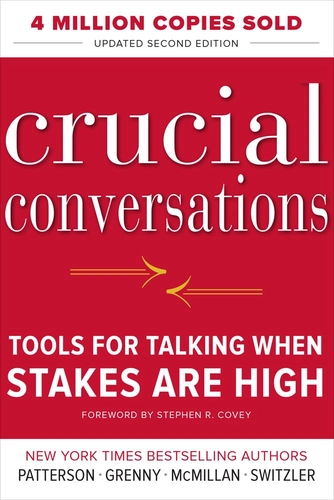
How do you handle someone who refuses to let you get a word in?
You have recognized the pattern. You understand why they do it. Now you have a harder question: what do I actually say when someone keeps cutting me off?
This book was written for people who need to navigate high-stakes conversations with people who are not easy to talk to. It covers the specific techniques you need when the other person is taking up all the space.
How to interrupt without being rude. How to hold your ground without escalating. How to say “I would like to finish my thought” in a way that does not invite defensiveness. How to redirect a conversation back to the topic you were discussing. How to end a conversation when the other person refuses to share the floor.
What makes this book valuable is the practicality. It does not tell you to be more confident. It tells you exactly what to say.
People will not give you space in a conversation. You have to take it. The question is how to do that without becoming the person you are trying to handle.
The book also covers what to do when the other person reacts badly. Because they will. That is how you know the technique is working.
For anyone who knows they need to speak up—but does not know how to do it effectively.
These three books each approach the problem from a different angle. Carter helps you read the signals that tell you when a conversation is becoming unbalanced. Cain helps you understand why some people dominate and why listening is not a weakness. Patterson, Grenny, McMillan, and Switzler give you the tools to handle them.
If you are tired of walking away from conversations feeling invisible, start with the one that matches where you are stuck:
- Need to stop missing the signals? Start with Carter.
- Need to stop thinking there is something wrong with you for listening? Start with Cain.
- Need to say something in the moment without becoming the person you are trying to handle? Start with Crucial Conversations.
Some people will always talk more than others. But you do not have to disappear.
