You know someone like this.
They talk about loyalty, but they leave when things get hard. They say they support you, but they undermine you behind your back. They promise to change, but their behavior never does. You want to believe them. You give them the benefit of the doubt. And then they show you again.
The gap between words and actions is one of the most frustrating patterns in human relationships. It is also one of the most revealing. People who consistently say one thing and do another are not just confused. They are operating from hidden motives, self-deception, or competing interests.
The three books below each explain a different part of this pattern. One exposes the hidden forces that drive the gap. One reveals how self-deception keeps people from seeing their own inconsistency. One shows you how to recognize the pattern early and protect yourself.
Awakening to Human Nature by Owen Pierce

Why do people’s words and actions so often diverge?
Pierce’s book strips away the polite illusions and reveals the real drivers of human behavior. People do not always say what they mean because they are not always aware of what they actually want. They say what sounds good, what protects their image, what keeps the peace. Meanwhile, their actions follow a different logic.
The book explains why loyalty expires when needs change. Why people chase validation over truth. Why double standards exist in every relationship. Why morality often takes a backseat to survival and self-interest. It also exposes how self-deception allows people to believe their own excuses.
When you understand the hidden incentives, you stop being confused by the gap. You see that the inconsistency is not random. It is a signal. People reveal their true priorities through what they do, not what they say.
For anyone who keeps being surprised by people who say one thing and do another.
The Elephant in the Brain by Kevin Simler and Robin Hanson
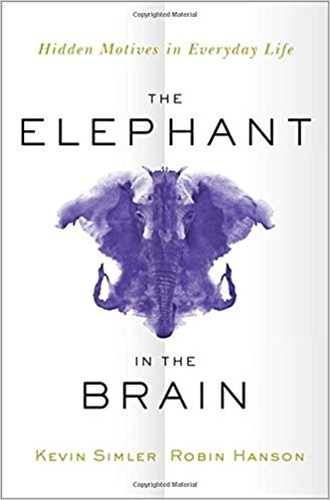
Why do we hide our true motives from ourselves and others?
Here is something most people do not want to admit. We are not always honest about why we do things. We tell ourselves we act out of kindness, honesty, or principle. But often, we are driven by status, self-interest, or the need to look good.
Simler and Hanson argue that our brains are wired to hide our true motives. We keep a positive self-image by convincing ourselves that our actions are noble. Meanwhile, our actions reveal the real priorities. This is why people say they value loyalty and then abandon friends when it becomes inconvenient. They believe their own justifications.
The book uses examples from everyday life, social dynamics, and even evolution to show how common this pattern is. It helps you see through your own rationalizations and recognize them in others.
For anyone who wants to understand why people lie to themselves about why they do things.
Leadership and Self-Deception by The Arbinger Institute
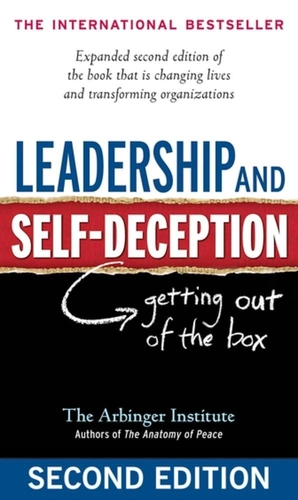
How do people become blind to their own inconsistency?
The gap between words and actions is often not a conscious choice. It is a result of self-deception. When people are in a state of self-deception, they do not see themselves clearly. They justify their behavior, blame others, and genuinely believe they are in the right.
This book, written in the form of a business fable, explains how self-deception works and how it sabotages relationships. It shows how people who are self-deceived treat others as objects, not people. They talk about respect but act dismissively. They say they care but show indifference. And they cannot see the contradiction because they are trapped in their own mindset.
What makes this book valuable is the clarity. It gives you a way to recognize when you or someone else is self-deceived. And it offers a path out.
For anyone who wants to see when they or others are blind to their own behavior.
These three books each approach the gap between words and actions from a different angle. Pierce exposes the hidden motives and self-deception that drive inconsistency. Simler and Hanson explain why we hide our true motives from ourselves. The Arbinger Institute shows how self-deception keeps us blind.
If you are tired of being confused by people who say one thing and do another, start with the one that matches where you are stuck:
- Need to understand why they do it? Start with Pierce.
- Need to see the hidden motives behind behavior? Start with Simler and Hanson.
- Need to recognize self-deception in yourself or others? Start with The Arbinger Institute.
You cannot always change people who are inconsistent. But you can stop being surprised by them.
