How to Tell the Ones That Actually Change How You See People
My daughter came home from her first semester of college and said something that stopped me mid-sentence.
“Mom, I think I trusted the wrong people all through high school. And I only figured it out after graduation.”
She was not crying. She was matter-of-fact about it. That almost made it worse.
I have been thinking about that conversation for months. Not the specific friends she lost. The pattern behind it. Why do we see people clearly only after the moment has passed? And what can we actually hand young adults so they do not have to learn everything the hard way?
Quick answer: Which self discovery books actually help young adults see people clearly?
Start with one that teaches patterns over isolated signals, one that builds practical social skills, and one that reframes happiness as a responsibility rather than a mood.
Here are three books about self discovery for young adults. One helps you stop explaining away warning signs. One gives you practical tools for reading people. One asks bigger questions about how to live.
Why Do We See People Clearly Too Late?
I asked my daughter to describe what happened with one particular friend. A girl she had known since ninth grade. Someone she defended, lent money to, covered for.
“She was nice to my face,” she said. “But whenever I got something good, a role in the play, a scholarship interview, she would go quiet for a few days. Then come back sweeter than ever.”
Quiet. Then sweet. Repeat.
I recognized that rhythm immediately. Not because I have studied psychology. Because I have lived it too.
Young adults walk into friendships believing that people say what they mean. That loyalty is stable. That kindness is always kindness. It is not. Not always. And nobody sits them down to explain this without making them paranoid in the process.
That gap between “trust everyone” and “trust no one” is where real growth happens.
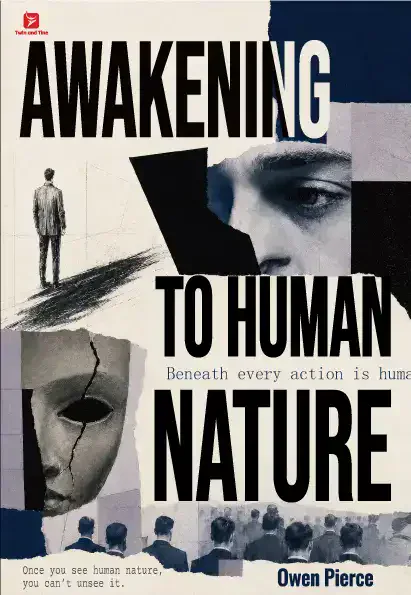
Awakening to Human Nature
By Owen Pierce
This is the book that stopped me.
What makes it different: The subtitle asks the exact question my daughter lived through. Why do I always see people clearly after it’s too late? The book does not teach body language tricks. It looks at patterns. What repeats. What shifts when pressure shows up. What someone’s actions say over months, not minutes.
What you get:
| What you learn | Why it matters |
|---|---|
| Why words and actions split when interests change | You stop being surprised when people shift |
| How to spot hidden motives without becoming paranoid | You see clearly without seeing everyone as a threat |
| Why smart, honest people keep getting taken advantage of | You learn to protect your time and energy |
| How to trust your own judgment again | You stop doubting what you already noticed |
One key idea: Stop explaining away the same warning signs. Recognize unhealthy dynamics earlier. Decide who deserves your trust, time, and energy.
Best for: The young adult who has already been burned and is trying to make sense of it.
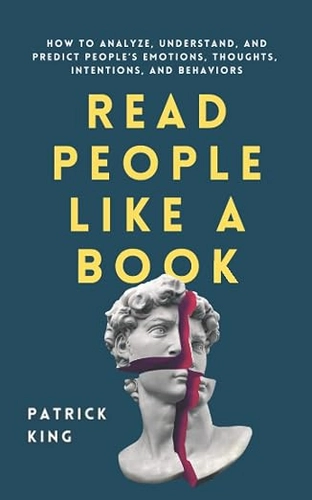
Read People Like a Book
By Patrick King
This one takes a more skill-based approach.
What makes it different: It focuses on body language, eye contact, and reading intentions. It leans toward social confidence and likability. Good for someone who wants practical tools and less philosophy.
What you get:
- How to analyze people without them saying a word
- Why context matters more than any single signal
- How to read body language, eye contact, and tone together
- Practical tools for everyday interactions
One key idea: A single gesture means nothing without context. Stop jumping to conclusions.
One caution: The risk here is turning people into puzzles to solve. People are not projects. Worth mentioning upfront.
Best for: The young adult who wants practical tools and social confidence.
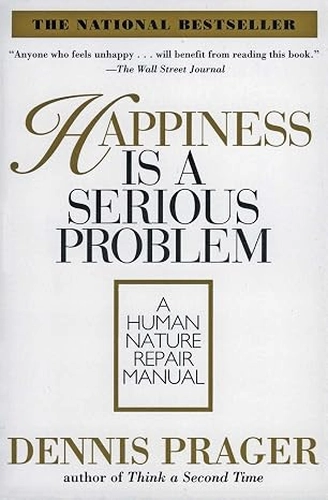
Happiness Is a Serious Problem
By Dennis Prager
This one comes at it from the other direction.
What makes it different: It argues that happiness is a responsibility, not a mood. The chapter on giving up the expectation that life should be wonderful hit close to home.
What you get:
- Why happiness is a practice, not a feeling
- How to stop seeing yourself as a victim
- Why taking responsibility for your own joy changes everything
- A framework for living well even when life is unfair
One key idea: Happiness is not something that happens to you. It is something you practice.
Best for: The young adult who has been let down and is now asking bigger questions about how to live.
The Three-Time Rule
I call it the Three-Time Rule. Not fancy. Just useful.
If someone shows me the same pattern three times, I stop calling it a coincidence. A friend cancels when I need support. Three times. A colleague takes credit. Three times.
I write it down now. A note on my phone. Just the date and what happened. No judgment.
The point is not to keep score. The point is to stop relying on memory, which is generous and forgetful in equal measure.
Does it feel cold? A little. But so does realizing at thirty that you have been repeating the same friendship mistake since fifteen.
What If You Do Not Want to Become Calculating?
My daughter said this to me directly. “I do not want to become one of those people who analyzes everyone.”
Fair. I worried about the same thing.
Here is what I told her. Understanding patterns is not the same as judging people. It is closer to learning how to swim. You do not stop loving the ocean. You just stop drowning in it.
The goal is not suspicion. It is awareness. You can hold both. Warmth toward people. Clear eyes about behavior.
She is still the person who brings soup to a sick roommate. She just does not lend money to the same friend three times anymore.
Final Thought
I could not protect her from every misread. I could not teach her in one conversation what took me forty years to learn. But I could hand her something that made the learning less lonely.
That is all any of us can do, really. Not fix it. Just leave the right book where they will find it.
Frequently Asked Questions
Which book should a young adult start with?
If they have already been hurt and want to understand why, start with Awakening to Human Nature. If they want practical social tools, start with Read People Like a Book. If they are asking bigger questions about how to live, start with Happiness Is a Serious Problem.
Is this about becoming suspicious of everyone?
No. It is about seeing clearly without becoming cold. Understanding patterns is not the same as judging people.
Do they need to read all three?
No. But they work well together. One gives you the framework. One gives you tools. One gives you perspective.
How do I talk to a young adult about these books without lecturing?
Read one yourself first. Leave it somewhere visible. Let them come to it on their own terms. Talk about scenes, not sermons.
Did this article help you see things differently? Our books turn helpful ideas into practical tools you can return to anytime.



Break the Anxiety Circle
$19.90

From Debt to Wealth
$19.90


